
While reading and watching the content for this, my fifth course in the ADL program, I found myself feeling a bit conflicted and frustrated. The research process that helped me identify my learning philosophy had me pulling away from my behavioral psychology undergraduate roots. Yet here I am, immediately thrust me back into concepts of behavioral change?
Wait a minute.

The Influencer book provides a framework for behavioral changes. As behavioral and social scientists, the authors share research findings, stories, and strategies that support change efforts. I am re-watching the Behavioral Science guys’ reminder that information overload and appeals to the head are not ways to inspire changes in behavior. Instead, we must appeal to the heart through “influential questions” (Crucial Learning, 2015).
But I thought I identified that I most align with humanistic and constructivist learning theories. Now I am returning to behaviorism? Behavioral change?

Fortunately, Dr. Dwayne Harapnuik’s post the head won’t go where the heart hasn’t been allowed me to explore connections of behavioral change through a cognitive lens which helped alleviate some panic. In this post, Dr. Harapnuik relays that “the science community is beginning to recognize the importance of the affective domain” (Harapnuik, 2015). To clarify, “the affective domain includes factors such as student motivation, attitudes, perceptions and values” (The Affective Domain in the Classroom, n.d.).
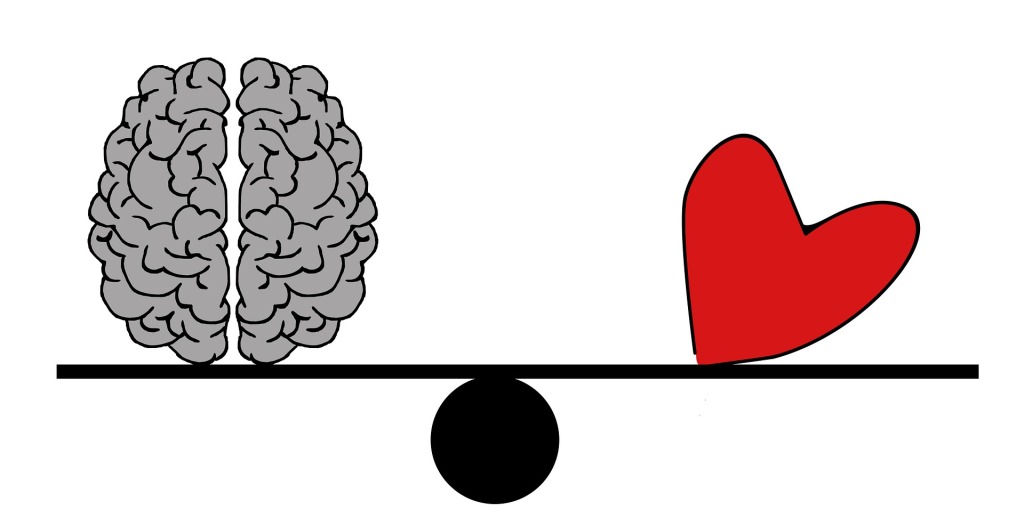
In this first assignment, I must balance and allocate the heart and the mind for change initiatives/strategies. Specifically, my innovation plan. The first task is identifying and articulating our Why, How, and What statements.
Simon Sinek defines why with the following questions:
- What is your purpose?
- What is your cause?
- What is your belief?
- Why does your organization exist? [Which I extend to include – why does your innovation exist?]
Using the neuroscience of the human brain, Simon Sinek illustrates the importance of starting with why through a golden circle, in which he explains that our feeling and emotional, limbic brain is “the part of the brain that controls behavior” (TEDx Talks, 2009). Sinek points out that by sharing our purpose and beliefs, we will attract others with those commonalities. He illustrates his point with a beautiful example from Reverend Martin Luther King Jr.’s (MLK) I have a dream speech. He points out that MLK “didn’t go around telling people what needed to change… he told people what he believed” (TEDx Talks, 2009).
Now to connect with what I believe? How do I get people to feel the way I feel? What is my why? While this seems big and overwhelming, I find encouragement in Simon Sinek’s call to action that “those who start with why… have the ability to inspire those around them…” (TEDx Talks, 2009).
Contemplating Tom Asacker’s questions on behavior change, I agree that “it is our personal narratives that move us to change the world and to improve our lives and the lives of others (TEDx Talks, 2014). I believe my own experience with learning gives me the purpose and passion for empowering my learners.
I want to help revolutionize advising. Dr. John Kotter argues that to enact change, one must “win over the hearts and minds of people” (Dr. John Kotter, 2011). Much like Sinek’s Golden Circle illustration, Kotter references two parts of the brain responsible for different functions (emotions/feeling vs. rational/thinking) and encourages change efforts must remember to focus on both aspects. Kotter (2012) urges that the “heart provides the energy to make something big, a big leap happen.” Kotter (2013) recommends that change agents work to create excitement and energy through transparency for the need and desire to strive for something better.
You see, I am all in.
“This is not an easy process but we owe it to our children and to the young men and women who are going to our universities and colleges with dreams of building a better world”
(Harapnuik, 2014).
References
Dr. John Kotter. (2011, March 23). John Kotter – the heart of change [Video]. YouTube. Retrieved from https://www.youtube.com/watch?v=1NKti9MyAAw
Dr. John Kotter. (2012, February 6). The biggest mistake I see: strategy first, urgency second. YouTube. Retrieved from https://www.youtube.com/watch?v=Qx46Z2daVtQ
Dr. John Kotter. (2013, August 15). Leading change: establish a sense of urgency [Video]. YouTube. Retrieved from https://www.youtube.com/watch?v=2Yfrj2Y9IlI
Harapnuik, D. (2014, September 16). People who like this stuff. . .like this stuff. It’s About Learning. Retrieved from https://www.harapnuik.org/?p=5198
Harapnuik, D. (2015, January 9). The head won’t go where the heart hasn’t been. It’s About Learning. Retrieved from https://www.harapnuik.org/?p=5461
TEDx Talks. (2009, September 29). Start with why — how great leaders inspire action | Simon Sinek | TEDxPugetSound [Video]. YouTube. Retrieved from https://www.youtube.com/watch?v=u4ZoJKF_VuA
TEDx Talks. (2014, June 30). Why TED Talks don’t change people’s behaviors: Tom Asacker at TEDxCambridge 2014 [Video]. YouTube. Retrieved from https://www.youtube.com/watch?v=W0jTZ-GP0N4
The affective domain in the classroom. (n.d.). Teach the Earth. Retrieved from https://serc.carleton.edu/NAGTWorkshops/affective/index.html

 The Advisor That Cares
4 thoughts on “Head vs. Heart”