Blog

ADL Program, Advising, Learning Community, Professional, Reflecting

Networking


As I begin reflecting on the benefit of networking and what learning networks I would join, I had some difficulty. I realized I needed to do a little more research to determine what is considered a learning network so I started by performing an internet search. 

Stanford Social Innovation Review says “Learning networks are a form of collaboration that enables groups of stakeholders to cultivate connections across communities and organizations, and to strengthen a whole system simply by focusing on the potential for participants to share information and learn from one another” (Ehrlichman & Sawyer, 2018). 

As soon as I read this definition, I immediately realized that I am already actively participating in several learning networks through my professional organization. I am currently a member of the following learning networks: 


Technology in Advising Community

The purpose of NACADA’s Technology in Advising Community is to help academic advisors, faculty advisors, and advising administrators understand the impact of using technologies in advising, including:

  • Online communication & virtual advising
  • Degree audits & web registration
  • Student information systems & electronic advising notes  
  • Social and connected spaces for innovative staff/faculty resources
  • Understand the ideas and trends of how technology is being utilized in higher education

Our activities include:

  • annual review and sponsorship of national conference proposals
  • solicitation of national and regional conference presentations and workshops 
  • compiling web resources for advisors, arranged by topics
  • organizing Twitter chats throughout the year

This community seeks to serve as a central resource and clearinghouse for information about innovations and issues in academic advising technology. Through our webpage, listserv, and our social media platforms including our NACADA Technology in Advising Facebook Group, on Twitter (using the hashtag #AcAdv or #AdvTech), and at national and regional conferences, we actively seek to encourage NACADA members to engage in topical discussions and activities related to the uses of technology in advising. 


Advising community for wellbeing and advisor retention

The Well-Being & Advisor Retention Advising Community community exists to encourage advisors to address wellbeing and self-care with their students, while also encouraging the same for advisors. This community thus hopes to decrease burnout amongst advisors and increase retention in the field. This community views wellbeing as a holistic and human need for students and advisors alike, and views self-care as ensuring student and advisor needs are met. This community hopes to encourage discussion among advisors about integrating wellbeing and self-care into advising appointments with students, while also encouraging institutions to consider the needs of their advising staff, and advisors to consider their own self-care. This community will do this by conducting research of both advisors and students, and considering and creating innovative approaches for both students and advisors. 

Our Advising Community has identified the following areas of focus: 

  • Research –  Coordinate academic research and review existing works for the committee’s use
  • Innovative Practice: Students –  Focus on new/emerging practices in incorporating wellness/wellbeing into the advising relationship, contributing to student retention/success
  • Innovative Practice: Advisors –  Focus on new/emerging practices in incorporating wellness/wellbeing into an advisor’s work, contributing to staff retention/success  
  • Regional Liaisons – Connect with regional chairs and conference chairs to incorporate wellness/wellbeing into regional events/planning; reach out to region chairs to find out what the region needs are in the areas of wellness and retention and the ways our community can assist them.

Advising Community on Distance Advising for Online Education

This community is dedicated to providing advisors with resources and insight into best practices relating to distance advising in online education. Advisors within this community can network with professionals who are responsible for providing advising services to students whose primary method of instruction is online.

Establishing an essential relationship with a student can be difficult in the online world of advising and distance learning. The Advising Community on Distance Education Advising hopes to become the community where advisors in any discipline can come network and share best practices regarding advising students whose primary method of instruction is online.

Goals:

  • Recruit members for the community address book and utilize these individuals to assist with research, writing, and presentation proposals for NACADA conferences.
  • Create an interactive online advising guidebook and publish sections to the commission website.
  • Host at least three webinars for the 2016-2017 year relating to advising online students.
  • Create a Facebook page to increase commission awareness and inform advisors of best practices relating to distance advising for online education. 

Benefits: https://nacada.ksu.edu/Community/Advising-Communities/Get-Involved-Benefits.aspx


In addition to these communities available through NACADA, I also frequently participate with TEXAAN. Both of these professional organizations believe strongly in connecting advisors with others within the advising profession. Some are professional advisors, some are faculty advisors, and still others are administrators; but we all find ways to learn from one another. For example, both these organizations and individual learning networks try to hold monthly coffee and connect sessions where topics of different interests are covered. These learning networks have been extremely helpful, especially through the shutdowns of 2020. Our communities have held frequent webinars about how each of our institutions was addressing technology concerns, how we were helping our students navigate online learning, and pushed one another to remember self-care through such a challenging event. I have participated in several online discussions within my profession. 

The benefit of these learning networks cannot be expressed enough. These networks provide us with a safe space to share the challenges (and victories) we each face guiding students through their academic paths. We have collaborated on solutions and new perspectives by maintaining a safe space to bring our challenges to one another. 

Reference

Ehrlichman, D., & Sawyer, D. (2018, July 27). Learn before you leap: The catalytic power of a learning network (SSIR). Stanford Social Innovation Review: Informing and Inspiring Leaders of Social Change. Retrieved June 21, 2022, from https://ssir.org/articles/entry/learn_before_you_leap_the_catalytic_power_of_a_learning_network#:~:text=Learning%20networks%20are%20a%20form,and%20learn%20from%20one%20another.

ADL Program, Evolution, Goals, Growth, Growth Mindset, Growth Mindset Plan, Learner's Mindset, Learning

From Growth Mindset to a Learner’s Mindset


As I continue to invest in my Growth Mindset with a goal toward developing a Learner’s Mindset, I will continue to share my experience, reflections, and challenges.

ADL Program, Growth, Growth Mindset, Growth Mindset Plan, Innovation Plan, Reflecting, Tips

Growing my Mindset


In the ADL Program, we have been asked to create our own growth mindset plans. As a follow up to my last post Growing your Mindset, I am going to attempt to answer the questions posed as openly and honestly as possible.


Reflections

Reflecting on the statements proposed by Dr. Carol Dweck’s (2016) book Mindset, I must admit growing up I completely believed “you can learn new things, but you can’t really change how intelligent you are” (p. 12). As I shared in my Getting Personal post, I did not have the best childhood experience in relation to school. I truly believed back then that “your intelligence is something very basic about you that you can’t change very much” (Dweck, 2016, p. 12). Thankfully, I had a much better college experience (studying psychology) and realized that my ideas of being “stupid” must be mistaken because as my coursework advanced my grades got higher. In chapter 3 of the Mindset book, when Dr. Dweck (2016) talks about the student who said “you mean I don’t have to be dumb?” my heart dropped because I felt exactly like that student in my grade school years (p. 55). I worked very hard to hide how truly stupid I believed I was as a result of learning disabled labels that were applied to me at a very young age. I definitely never volunteered to go to the board, those were mortifying reinforcements of everything I believed about myself. I was extremely shy. I believed that teachers didn’t like me.

Fortunately I survived elementary school, squeaking by in junior high and high school. I became involved in things like drill team and FFA which gave me outlets that boosted my confidence in other areas. As I learn about mixed mindsets, it is very interesting to reflect on my ability to try a dance routine over and over, making mistakes until perfected, performing for large groups of people but doing the same for academics was never on my radar.

I started to believe in myself and my ability to learn in college but reflecting now I can honestly say that I think I was just waiting for the truth to be exposed. I think I believed that through some strange fluke I was learning and doing well, but I completely felt like a fraud. Reflecting now, I have a feeling that this is why transpersonal psychology appealed to me so much. We started every class with a meditative session. We learned about accepting ourselves just as we are in each moment. I found peace and freedom in learning how to just be.


Questions and Answers

Q: Why is the growth mindset so important?

A: I am living proof that the growth mindset is very important because students can get stuck living a fixed mindset life, believing that there is no means to improve and better themselves. Assisting students in their academic pursuits requires that students learn that intelligence is something that can be improved over time with effort. College and life inevitably come with hardships and challenges. Students with a fixed mindset may never bounce back from those experiences. I have a whole section on my portfolio called When Life Happens to guide and assist students with their options along their academic journey. I hope to add growth mindset language throughout my portfolio and in my correspondence with students to fortify their growth mindset and to help develop it for those who do not currently have one. As cited by Scott Jeffrey (2020), “Dweck has found that just learning about the growth mindset can cause major shifts in how people view themselves and their lives.”


Scott Jeffrey’s guide How to Establish a Growth Mindset proposes this four step process to changing a fixed mindset to a growth mindset:

  • Step 1: Learn to hear your fixed mindset “voice.”
  • Step 2: Recognize that you have a choice.
  • Step 3: Talk back to it with a growth mindset voice.
  • Step 4: Take the growth mindset action.

Q: How will you incorporate the four steps?

A: I will admit that I still have to really pay attention to my inner dialog and recognize that fixed mindset voice identified the first of these four steps, because old habits are hard to break. If I still struggle with hearing my fixed mindset voice and recognizing I have a choice, then I can safely assume my students do too. Some students may have survived their whole primary, secondary, and post-secondary education without ever knowing about the growth mindset. I want to incorporate a mini course or some means of exposing students to the growth mindset concepts to help them begin to respond to their educational journey and challenges with a growth mindset voice.

Q: How will you communicate the message of “yet” to others?

A: By utilizing Dr. Dweck’s TedTalk The power of believing that you can improve in welcome emails at start of online graduate programs. By utilizing encouragement throughout program completion that focuses on progress. I will communicate the message of yet to my students, by acknowledging their challenges as opportunities. I will direct student to course correction strategies and remind them failure is a normal part of progress toward difficult long-term goals.

Q: What resources (content, video, media, etc.) will you use to promote the growth mindset?

A:

Q: When and how often will you promote the growth mindset?

A: I feel that the growth mindset should be introduced to all students upon admission but should be further reinforced when students reach out about dropping, withdrawing, or when students face academic standing issues. I will strive to include “growth mindset message[s that include] phrases about the universality of challenges (this is incorporated with the phrase, ‘‘all students struggle’’), and nods to the importance of effort (e.g. “help your hard work pay off’’), strategies (‘‘learning strategies,’’ ‘‘I’m happy to strategize with you’’), and help-seeking (“I’m glad you reached out’’) for success” (Kyte et al., 2020).

Q: How will the growth mindset influence or impact the way you approach your work in this course and the program? 

A: I must approach new content with a mindset that holds excitement for what new knowledge I will learn that can later be implemented into my Advisor’s Tips Page. I must continue to recognize the fixed mindset behaviors and thoughts from the past. I can only continue gains toward the learner’s mindset by replacing those old habits with new growth mindset thoughts and actions. I must acknowledge I have a choice about how I approach new challenging content. When I struggle and fail, I must regroup and search for the lessons learned through the attempt. I must seek feed forward from trusted relationships as encouraged by the COVA model either from my classmates/learning when course related and from my team when professional. As I recognize my fixed mindset voice and choose to replace it with a growth mindset one, while implementing growth mindset actions it is important that I continue to find ways to share the mindset message with my advisees continually improving my portfolio.


References

Dweck, C. S. (2016). The Mindsets. In Mindset (Updated Edition). Ballantine Books.

Jeffrey, S. (2020, June 23). Change your fixed mindset into a growth mindset [complete guide]. Scott Jeffrey. Retrieved June 14, 2022, from https://scottjeffrey.com/change-your-fixed-mindset/

Kyte, S. B., Collins, E., & Deil-Amen, R. (2020). Mindset messaging: Fostering student support and confidence through micro-messaging in advisor communication. NACADA Journal, 40(1), 36–48. https://doi.org/https://doi.org/10.12930/NACADA-19-08

TED. (2014, December 17). The power of believing that you can improve | Carol Dweck [Video]. YouTube. https://www.youtube.com/watch?v=_X0mgOOSpLU

ADL Program, Growth, Growth Mindset, Growth Mindset Plan, Learning

Growing your Mindset


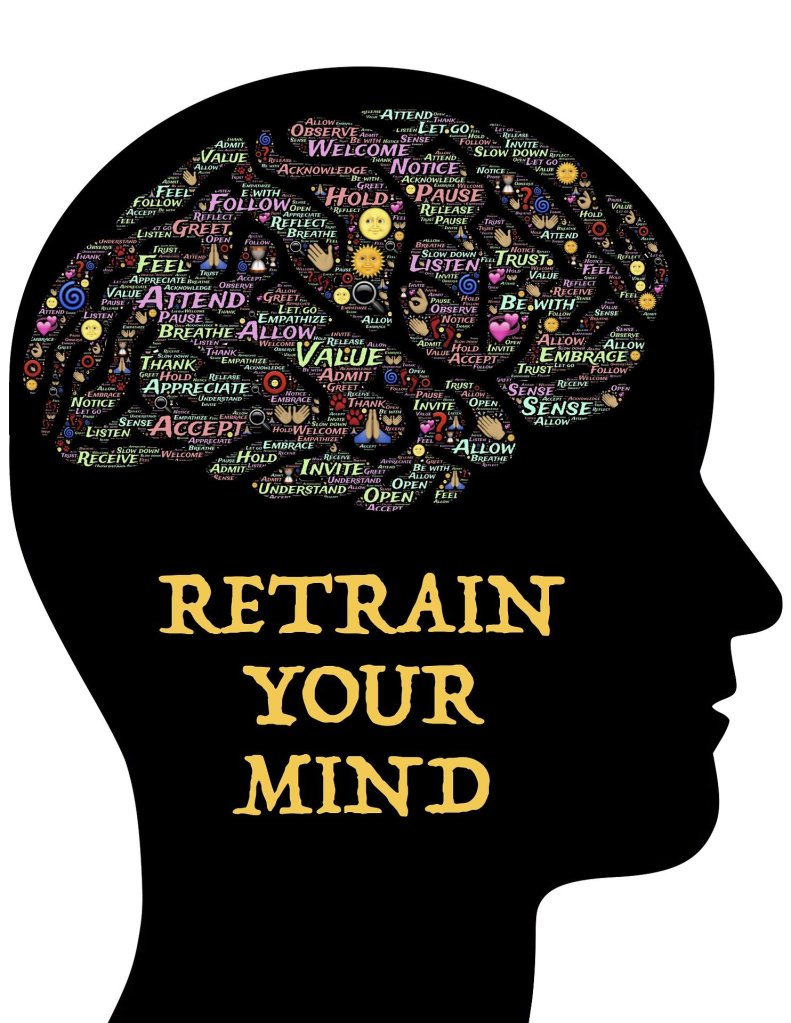
Dark silhouette of a human head as colorful words (attend, allow, value, listen, pause, release, hold, follow, greet, trust, be with, embrace, sense, invite, open, allow, appreciate, accept, etc.) are shaped to resemble the human brain's gyri and sulci. In large letters "Retrain your mind" is visible on the silhouette.

In the ADL Program, we have been asked to create our own growth mindset plans.

Carol Dweck offers the following statements to help us determine our Mindset in her book by the same title. Let us see which of these resonates with us while thinking about our intelligence (quoted from page 12):

  1. Your intelligence is something very basic about you that you can’t change very much.
  2. You can learn new things, but you can’t really change how intelligent you are.
  3. No matter how much intelligence you have, you can always change it quite a bit.
  4. You can always substantially change how intelligent you are.

“Questions 1 and 2 are the fixed mindset questions. Questions 3 and 4 reflect the growth mindset”

You can also answer these same questions about other personal attributes you possess (or believe you don’t possess).


Dweck asks similar questions about personality and character (quoted from page 13), lets see which of these resonates with us.

  1. You are a certain kind of person, and there is not much that can be done to really change that.
  2. No matter what kind of person you are, you can always change substantially.
  3. You can do things differently, but the important parts of who you are can’t really be changed.
  4. You can always change basic things about the kind of person you are.

“Here, questions 1 and 3 are the fixed-mindset questions and question 2 and 4 reflect the growth mindset. Which did you agree with more?”


Do you find that you have a mixed mindset? Do you view your intelligence one way but your character in another light? How about when you look at other abilities? I would love to hear your thoughts in the comments.


While reviewing Scott Jeffrey’s guide How to Establish a Growth Mindset he proposes the following four step process to changing a fixed mindset to a growth mindset:

  • Step 1: Learn to hear your fixed mindset “voice.”
  • Step 2: Recognize that you have a choice.
  • Step 3: Talk back to it with a growth mindset voice.
  • Step 4: Take the growth mindset action.

In this guide, Scott Jeffrey suggests the following questions to “activate a growth mindset” which he cites were “collected from various sections throughout the Mindset book:”

  • What can I learn from this?
  • What steps can I take to help me succeed?
  • Do I know the outcome or goal I’m after?
  • What information can I gather? And from where?
  • Where can I get constructive feedback?
  • If I had a plan to be successful at [blank], what might it look like?
  • When will I follow through on my plan?
  • Where will I follow through on my plan?
  • How will I follow through on my plan?
  • What did I learn today?
  • What mistake did I make that taught me something?
  • Is my current learning strategy working? If not, how can I change it?
  • What did I try hard at today?
  • What habits must I develop to continue the gains I’ve achieved?

As we prepare to create our growth mindset plans, the assignment asks us to consider the following questions:

  • Why is the growth mindset so important?
  • How will you incorporate the four steps?
  • How will you communicate the message of “yet” to your others?
  • What resources (content, video, media, etc.) will you use to promote the growth mindset?
  • When and how often will you promote the growth mindset?
  • How will the growth mindset influence or impact the way you approach your work in this course and the program?  

I look forward to hearing your thoughts on this topic and your answers to these questions as you being to think about your mindset and consider developing your own growth mindset plan.


Dweck, C. S. (2016). The Mindsets. In Mindset (Updated Edition, pp. 12–13). Ballantine Books.

Jeffrey, S. (2020, June 23). Change your fixed mindset into a growth mindset [complete guide]. Scott Jeffrey. Retrieved June 14, 2022, from https://scottjeffrey.com/change-your-fixed-mindset/

ADL Program, Advising, ePortfolios, Growth Mindset, Innovation Plan, Professional, Reflecting

Technology and Advising


The wildly important goal related to technology integration I am focused on is encouraging my advisees to take ownership of their degree program, the path to attainment, and to set goals for themselves. Too many of my students begin programs with little to no understanding of the requirements they need to research and prepare (such as internships). The students’ lack of knowledge and information causes hostility and confusion as they reach those later points in their programs.

My goal is to integrate technology into my advising practices to guide them through the research and information-gathering processes needed to succeed. Universal Design for Learning allows all learners to utilize the what, how, and why of learning as they engage with active learning by incorporating technology into the classroom and learning opportunities. This shifts the one size fits all approach to learning, does not meet learners where they are and doesn’t consider diversity. Technology integration allows for different types of media to be used to engage students in the learning process. We must have a purpose to stay involved and engaged in our learning journey until we obtain mastery of our given goals.

When asked whether I thought I had a fixed or growth mindset last semester, I believed I was primarily a growth mindset individual. I am optimistic about most things. However, upon learning of the false growth mindset and further evaluation this semester, I can honestly say that many of my internal dialogs and personal expectations fall more in line with a fixed mindset. I can feel quite defensive when challenged professionally, and I know that comes from personal insecurity. I am very growth mindset oriented when assisting others but often hold myself to an unrealistic expectation of perfection. The more I learn about the growth mindset, the more I aspire to replace my perfectionist thinking with a perspective that allows for trial and error along with failing toward my goals. The messages about praising progress and avoiding a false growth mindset are also beneficial because I began focusing on effort as the key to a growth mindset. Now, I know that progress is the key to praise. Perfectionist thinking has held me back from achieving important goals throughout my life. I have been on and off weight loss plans for almost all my adult life. When I am super strict and losing weight, I can fool myself into believing I have a growth mindset, but one slip-up or terrible choice can immediately trigger me into a fixed mindset. I have entirely spiraled into a weekend of junk food binging over a minor setback. Don’t even get me started on October through December (Halloween candy leads right into the holidays), and fixed mindset thinking can derail all prior progress. To avoid a false growth mindset, I will focus on praising the process and progress over simply praising effort. The suggestion of tying praise to strategies, persistence, and performance will assist me in avoiding the development of a false growth mindset. 

There have been times that I have made decisions in life to avoid failure. Now I see that failure is just a part of learning and an opportunity for my brain to grow. I would say that avoiding situations was my go-to defense mechanism back in high school and college. I struggle severely with mathematics and will still find myself avoiding situations that test my abilities. I definitely could have used a growth mindset perspective as I fought through multiple levels of remedial math, desperately trying to grasp concepts that escaped me. Even pursuing a graduate degree was something that I avoided for fear of failure. I have to constantly give myself a pep talk about growth and perseverance regarding the program and the vague nature of assignments. I know the design of projects and assignments creates an environment for deeper learning through the process of researching and finding answers. Still, in the heat of the moment, my fixed mindset thinking can flare and try to convince me of all the old terrible things I would tell myself in my internal dialog growing up. It helps to learn that I can name that inner voice and “recruit it to collaborate on your challenging goals instead of letting it undermine you with doubts and fears.” 

With almost every new thing I’m learning, I tend to turn to YouTube and internet search engines to inform myself. I also seek out podcasts and books on different topics that interest me. I have watched the Learner’s Mindset Discussions on the growth mindset topic and sought additional YouTube resources such as TEDTalks. I will follow a rabbit hole by clicking links off of links to other resources. Additionally, I have begun actively seeking additional research related to advising via google scholar.

Reference

Dweck, C. (2016, January 11). Recognizing and overcoming false growth mindset. Edutopia. Retrieved June 7, 2022, from https://www.edutopia.org/blog/recognizing-overcoming-false-growth-mindset-carol-dweck 

ADL Program, Evolution, Growth, Humor, Learning

Y is for Yet…


This read-along undoubtedly meant for grade school children, can help those of us working on developing our growth mindset.


  • A – Ability
  • B – Brain
  • C – Challenges
  • D – Determined
  • E – Effort
  • F – Feedback
  • G – Growth Spurt
  • H – Help
  • I – Imagination
  • J – Journey
  • K – Knowledge
  • L – Learn
  • M – Mindset
  • N – Notice
  • O – Optimism
  • P – Progress
  • Q – Questions
  • R – Resilient
  • S – Setting Goals
  • T – Trying
  • U – Until
  • V – Visualize
  • W – Work
  • X – eXtra
  • Y – Yet
  • Z – Zany

Children’s Read Alouds by Brittany. (2021, September 27). Y IS FOR YET, A Growth Mindset Alphabet – Read Aloud [Video]. YouTube. https://www.youtube.com/watch?v=XekYdto3JNA

ADL Program, Evolution, Goals, Growth, Growth Mindset, Learner's Mindset, Personal, Reflecting

Power of Growth Mindset


I am very excited to begin the third course of the ADL Program on the Growth mindset and look forward to the personal benefits of this pursuit.

I faced many learning challenges in early elementary, and as a result, I developed a fixed mindset about my intelligence and abilities. As I read chapters 1-4 of Carol Dweck’s Mindset book I could not help but wish that I was familiar with this concept back in my own grade school experience. The internal voice in my head matched all of the fixed mindset examples provided by Carol Dweck in her Mindset book and youtube video on The Power of Yet.

If only someone had instilled the power of yet in my learning, I could have saved myself years of low self-esteem and negative self-talk. Even as I did well in pursuing my undergraduate degree, I felt like a fraud who was just one step away from being the “dumb kid” again. I so readily accepted that identity as a result of early labels.

I wasted the first part of my life feeling slow, dumb, and below average. I surely was not going to be the first one raising my hand or offering to go to the board to complete a problem with excitement and enthusiasm, as described by Dr. Dweck when describing children equipped with a growth mindset.

Both Carol Dweck and Eduardo Briceno share knowledge and facts about our abilities to improve through repetition and practice. Grit and determination are the messages we need to share with our students and children and embrace that hard work obtains results.

I have started working process-related praise into how I tell my 19-year-old daughter that I am proud of her as she moves through early adulthood. I can see the fixed mindset in her and hope that as I understand more, I will be able to equip her with a growth mindset at her age instead of at mine. As Eduardo Briceno described praise through the mindset lens, I wished I learned what I’m learning now when she was just a little kid.

Taking the leap of faith to begin a graduate program was filled with self-doubt and an internal voice that worried I would embarrass myself. Hence my duplicitous excitement about the potentially painful process that may come from continuing to reshape my mindset.

I admit that I may have come to this program with a fixed mindset. I am done with the people-pleasing and approval-seeking ways of the past and instead move forward reprogramming myself to a growth mindset. The first two courses have already opened my mind to a different perspective on learning. Now I am trying to fully embrace a growth mindset so that I can work to instill that in others.

ADL Program, ePortfolios, Learning, Reflecting

What we say vs. what is heard


As I reflect on the final Creating and Sharing Your ePortfolio assignment of the second course of the ADL program, I have re-read and reviewed my notes from our final class discussion and the submission page within the Learning Management System (LMS) and what I’m understanding is a compilation post (or page) leading to everything outlined is the expectation. “Quickly summarize everything you’ve done and what has been accomplished through your ePortfolio experience” is what I find in my class notes.

Silhouettes of two human profiles face one another. One has curved shapes from the mouth area that get wider as they near the other head. The other has an oversized ear outlined.

I am curious what others heard and understood because I know that as humans we have a tendency to interpret words and meanings differently based on our experiences. Now that I’m looking at learning and influence I think this would help with my concerns about email communication.

How do I get to the point and still relay sincerity? I guess this is where digital content would be beneficial. I could answer questions and give tips where non-verbal communication would be evidenced. Hmm, food for thought.