Blog

ADL Program, ePortfolios, Learning, Reflecting

Voice


I am constantly struggling to find the voice of my ePortfolio. I get focused on the purpose of the portfolio, and then I get confused over who my audience is. On the one hand, I want to refer my students to the portfolio for my tips and information. Yet, on the other hand, I want to utilize my portfolio professionally to showcase my development as a professional. Then on the third hand, I also want to personalize my portfolio and share my growth and learning as a student. 

Because I come from an older generation where you didn’t want to give away too much personal information online, I am still struggling to find what voice my portfolio will fulfill for myself and my audience. As discussed in chapter 11 of the COVA book, I need “formative feedback/feedforward and encouragement” to continue to develop my voice.

I have realized that while trying to figure out what I’m supposed to be reflecting/blogging about, I have not started implementing my Advisors Tips/Innovation plan. The only way I will be to apply the information I am learning in this ePortfolio course is by authentically living with and using it. I have started phase one of finding my voice by taking the most common information I share with students on a daily basis to build those sections on my website. I will immediately be able to start sending links to this portfolio and obtain feedback with the users it is intended to help.

I feel like this portfolio changes almost daily as I implement different aspects and tweak different placement, information, links, and functions. Once again, I am just trusting the process and hoping that as I exercise this muscle, I will gain confidence and find my voice through and beyond the ADL program. 

References:

Harapnuik, D., Thibodeaux, T., & Cummings, C. (2018). COVA: Choice, Ownership, and Voice, through Authentic Learning.

ADL Program, Contributions, Learning, Learning Community, Reflecting

Watch party, as collaboration?


I’m just reflecting on the discussion boards, our group discussions, the weekly class discussions, and the content we explore in the ADL Program. I always wish for a more interactive discussion of our weekly course content. That made me wonder if anyone has ever considered a watch party-type weekly collaboration.

Would anyone attend a class watch party? It seems like a group of classmates (or even the learning community members) could turns reading chapters, content, and screen share for videos and examples.

I’ve always wondered what class would be like if we all had that additional time to build trusted relationships while actively engaging with the content and discussing it in real-time. I think we could even record our session to rewatch our own ideas for later personal learning reflections.

I know that I get so many ideas, thoughts, and inspirations in our breakout sessions and individually while reviewing the information through each week’s modules and associated links.

I enjoy learning from all of you and seeing your perspectives.

ADL Program

ePortfolio Exploration

When creating an ePortfolio, I honestly didn’t explore platforms at all. I spent a fair amount of time at harpanuik.org before committing to the ADL program. I had seen enough podcasts and posts to know that students reflected at the end of the program on how much they wished they had just listened to Dr. H when he recommended selecting a robust platform like WordPress. Upon starting the ADL program, I signed up on WordPress and committed to a year of hosting. I later realized that the Innovation course did not require the development of an ePortfolio yet. Now that I have started the ePortfolio course, I have learned that there may be other hosting options I should have considered. However, since I’d already paid for an annual plan with WordPress, I didn’t want to move to a service like Bluehost purely for financial reasons. I sincerely hope that does not become something I regret moving forward. I am taking Dr. Harapnuik’s (n.d.) advice to “take control of your domain and site and ensure that you can take your work with you” as a critical lesson learned from his experience and professional evolution. I also hope to be one of the exceptions to the statistic cited by Harapnuik (2016), which shows that “many students stop using their eportfolio after the completion of their program of study.”

After reviewing other students’ and professionals’ ePortfolios, I am inspired to continue finding and sharing my voice, passion, and why. Many prior ADL/DLL students left interesting breadcrumbs of tips for succeeding in the program. I feel I have a much better understanding of the ePortfolio’s purpose for the immediate focus of showcasing my progression through the program. 

Thoughts on Levi Harapnuik’s page: seeing the evolution and change over time is interesting. On Caleb Harapnuik’s page, the home page and sleekness are breathtaking. Both pages utilize a simplicity that provides a clear focus for each independent purpose. Andre Malan’s undergraduate example page is super simple, with excellent cartoon illustrations. During my review, I found myself searching for more content and learned the Steinfield method for developing a new habit after reading a reflection I seriously need to incorporate concerning my learning reflection writing. Jesse Lee’s portfolio seemed like a collection of blog posts. 

From the ADL/DLL examples, Brooke Joseph’s ePortfolio is very colorful and cute. Still, I find some of the backgrounds and floating images too overwhelming for my eye. Once again, I really liked the simplicity of Bridget Gallagher’s ePortfolio. I really like how her homepage summarizes her learning throughout the program. Michelle Little has done a great job reflecting on her experience and organizing her ePortfolio. Once again, I am struck by the simplistic color selections and menu options. Kris Bumstead’s ePortfolio was very engaging throughout through the use of digital storytelling. Rebecca Recco’s ePortfolio has very elaborate navigation panels. I really appreciate how Jordan Roberts’ ePortfolio’s About Me page divides his personal profile from his professional one. That is something I could see myself incorporating in the future. Judy Cornelius has a very well-organized and visually appealing ePortfolio, too. Nancy Watson’s ePortfolio seems so professional that I assumed it was misfiled under ADL/DLL examples. I love that she has a testimonials section. I wonder if I couldn’t create an area for positive student feedback. Testimonials that I genuinely am the advisor that cares.

Roselynn Verwoord’s ePortfolio inspired me to see how a professional portfolio could market and showcase one’s abilities, learning, and accomplishments. Rebecca Lynn Taylor’s portfolio’s organization, clean lines, and color contrast really appeal to me. 


Harapnuik, D. K. (n.d.). Examples of ePortfolios. Harapnuik.org. Retrieved April 15, 2022, from https://www.harapnuik.org/?page_id=5979 

Harapnuik, D. K. (2016, March 8). What if we gave students enough time to learn. Harapnuik.org. Retrieved April 15, 2022, from https://www.harapnuik.org/?p=6336 

ADL Program, Humor, Personal, Reflecting

Well this is really inconvenient


As I was reading this weeks assigned reading Moving from Time Management to Engagement Management, I was struck with a really inconvenient fact… My husband, is doing things right!

My husband has a work-life balance approach to projects at home. He believes in working a little, playing a little, working a little more, etc. Whereas I tend to pride myself as a multi-tasking fool.

My husband prefers to work in productivity bursts. He will play a video game while doing laundry so that he pairs something he doesn’t want to do with someone he does.

Whereas I prefer to work endlessly until a job is complete. As I evaluated my engagement management, I realized that I was in fact not managing my time or productivity well.

Permit me to use use house cleaning as an example. I will set out to clean the house and may go to the kitchen cabinet to get a cleaning product, then I may notice that the dishwasher needs to be loaded, so I set the cleaning product down on the counter and proceed to load the dishwasher. After washing my hands I may decide that the hand towel needs to be washed so I’ll go start a load of laundry in the washing machine, finally returning to the cleaning product I retrieved from the kitchen cabinet to go wipe down the bathroom counter, and on and on.

I admittedly get frustrated at his play breaks because in my mind just getting it all done in one fell swoop must be more productive. But now I realize that “finding a balance in these types of energy use and replenishment is the key to […] productivity and performance” (Harapnuik, 2021).


Harapnuik, D. (2021, January 4). Moving from Time Management to Engagement Management. Harapnuik.org. Retrieved April 11, 2022, from https://www.harapnuik.org/?p=8494

Advising, ePortfolios, Goals, Professional

Better late than never…

In December 2021, I attended a virtual professional development drive-in hosted by my professional organization, TEXAAN, titled Advising a life long profession: Proactively planning and investing in career growth and development. One of the sessions hosted during the webinar was titled Building your personalized advising portfolio by Sarah B. Sanche. Little did I realize, but less than a month later, I would finally take the leap of faith to embark upon my project-based learning graduate program and would be building my own ePortfolio.

I am finding her suggestions very valuable and inline with our goals here in the ADL program. She suggests the following (some paraphrased):

  • Find a notebook and pen of your choosing (or in our case create a wordpress blog)
  • Write down thoughts 3-4 times per week
  • Write about the day
  • After a month, go back and review previous writings
  • Continue with the routine for 6 months and evaluate the content of your writing
  • Connect with others
  • Stay dedicated to the reflection process…

In her presentation, Sarah Sanchez also sites a checklist from a NACADA article titled Advisor portfolio examples by Catherine Buyarski. In her article, Catherine Buyarski sites the following goals for an advising portfolio:

  1. To allow each advisor to document and accomplishments and contributions to students […] and the education profession;
  2. To define expectations for advisor performance and reinforce the priorities of [the institution and advising team];
  3. To encourage professional reflection and goal-setting; and
  4. To allow for assessment of advisor needs to provide input into [institutional] planning.

Buyarski, C. (2014). Advisor Portfolio Examples. NACADA | Clearinghouse of Academic   Advising. Retrieved from https://nacada.ksu.edu/Resources/Clearinghouse/View-Articles/Advisor-Portfolio-Examples.aspx

Sanchez, S. B. (2021). Building your personalized advising portfolio.

ADL Program, ePortfolios, Evolution, Growth, Learning

Unlearn


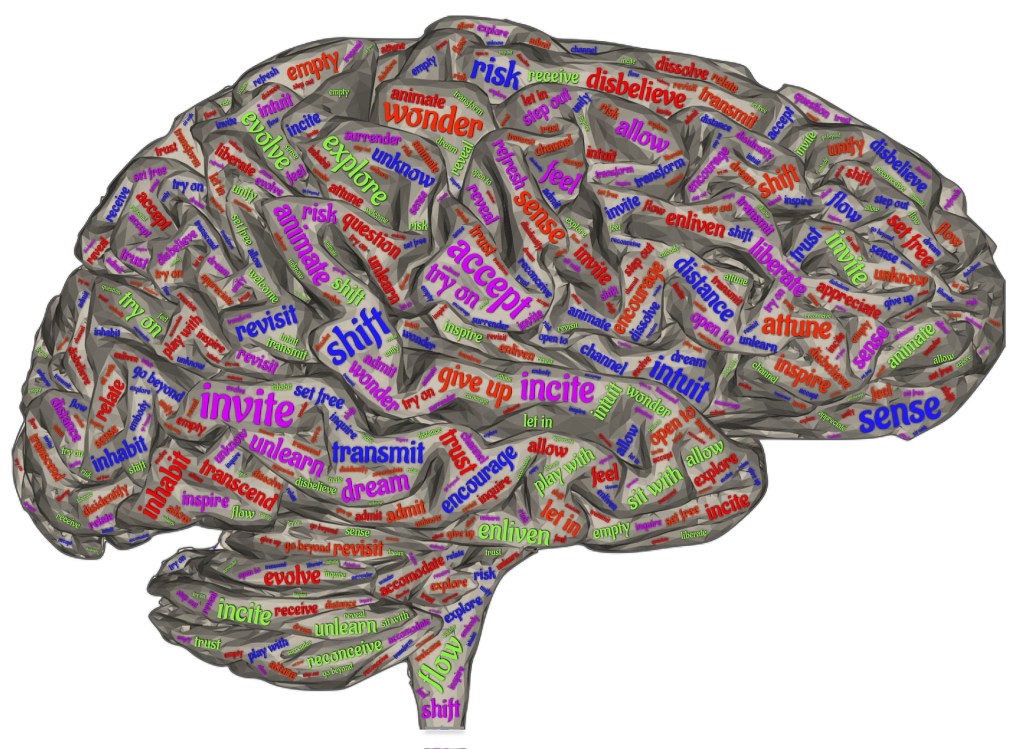
Rendered cross section of human brain with colorful words written everywhere. Some of the words are how, shift, revisit, inhabit, inspire, transcend, unlearn, transmit, distance, wonder, explore, allow, evolve, try on, enliven, and several others as well as smaller words that are difficult to read.

I just completed my graduate training requirement titled “Mental Well-Being” from getinclusive.com as required by the Dean of Students and the Student Health Center.


Reflecting on this training, I realize that everything now passes through this new learning lens. In the training there was a section on the need to unlearn. I could not help but think about all of us in the ADL Program. Aren’t we unlearning everything we previously thought about learning? Aren’t we unlearning previous expectations and measures of our learning and our students?

How is your unlearning journey going? I struggle with myself as I try to figure out the goal, objective, or expectation of a given assignment when I’m just supposed to be observing my my learning process.

I’m learning to reconnect with my inquisitive and creative mind and recognize that it takes time to break those old established learning ideas.


Change is difficult at first, but it is worth it.


Harapnuik, D. (2010, January 12). Innovation Starts with a Focus on Creativity. Harapnuik.org. Retrieved April 9, 2022, from https://www.harapnuik.org/?p=474

Harapnuik, D. (2020, December 12). Want To Change the World – Tell a Good Story. Harapnuik.org. Retrieved April 9, 2022, from https://www.harapnuik.org/?p=8441

Harapnuik, D. (2021, August 16). Assessment OF/FOR/AS Learning. Harapnuik.org. Retrieved April 8, 2022, from https://www.harapnuik.org/?page_id=8900

ADL Program, Evolution, Learning, Learning Community

Interesting observation

I put out a post at the start of this session asking for mentorship and offering mentoring. I have had a few correspondences with classmates but little ongoing collaboration outside weekly module discussions.

However, through my learning communities, I am finding a mentorship role. I really appreciate that I can share findings and tips from my own experience with the Innovation course. I don’t understand why (yet), but I can guide my group mates in finding their assertive voices. I can only assume because I struggle with writing in a passive voice. Even when I recognize my error, I can get stuck trying to reword the sentences or clarify the meaning.

I am very grateful that I have found an opportunity to glean the benefit of this program component.


Harapnuik, D. (2021, August 16). Assessment OF/FOR/AS Learning. Harapnuik.org. Retrieved April 8, 2022, from https://www.harapnuik.org/?page_id=8900

Harapnuik, D. (2021, October 9). ADL/EDLD 5305 Tips & Perspectives. https://www.Harapnuik.Org/. Retrieved April 8, 2022, from https://www.harapnuik.org/?page_id=8553

Stanford Alumni. (2014, October 9). Developing a Growth Mindset with Carol Dweck [Video]. YouTube. https://www.youtube.com/watch?v=hiiEeMN7vbQ

ADL Program, ePortfolios, Reflecting

Mine!


Having ownership of my ePortfolio allows me to become the visionary and voice for my ideas. Through the full ownership of my creation, I can experiment with what I want my digital identity to say about me. I am empowered to explore and experiment through the creation of my ePortfolio—both in form and function. I ultimately control the visual aesthetic, and the tone of the information shared because I own my ePortfolio. Because I own my ePortfolio, the knowledge and information I post is mine to take with me no matter where I work, present, or promote myself. By owning my ePortfolio, I am the “system administrator for [my] digital [life] (Campbell, 2009) and the IT department of my institution is not “the steward for [my] work (Watters, 2015). 

References

Gardner, W. G. (2009, September 4). A personal cyberinfrastructure. EDUCAUSE Review. Retrieved April 7, 2022, from https://er.educause.edu/articles/2009/9/a-personal-cyberinfrastructure  

Watters, A. (2015, July 15). The web we need to give students. Medium. Retrieved April 7, 2022, from https://medium.com/bright/the-web-we-need-to-give-students-311d97713713