
ADL Program, Growth, Growth Mindset, Growth Mindset Plan, Learning

Growing your Mindset


Dark silhouette of a human head as colorful words (attend, allow, value, listen, pause, release, hold, follow, greet, trust, be with, embrace, sense, invite, open, allow, appreciate, accept, etc.) are shaped to resemble the human brain's gyri and sulci. In large letters "Retrain your mind" is visible on the silhouette.

In the ADL Program, we have been asked to create our own growth mindset plans.

Carol Dweck offers the following statements to help us determine our Mindset in her book by the same title. Let us see which of these resonates with us while thinking about our intelligence (quoted from page 12):

  1. Your intelligence is something very basic about you that you can’t change very much.
  2. You can learn new things, but you can’t really change how intelligent you are.
  3. No matter how much intelligence you have, you can always change it quite a bit.
  4. You can always substantially change how intelligent you are.

“Questions 1 and 2 are the fixed mindset questions. Questions 3 and 4 reflect the growth mindset”

You can also answer these same questions about other personal attributes you possess (or believe you don’t possess).


Dweck asks similar questions about personality and character (quoted from page 13), lets see which of these resonates with us.

  1. You are a certain kind of person, and there is not much that can be done to really change that.
  2. No matter what kind of person you are, you can always change substantially.
  3. You can do things differently, but the important parts of who you are can’t really be changed.
  4. You can always change basic things about the kind of person you are.

“Here, questions 1 and 3 are the fixed-mindset questions and question 2 and 4 reflect the growth mindset. Which did you agree with more?”


Do you find that you have a mixed mindset? Do you view your intelligence one way but your character in another light? How about when you look at other abilities? I would love to hear your thoughts in the comments.


While reviewing Scott Jeffrey’s guide How to Establish a Growth Mindset he proposes the following four step process to changing a fixed mindset to a growth mindset:

  • Step 1: Learn to hear your fixed mindset “voice.”
  • Step 2: Recognize that you have a choice.
  • Step 3: Talk back to it with a growth mindset voice.
  • Step 4: Take the growth mindset action.

In this guide, Scott Jeffrey suggests the following questions to “activate a growth mindset” which he cites were “collected from various sections throughout the Mindset book:”

  • What can I learn from this?
  • What steps can I take to help me succeed?
  • Do I know the outcome or goal I’m after?
  • What information can I gather? And from where?
  • Where can I get constructive feedback?
  • If I had a plan to be successful at [blank], what might it look like?
  • When will I follow through on my plan?
  • Where will I follow through on my plan?
  • How will I follow through on my plan?
  • What did I learn today?
  • What mistake did I make that taught me something?
  • Is my current learning strategy working? If not, how can I change it?
  • What did I try hard at today?
  • What habits must I develop to continue the gains I’ve achieved?

As we prepare to create our growth mindset plans, the assignment asks us to consider the following questions:

  • Why is the growth mindset so important?
  • How will you incorporate the four steps?
  • How will you communicate the message of “yet” to your others?
  • What resources (content, video, media, etc.) will you use to promote the growth mindset?
  • When and how often will you promote the growth mindset?
  • How will the growth mindset influence or impact the way you approach your work in this course and the program?  

I look forward to hearing your thoughts on this topic and your answers to these questions as you being to think about your mindset and consider developing your own growth mindset plan.


Dweck, C. S. (2016). The Mindsets. In Mindset (Updated Edition, pp. 12–13). Ballantine Books.

Jeffrey, S. (2020, June 23). Change your fixed mindset into a growth mindset [complete guide]. Scott Jeffrey. Retrieved June 14, 2022, from https://scottjeffrey.com/change-your-fixed-mindset/
ADL Program, Advising, ePortfolios, Growth Mindset, Innovation Plan, Professional, Reflecting

Technology and Advising


The wildly important goal related to technology integration I am focused on is encouraging my advisees to take ownership of their degree program, the path to attainment, and to set goals for themselves. Too many of my students begin programs with little to no understanding of the requirements they need to research and prepare (such as internships). The students’ lack of knowledge and information causes hostility and confusion as they reach those later points in their programs.

My goal is to integrate technology into my advising practices to guide them through the research and information-gathering processes needed to succeed. Universal Design for Learning allows all learners to utilize the what, how, and why of learning as they engage with active learning by incorporating technology into the classroom and learning opportunities. This shifts the one size fits all approach to learning, does not meet learners where they are and doesn’t consider diversity. Technology integration allows for different types of media to be used to engage students in the learning process. We must have a purpose to stay involved and engaged in our learning journey until we obtain mastery of our given goals.

When asked whether I thought I had a fixed or growth mindset last semester, I believed I was primarily a growth mindset individual. I am optimistic about most things. However, upon learning of the false growth mindset and further evaluation this semester, I can honestly say that many of my internal dialogs and personal expectations fall more in line with a fixed mindset. I can feel quite defensive when challenged professionally, and I know that comes from personal insecurity. I am very growth mindset oriented when assisting others but often hold myself to an unrealistic expectation of perfection. The more I learn about the growth mindset, the more I aspire to replace my perfectionist thinking with a perspective that allows for trial and error along with failing toward my goals. The messages about praising progress and avoiding a false growth mindset are also beneficial because I began focusing on effort as the key to a growth mindset. Now, I know that progress is the key to praise. Perfectionist thinking has held me back from achieving important goals throughout my life. I have been on and off weight loss plans for almost all my adult life. When I am super strict and losing weight, I can fool myself into believing I have a growth mindset, but one slip-up or terrible choice can immediately trigger me into a fixed mindset. I have entirely spiraled into a weekend of junk food binging over a minor setback. Don’t even get me started on October through December (Halloween candy leads right into the holidays), and fixed mindset thinking can derail all prior progress. To avoid a false growth mindset, I will focus on praising the process and progress over simply praising effort. The suggestion of tying praise to strategies, persistence, and performance will assist me in avoiding the development of a false growth mindset. 

There have been times that I have made decisions in life to avoid failure. Now I see that failure is just a part of learning and an opportunity for my brain to grow. I would say that avoiding situations was my go-to defense mechanism back in high school and college. I struggle severely with mathematics and will still find myself avoiding situations that test my abilities. I definitely could have used a growth mindset perspective as I fought through multiple levels of remedial math, desperately trying to grasp concepts that escaped me. Even pursuing a graduate degree was something that I avoided for fear of failure. I have to constantly give myself a pep talk about growth and perseverance regarding the program and the vague nature of assignments. I know the design of projects and assignments creates an environment for deeper learning through the process of researching and finding answers. Still, in the heat of the moment, my fixed mindset thinking can flare and try to convince me of all the old terrible things I would tell myself in my internal dialog growing up. It helps to learn that I can name that inner voice and “recruit it to collaborate on your challenging goals instead of letting it undermine you with doubts and fears.” 

With almost every new thing I’m learning, I tend to turn to YouTube and internet search engines to inform myself. I also seek out podcasts and books on different topics that interest me. I have watched the Learner’s Mindset Discussions on the growth mindset topic and sought additional YouTube resources such as TEDTalks. I will follow a rabbit hole by clicking links off of links to other resources. Additionally, I have begun actively seeking additional research related to advising via google scholar.

Reference

Dweck, C. (2016, January 11). Recognizing and overcoming false growth mindset. Edutopia. Retrieved June 7, 2022, from https://www.edutopia.org/blog/recognizing-overcoming-false-growth-mindset-carol-dweck 

ADL Program, Evolution, Growth, Humor, Learning

Y is for Yet…


This read-along undoubtedly meant for grade school children, can help those of us working on developing our growth mindset.


  • A – Ability
  • B – Brain
  • C – Challenges
  • D – Determined
  • E – Effort
  • F – Feedback
  • G – Growth Spurt
  • H – Help
  • I – Imagination
  • J – Journey
  • K – Knowledge
  • L – Learn
  • M – Mindset
  • N – Notice
  • O – Optimism
  • P – Progress
  • Q – Questions
  • R – Resilient
  • S – Setting Goals
  • T – Trying
  • U – Until
  • V – Visualize
  • W – Work
  • X – eXtra
  • Y – Yet
  • Z – Zany

Children’s Read Alouds by Brittany. (2021, September 27). Y IS FOR YET, A Growth Mindset Alphabet – Read Aloud [Video]. YouTube. https://www.youtube.com/watch?v=XekYdto3JNA

ADL Program, Evolution, Goals, Growth, Growth Mindset, Learner's Mindset, Personal, Reflecting

Power of Growth Mindset


I am very excited to begin the third course of the ADL Program on the Growth mindset and look forward to the personal benefits of this pursuit.

I faced many learning challenges in early elementary, and as a result, I developed a fixed mindset about my intelligence and abilities. As I read chapters 1-4 of Carol Dweck’s Mindset book I could not help but wish that I was familiar with this concept back in my own grade school experience. The internal voice in my head matched all of the fixed mindset examples provided by Carol Dweck in her Mindset book and youtube video on The Power of Yet.

If only someone had instilled the power of yet in my learning, I could have saved myself years of low self-esteem and negative self-talk. Even as I did well in pursuing my undergraduate degree, I felt like a fraud who was just one step away from being the “dumb kid” again. I so readily accepted that identity as a result of early labels.

I wasted the first part of my life feeling slow, dumb, and below average. I surely was not going to be the first one raising my hand or offering to go to the board to complete a problem with excitement and enthusiasm, as described by Dr. Dweck when describing children equipped with a growth mindset.

Both Carol Dweck and Eduardo Briceno share knowledge and facts about our abilities to improve through repetition and practice. Grit and determination are the messages we need to share with our students and children and embrace that hard work obtains results.

I have started working process-related praise into how I tell my 19-year-old daughter that I am proud of her as she moves through early adulthood. I can see the fixed mindset in her and hope that as I understand more, I will be able to equip her with a growth mindset at her age instead of at mine. As Eduardo Briceno described praise through the mindset lens, I wished I learned what I’m learning now when she was just a little kid.

Taking the leap of faith to begin a graduate program was filled with self-doubt and an internal voice that worried I would embarrass myself. Hence my duplicitous excitement about the potentially painful process that may come from continuing to reshape my mindset.

I admit that I may have come to this program with a fixed mindset. I am done with the people-pleasing and approval-seeking ways of the past and instead move forward reprogramming myself to a growth mindset. The first two courses have already opened my mind to a different perspective on learning. Now I am trying to fully embrace a growth mindset so that I can work to instill that in others.

ADL Program, ePortfolios, Learning, Reflecting

What we say vs. what is heard


As I reflect on the final Creating and Sharing Your ePortfolio assignment of the second course of the ADL program, I have re-read and reviewed my notes from our final class discussion and the submission page within the Learning Management System (LMS) and what I’m understanding is a compilation post (or page) leading to everything outlined is the expectation. “Quickly summarize everything you’ve done and what has been accomplished through your ePortfolio experience” is what I find in my class notes.

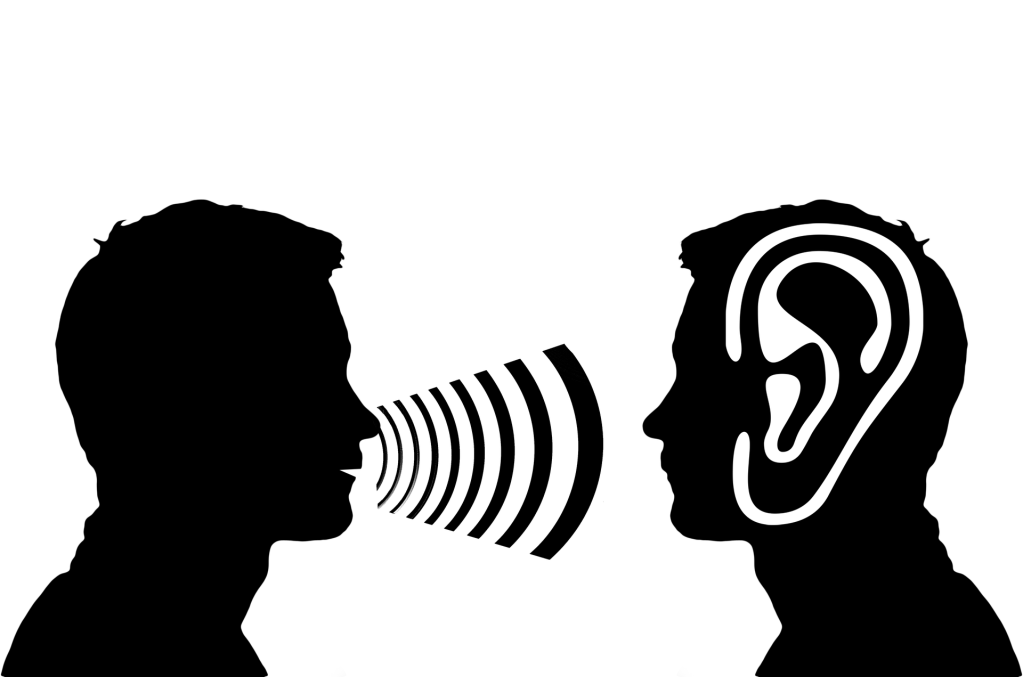
Silhouettes of two human profiles face one another. One has curved shapes from the mouth area that get wider as they near the other head. The other has an oversized ear outlined.

I am curious what others heard and understood because I know that as humans we have a tendency to interpret words and meanings differently based on our experiences. Now that I’m looking at learning and influence I think this would help with my concerns about email communication.

How do I get to the point and still relay sincerity? I guess this is where digital content would be beneficial. I could answer questions and give tips where non-verbal communication would be evidenced. Hmm, food for thought.

ADL Program, Contributions, Growth, Learning, Learning Community, Reflecting

Contributions, 5303


ePortfolio Course

  • Spring 2022
  • Course Number: EDLD 5303
  • Course Title: Applying Digital Technology Portfolio

On a background of blue sky with fluffy white clouds are green street signs. One has arrows pointing in opposite directions and the other reads "take and give."

Contributions to learning and learning community.

I am giving myself a score of 93 out of 100


Crediting Group Members: Bethany Eisele, Lera Longbottom, and Rachael Lancon


Key and Supporting Contributions

Reflecting on this ePortfolio course my second of the ADL program, I can say with confidence that I worked throughout the semester to be sure I read all of the assigned materials, watched all of the accompanying videos, and followed the subsequent links. I would sometimes ask about a link deep down the links trail to find that not everyone link dived as deeply as I. It took a while to create a systematic method to go through the material to avoid getting lost. I am doing my best to adapt the skills, knowledge, and information I learn into my ePortfolio development and personal learning. I revised all assignments and reflected on being deliberate with the choice of content on my ePortfolio by taking complete ownership of my authentic experience, which helped me develop my voice.

I believe I helped build our core group by reaching out via course mail after our first class meeting. A few classmates contributed to the class conversation and just had a generally positive perspective that made me want to collaborate with them. After a few days of coordination, we formed our core learning community. Having worked in a learning community in the first course, I quickly jumped on creating a GroupMe channel for our group and set up a google drive so that we could share documents and collaborate. I made a “getting to know one another” ice breaker type document within the google drive to allow group members to share and start building relationships. We had cute short bios, including photos that allowed us to connect on a personal level. We gave information about ourselves, our ePortfolio platform, and our innovation strategy. Our core group was great about contributing to weekly group discussions and provided commentary on each other’s thoughts. As we discussed weekly content, we explored further our thoughts, our learning, and our ePortfolio development, leading to additional ideas, blog posts, and blackboard discussion posts. We each worked to give one another timely feedback on discussions and our ePortfolios. I created weekly to-do list to help our learning community keep track of course content, readings, discussion posts, group discussions, and blog suggestions from the weekly modules.

Sharing two classes with my learning cohort allowed us to get to know one another through class discussions. The last two weeks of discussion posts were the most collaborative our cohort has been. It was amazing to see the class come together to help one another with ePortfolio feedforward suggestions. The part that I think I could do better would have been to offer group collaboration sessions regularly for the whole class. I did post in the student lounge that I was interested in mentorship and mentoring opportunities. I connected with several classmates via course mail in the first few weeks of the course, but none grew into the mentoring/mentorship type collaboration I envisioned.


Learning Community Key and Supporting Contributions

I was able to take leadership responsibility in my group in various ways. First, by creating communication avenues and a place to collaborate, as previously described. Then, as the most experienced member of our group (which is quite humorous considering I had only completed one course at the time), I provided feedback on my learning communities’ innovation coursework.

I set up weekly zoom meetings for Tuesdays at 7 pm immediately following the class meeting. I contributed to all learning activities and opportunities and actively participated in the meetings and discussions. Through our group discussions, I was able to dive more deeply into the content of the weekly modules and reflect upon my learning process.

I attended a literature review information session hosted by the Mary and John Gray Library. I informed my learning community about it since I knew they were working on that component in their innovation course. I shared my thoughts, feelings, and struggles with my learning community. Their support through having a peer group discuss content, vent about frustrations, celebrate victories, and with whom to share the learning experience with has been valuable. I only wish for more; more collaboration, more discussions, and more interaction.

I still struggled to keep up with discussion posts once I had added mine to the LMS. However, I eventually figured out how to subscribe to the discussion posts and was able to respond in real-time to my classmates’ posts. I even created a discussion post in the student lounge and a blog post, hoping to help current and future classmates who struggle with this aspect. Had I figured this out earlier in the semester I may have experienced more real-time dialog about the course material.


ADL Program, Growth, Learning, Personal, Reflecting

Getting personal


I find myself re-reading the COVA book and reflecting on my ePortfolio experience and my first semester in the ADL program. Before starting the ADL Program, Dr. Harapnuik’s digital story, Not Suited for School but Suited for Learning, resonated with me and my personal learning experience.


I was in grade school in the 80s in a tiny town. I remember going through diagnostic testing at school, but I couldn’t begin to tell you what any of my diagnoses would have been. I believe my small-town American school was more concerned with hiding my struggles than helping me with them. I definitely adopted the label and the identity of being learning disabled.

I didn’t read my first complete sentence aloud in school until the third grade. In hindsight, I feel Ms. Leffler was an innovative teacher as she was the only one to finally get through to me. I remember how excited and proud she was of me/for me that she took me across the hall to read to my 2nd-grade teacher (undoubtedly after a whole school year of trying with me). Throughout every public school level, I spent many evenings sitting at the kitchen table, crying my eyes out in frustration, just simply not understanding a given subject or assignment. I truly felt I was also not suited for school, and I felt unsuited for learning.

It wasn’t until I transitioned from community college to university that I realized that I was taking classes and accumulating knowledge for my own benefit. I could not only select the days and times of my courses, the electives I chose, and research topics related to my personal interests. I picked a major that I was interested in learning more about and finally freed myself of some of the labels I let define me through high school and community college. As I watched John Hattie’s Visible Learning, I realized what an impact those labels had on my learning (Bell, 2011, 3:38).

If only someone had instilled a growth mindset through the power of yet, as described by Carol Dweck (Stanford, 2014, 4:34). If only I had the opportunity to learn in this constructivist way in my early education, I would approach challenges with excitement. Just as Carol Dweck explained, “learning a growth mindset [transforms] the meaning of effort and difficulty. [What] used to mean they were dumb, and now it means they had a chance to get smarter” (Stanford, 2014, 7:48).

I am very grateful to have this opportunity to get smarter and reevaluate my learning.


Mike Bell. (2011, December 1). John Hattie, Visible Learning. Pt 2: effective methods. [Video]. YouTube. https://www.youtube.com/watch?v=3pD1DFTNQf4

Harapnuik, D., Thibodeaux, T., & Cummings, C. (2018). Choice, ownership, and voice through authentic learning. Creative Common License.

Stanford Alumni. (2014, October 9). Developing a Growth Mindset with Carol Dweck [Video]. YouTube. https://www.youtube.com/watch?v=hiiEeMN7vbQ

ADL Program, Goals

Big Hairy, what?

Chapter 4 Quote “When you add the notion of Collin’s (1994) Big Hairy Audacious Goal (BHAG) to Finks table you provide your learner their destination in this stage of their learning journey. Fink’s ideas also align with the mapping analogy because he encourages us to think in terms of who the learner will be or where the learner will be at the end of the course. This type of thinking is analogous to the final destination in our map/travel discussion above but the BHAG perspective adds the affective factors that address why the learner will want to go there. Similarly, the learning outcomes are the stages or landmarks along the way.”

Good point for blog/reflection

ADL Program, Goals, Growth, Learner's Mindset

Accessibility


Accessibility is something that is very important to me. As I develop my ePortfolio I am really trying to learn and incorporate as many features and functions as possible to ensure that all my students and visitors are able to view my content. I will admit that I have a lot of work to do on this aspect of my online presence after feedback I received on my final project “An Invitation to Innovate Advising.”

Little did I know that citations for images looks very similar accessible descriptions. I’ve been lazily avoiding adding my descriptors for fear that I would also need to add accompanying image citations. However, as I take greater ownership of this

To begin familiarizing myself with how to best add descriptive captions to my images, I began doing some additional research into best practices.

ADL Program, Contributions, ePortfolios, Evolution, Growth, Learning, Learning Community, Personal, Reflecting

Hugs


Two women wearing black shirts embrace in a hug. Photo by Ketut Subiyanto on Pexels.com

I always do my best to shine a little light, encouragement, and love with those willing to connect. Tonight, I stopped at the local drug store. The employee was having a rough night, and I asked how much longer her shift was (10:30 pm with 7 am return).

My husband picked up chocolate peanut butter ice cream, and she said she would come over to cry and help me eat it. She said something about being a hug person, and I lamented how much I also miss hugs.

As I was preparing to leave, I asked, “can I give you a hug?” She accepted and met me at the end of the counter for a genuine hug.


My favorite days are the days I get to hug strangers. I’ve missed it so much.


As I said goodbye to my classmates Tuesday night (our last class meeting), I had to say out loud that I would miss seeing many of them next semester (accelerated post coming soon). Some will be graduating by December, and our classes no longer overlap. Tonight, I reflected on our one-two sessions together, our growth and vulnerabilities.

Then I realized that some of them will walk at the commencement ceremonies. I volunteer at those events and hug strangers at those events. Surely, I will get to meet some classmates at graduation! I started to imagine the next two years! Three ceremonies a year, potentially meeting the people with whom I will undoubtedly grow so much.

  • Who will we be after completing another class? What about two classes from now? Four?
  • Can you imagine looking at our final projects, reflections, innovation plans, and these digital babies (our ePortfolios)?
  • How much will they/we change through the evolution of this program?

  • How are you feeling?
  • Have you taken a good deep breath lately?
  • Have you hugged a stranger? (Okay, I know that the last one’s not for everyone)