In my experience, higher education tends to be reactive by nature and less proactive. While we do set future goals, the primary focus is still on lag measures. My institution is no exception to this typical human condition. It can feel like we run from one crisis to the next as staff. My innovation proposal is much more proactive.
The invitation to innovate advising flips the script and instead seeks to empower and give ownership to students from their earliest interactions with advisors and the college programs.
Crucial Conversations and The Influencer Model are two key strategies that will continue to guide this work: supporting a culture change and a new approach to learning through advising.
Reflecting on the innovation plan update while collaborating with my classmates, I feel like the last two years have been about me preparing, researching, and developing the skills I need to help set the stage for my innovation. Yet, now it was time to start walking the talk.
talk the talk … walk the walk
idiom
You see, throughout the ADL Program, we have been learning and planning as we explore and develop our innovation project. I have talked A LOT about my innovation and the related components. But now, instead of just talking the talk, it was time for me to walk the talk! A slight modification of the idiom.
What does walking the talk look like in my life?
It means vulnerability. It is being raw and authentic. To change the world, it is time to be vulnerable. Vulnerability means sharing my innovation ideas with my team. Instead of the select few fellow advisors, I secretly whisper little tidbits of my innovation plans to see if they will be receptive to the idea. I have a few former colleagues and one current one who have seen pieces of my innovation plan. I do not know if they embraced a learner mindset and explored my resources, but this next step in being authentic and walking the team means sharing it boldly with others.
New role: It has been harder to share with others in my new leadership role.
As an advisor, I was just sharing an easier way to do things instead of potentially being “the know-it-all boss” who comes in to tell others how to do things. I want advisors to know that these innovation ideas are completely personally curated by them. Each advisor has choice, ownership, and voice in what they create to share with their learners. I want them to create a resource that supports their objectives and fulfills their purpose. I want to ask each one, “What do you want to make it?” I sincerely invite you to take my innovation idea and run with it. Let’s improve it. My innovation idea is all about collaborating, sharing, and giving one another feed-forward to continue improving our ideas and how we can reach our students.
Crucial Conversations are essential.
Nothing can work until people learn to talk to one another. While acknowledging that change is hard, isn’t life just a long series of trial-and-error opportunities? How do we know how best to fulfill our roles if we don’t evolve and continue to try new things? In order to do so, I have to help create a culture of safety that facilitates relationships to allow communication and innovation to flow among team members. This investment provides the foundation for fruitful collaboration as the team grows to trust one another. I must be observant and aware when the team is engaged in dialogue and when it is not. Committing to actively engage when dialogue stops cultivates accountability and changes the team dynamic so we can explore difficult ideas together. As we move forward together, we will influence each other to develop the most effective advising resource to serve a variety of learners.
I have created a personally curated resource of advising information.
Reflecting on how far I have progressed toward implementing my innovation, I feel very proud of all the work I have completed. The advising.blog, ePortfolio has become such a useful part of both my personal learning and my professional development.
I have created a professional learning plan.
My professional learning plan is for advisors to create a professional portfolio. Giving advisors choice, ownership, and voice (COVA) in their creative process, I aim to show them what a valuable opportunity they have to create a significant learning environment (CSLE) for their learners. Building collaboration into my professional learning strategy, I seek to fortify relationships among the advising teams. Piloting professional learning in phases allows for input, modification, and improvements. Teambuilding through professional learning is just another example of how I am being intentional about facilitating a caring culture. Sharing the why, what, and how helps to guide the advising innovation. This professional learning opportunity seeks to connect advisors with their passion and valuable purpose.
I have assessed my innovation through action research.
As I evaluated my innovation plan and its purpose, the theme of learner agency was common. Ultimately, my innovation seeks to flip the advising interaction, so my action research strategy evaluates in what ways a flipped advising module on degree planning facilitates student agency in making curricular choices during the first year of college? The four-stage action research process invites the advising team to critically evaluate their practice through data analysis.
The instructional design online learning course guided me through creating my innovation within a learning management system (LMS). In my efforts to create a significant learning environment, I was able to apply the skills I learned through the CSLE course. The process of creating the Advising 101 course was also my first big reveal of the innovation idea to other advisors within my advising unit. By asking advisors to participate in the usability testing of this early prototype of an advising course design. Sharing with advisors at my organization provided me with valuable insights and information on the overall innovation plan.
I have prepared to share my innovation.
I plan to share my innovation ideas through an open invitation to advisors everywhere through publication within my professional organizations and learning networks. The multiple literature reviews and the publication process revealed a need for further discussion, collaboration, and exploration of how technology (digital learning) can be leveraged to humanize relationships.
I have pivoted the one advisor against the world (early innovation idea) toward much larger-scale innovation strategies. Many of which I never dreamed possible, yet here I am proposing them. As stated in my final reflections on creating significant learning environments,
“I now understand the bigger picture project and goal. In addition to making sure learners have a positive advising experience, we can help create a strong learning foundation that learners carry with them into their academic subjects and beyond to their lives and futures. The task that was already humbling enough is now even more so. We owe it to our learners to put in the hard work it takes to create significant learning environments”
Reflecting on my Learning Manifesto, I can see that my heart is aligned with my purpose. These early thoughts and plans reflect every step I’ve taken toward this innovation. Thanks to the ADL Program, I am equipped with a growth mindset plan, and I continually revise and evolve that excitement about learning new things toward my learners’ mindset. Having researched my learning philosophy really helped me in this personal evolution. As I evaluated what I believed about learning, I released myself from limiting beliefs and a fixed mindset.
My awesome learning community met on Monday and Tuesday night. Monday night was our class call, but we were the only ones who remembered. Tuesday night was a meeting we scheduled over the weekend as an accountability and support for each other. One of my awesome group asked, “How are you feeling about your innovation update, Dawn?” and here’s what I had to say (speaking from the heart, in the moment)
I’m not in the same role as my innovation. I can follow my innovation until November, but then I changed roles, and my priority became less about pushing my innovation forward and more about creating a team.
Creating a culture in which I could then propose my innovation idea. I could not walk into that workplace and say, “Hey, nice to meet you. I am here to solve all your problems, and we will do it my way.” Talk about alienating people right out of the gate. I have instead worked to build relationships. It really has been a year of just stepping back and observing. I constantly think about Crucial Conversations, and undoubtedly that guides me in my interactions with team members. I am constantly thinking about the Influencer strategies and those vital behaviors. I have listened to the 4DX something like three times because I really believe in the idea of it, but it is very overwhelming to say I’m going to lead a staff meeting by saying “okay, we’re all going to come up with a wildly important goal. Then we are going to identify our lead measures. Together we can create a compelling scoreboard and we will have weekly WIG meetings and we’re going to do this thing.
I guess I have been setting the stage for future innovation.
I feel like I am in a much better position now, having done that work. By helping to create a positive workplace culture, we now have teams that are prepared to move forward together. Armed with these strategies, my innovation idea can continue to grow and evolve as additional brainpower and ideas are put toward the challenges our students face.
My classmate acknowledged that due to my change in roles, this delay in my innovation plans made perfect sense. I really did need to take this time to get to know my situation. Without taking this last year to step back I wouldn’t be able to identify those key players. I had to invest the time to assess what has been happening. I did not want to step into my role making changes just for change sake. I really wanted to know what would really make these advisors’ jobs more enjoyable, their work more accurate, and their workload more manageable, while equipping students with the self-efficacy they need to develop to successfully navigate college life. I want to be that catalyst for change! I want to help learners get the best possible experience out of their time at our institution. I want to help people achieve their dreams and be self-advocates throughout their lives.
Let me just say that I definitely need the Growth Mindset course before attempting the Literature Review. That first-semester writing assignment put me right back at my childhood kitchen table. My mom was visiting for the weekend.
So, my process was to print out articles and then look for themes. Here is an image of my initial literature review research process. I still struggle with research organization, but needless to say, this was the last time I attempted to print and physically organize it. I am a visual person, so the sorting process is helpful, but I learned over time and with experience that not every article on your topics is worth including.
I began my review outline and early writings, and it was a complete regression into our old roles. I was the frustrated and confused learner, and she was the “It is so obvious; how do I explain it to you any differently” knowledgeable expert?
It’s a Lit Review…
– Mom
I really thought my ship was going to sink before I even got through the first course of the program. This had me in full-out tears and beginning to question my professional embarrassment when I had to drop the first course for one of the programs I was advising. You see, in hindsight, I see now that I was still looking to my mom to explain it to me in a way that made the lightbulb go off. I still didn’t know how to be an auto-diadic learner. I was frustrated because she couldn’t make me understand. It was rough on both of us, having that flashback to my childhood.
It was not until I paused and thought about what we were learning throughout our discussion posts, video resources, and readings. I stopped looking to another person to help me understand and instead began looking up the meaning and purpose of a literature review. I watched YouTube videos on how to conduct and organize research. At one point, I attempted to explain to my mom that I was going about my approach all wrong. I now felt like I had a better understanding of what I needed to do, but she thought I was just being defeatist and trying to start over. I finally had to trust that I knew what I needed to do. I still struggled with the task and do not feel confident in my writing abilities, but completing that first literature review is an accomplishment that is mine alone.
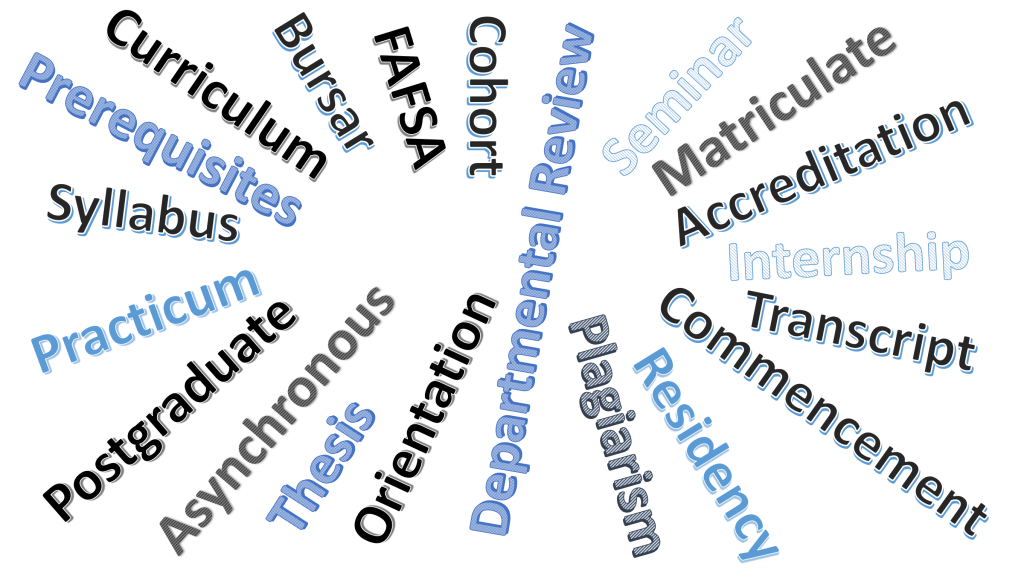
Through the content of the coursework and through weekly class meetings with our learning facilitator, I recognized that simply translating higher-ed lingo was not going to be significant enough to sustain an innovation project throughout the ADL Program. I needed to think about the bigger picture and a more substantial impact.
Formulating an innovation proposal letter allowed me to refine and focus on exactly what I felt I could develop to support students, my fellow advisors, and our organization. After feedback from my learning community and course facilitator, I modified the innovation idea to the personally curated resources of an advisor’s knowledge. Proposed their innovation to my supervisor and was permitted to begin developing my innovation idea.
As I began to evaluate what (whispers: disruptive innovation) I could propose that would provide a solution within my organization, I immediately thought of something my husband and I call “5K Syndrome.”
Let me see if I can explain…
In 2010, after a long battle with high blood pressure, I decided to see if changing my lifestyle would help where medication had not been able to. In the process, I decided to complete a Couch to 5K training plan. I completed the weekly outlined progression of building up mileage and endurance completely indoors on my treadmill. I got up each morning before work or committed to running before bed. My physician suggested that I sign up for a 5K at the end of the training schedule to keep myself motivated to stay on track. My family and I were traveling to Dalhart, TX, for a family reunion (held annually with the XIT Reunion). On 08/07/2010, I participated in my first 5K “Chase a Coyote XIT Trail Run in Dalhart, TX,”
I remember returning to my physician for my next check-up, finally not dreading the lecture about needing to lose weight, exercise more, and manage stress. I proudly told her of my accomplishment and beamed, awaiting my pat on the back. Do you know what she did? She said, “when is your next one?” My jaw hit the floor! What was this lady talking about! I set a goal. I accomplished my goal. I did it. Next one? Geeze!
I went online and looked for the next available 5K, this time in my local community. My second 5K was at a 911 Remembrance Run on 09/11/2010, benefiting our city police department. Oh cool! I can support good causes with my entry fees? I’m in! Let’s do this! My husband and I arrived at the police station to several hustling and bustling runners. We wandered about following the crowds, but there was no information on where to go or what to do. It was highly frustrating, and finally, some lovely runner saw our lost looks of panic and showed us where to go and how to check-in.
Since that day, we consistently see this and refer to it in our organization. 5K Syndrome.
Higher education experiences a lot of 5K syndrome. There are a million policies to follow. If a student says the wrong word, they can be sent all over the institution only to be told they must begin again with the correct area/issue. Our terminology is poorly understood, and this seemed like the ideal place to focus my innovation efforts.
In November 2022, I switched roles from being the advisor to multiple online graduate Education programs to being the Associate Director for the centralized advising center that serves incoming students to the university. Our primary focus is on freshman and sophomore students as we assist with onboarding them to the institution and their major/department. We determine each student’s college readiness course placement and math pathway. We facilitate support service referrals and explain procedures. Our team addresses probation and suspension issues. We facilitate referrals to career and major exploration services. The leading organizational change course could not have come at a more perfect time in my professional and program journey.
In my new role, I have only created one additional program section on my ePortfolio for one of the more challenging undergraduate majors. I still intend to expand the information and resources to include other majors and programs and more clearly designate my general information between graduate and undergraduate information to further expand my potential audience.
However, I have been working on our office culture and employee morale instead of expanding the innovation proposal. While I did not immediately make changes, I believe taking time to observe the day-to-day operation was an essential starting point. I am grateful that the action research I created for my innovation idea evaluates the highest impact areas we can target in our initial after a future revision of my implementation efforts.
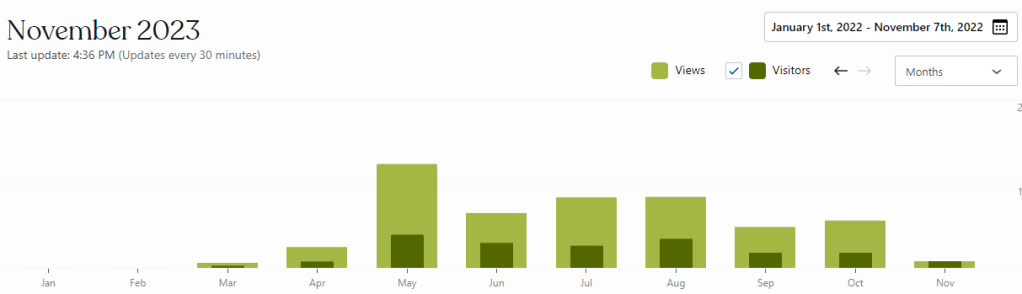
I began a test pilot of my innovation idea in my advising role (a personally curated resource of advising tips and knowledge). Advising.Blog was born to provide unlimited 24/7 access to an advisor’s information. From March 2022 through October 2022, I actively utilized my portfolio as an advising resource. I directed students to supplemental support that helped them onboard to the institution and their online graduate program. Seeing that my innovation idea was being utilized in the early pilot implementation phase was exciting.






 The Advisor That Cares