
ADL Program, Advising, Collective, Contributions, ePortfolios, Goals, Growth, Innovation Plan, Learner's Mindset, Learning, Learning Community, Personal, Professional, Reflecting

Connecting the Dots


I am working toward the learner’s mindset. I do everything possible to learn and absorb as many sources of information as possible on each topic with which we are presented. I seek outside resources, follow links from links, and reference farm for additional sources to provide more context for greater understanding. However, a part of this is my personality type. I am still learning and seeking ways to instill this mindset in my learners and learning environment. I hope to take my learners to the authentic space we experience here in the ADL Program. I want to create that inquisitive place where they actively seek to understand and make sense of their learning journey/experience. 

While I consider myself an independent learner, I believe my learners are dependent. Unfortunately, I think that I am to blame for creating some of this dependency. I am highly responsive and helpful as a person. Therefore, my learners can sometimes become lazy in seeking information because they know I will respond and provide information. I believe a portion of this comes from a customer service mentality of “keeping the students happy.” Still, it may also stem from working with incoming first-year students when I initially became an advisor. I have worked to provide guidance and direction more than just giving the answer since I began in the ADL Program, knowing that if I equip them with the knowledge of how to find information, there is a chance of them becoming independent learners. I can say from my experience that struggling through the process is how we learn the most. Upon reflection, in another sense of the word, I can say that I was a very independent learner when I began the program. Still, the learning community component has taught me how helpful the collective can be in thinking about our thinking. I struggle with finding the level of collaboration and communication that would make my experience even more meaningful. I am a bit of an outsider since I don’t work in the K-12 system, but I feel like this is an aspect that could be significantly improved by collaborating with others. I struggle with how to incorporate peer learning opportunities due to FERPA regulations. I love the idea of the collective and our learning communities. Unfortunately, I cannot disclose students’ names, majors, etc., needed to form collaborative peer groups. Still, I have been brainstorming other ways to make this happen through my ePortfolio. If the student opts into an organization or group on their own accord, then I wouldn’t be disclosing any personal information or if there were a means of creating a message board or some system without student names. I also have concerns that students might share personal/private information like student ID numbers, grades, GPAs, and negative comments about professors or the institution. I guess that is where moderation would be a factor. I realize students are entitled to all of those interactions. Still, as an institution representative, I’m not sure I can facilitate collaboration if those issues arise. I am still struggling to determine how students could collaborate and support one another.

[Learners Mindset]. (2021, January 18). Collecting dots vs connecting dots [Video]. YouTube. Retrieved October 8, 2022, from https://www.youtube.com/watch?v=_7o3Jh1KZLw

A factor I am trying to pay close attention to is the one about expert biases. In higher education, there is a whole culture that utilizes terms and jargon that everyone knows, but that is unfair to everyone who isn’t in the know. Even as I try to translate policy and procedure into laypeople’s terms, many internal phrases remain out of touch with our learners. I can completely understand how those “blind spots” or biases would be something to be very aware of and that I will need feedback from students/users throughout the development process. 

Additionally, I have been considering how to align outcomes, activities, and assessments, but I am still trying to wrap my head around my learning outcomes. What do I teach? How do I make that engaging and active? So much of what I have to share with students is currently information dumping. “Here is a massive amount of information; read it thoroughly, and let me know if you have any questions,” but many do not read the information provided. I have spent a year working with graduate students, being stunned by the lack of ownership some of my students accept in their learning journey. I have students who miss deadlines and delay their degree programs. I am the outlet for frustration and confusion about the program requirements and departmental expectations, which are entirely out of my control or my area. While I inform my students of their program’s requirements, I am not the content provider or developer of the necessary resources and information. I translate where and what the students need to know, but that doesn’t always lend itself to a clear set of learning outcomes. Speaking with Dr. Grogan has helped me conceptualize how I could create benchmarks and modules for different stages of the student’s journey. I don’t know if this means creating multiple courses and having key points where those courses are deployed or if creating one giant course that students progress through as needed where the modules can be selected as needed along the program path. The benefit of the second option is some learners may want to familiarize themselves with the whole process at the start. In contrast, the benefit of the first option is that students might not feel so overwhelmed by the amount of information with which the students need to become familiar. 

My goal is to embrace the opportunity to create a significant learning environment, so my innovation can be successful and hopefully improve the student experience, alleviate stress, and make room for other, more meaningful opportunities. By keeping the learners focused on the overall goal of the course(s), I can help them maintain clarity for why they will be participating in the learning activities outlined. Through these BHAG’s, learners can draw connections to experiences and information they already know and look ahead to what they will gain throughout our course or program. As I work through the worksheet and documents on creating significant learning environments, I am learning how important it is to focus on learning outcomes first and foremost. By working backward with outcomes in mind, I am learning that I can plan learning objectives and activities that align with those learning goals/outcomes.

Just in the few classes I have completed here in the ADL program, I believe there has been plenty of proof that the collect the dots method does not lead to long-term learning or understanding. Therefore, the only reasonable explanation is data points/quantifiable proof of “learning,” which we all now know is not what those test results show. Surveillance is, in my opinion, exactly why collecting dots is still the focus. Education has to have a quantifiable method to show parents, taxpayers, state agencies, and the federal department of education that they are meeting learning objectives. We have become so focused on the output that we have lost sight of the point or learning outcomes.
A New Culture of Learning, ADL Program, Advising, Collective, Growth, Innovation Plan, Learner's Mindset, Learning, Learning Community, Personal, Professional, Reflecting

Humanism and Advising


I’m feeling very wishy-washy. I keep thinking I have found a learning theory, then I learn more about it and change my mind again. Most recently, I thought there might be a mash-up between Humanism and Constructivism as my learning philosophy. I have read so much literature over the last several weeks. I have flip-flopped and flipped again. I find value in so many of the learning theories.

Right now, I am mentally agreeing with enthusiasm over the recent publications I’ve found regarding humanistic advising. Humanistic advising aligns with every professional purpose and passion I can currently identify. I can see my passion and interest in the humanistic advising philosophy in the professional development sessions I select and attend. I know that being caring and compassionate is 110% why I do what I do, why I stay when it’s tough, and why I try to go above and beyond everything single opportunity.

Andy Johnson [Dr. Andy Johnson]. (2015, May 22). Humanistic Learning Theory: Overview [Video]. YouTube. https://www.youtube.com/watch?v=uMGRWVXyrqg

The biggest challenge has been trying to wrap my mind around ways to bring this hands-on learning approach into my role and relationships with students. Throughout my New Culture of Advising consideration, I desperately wanted to find ways to introduce the power of the collective into my advising relationships. Federal regulations still limit me from connecting students with other students. Finding multiple current sources of humanism and advising gives me hope that there is a learning theory that will align with my goals and passions.

Nonetheless, as seen in my last post, I desperately want to incorporate the constructivist experience from which I currently benefit. The process of identifying a learning philosophy has indeed been a labor of love, and I ultimately see the reasoning in this painful pursuit. I cannot help but wonder if others read a brief description of the learning theories and picked from a paragraph or two. I have been digging and discovering sources and context in desperation for the one that felt right.

Andy Johnson [Dr. Andy Johnson]. (2015, November 11). CONSTRUCTIVISM: PART 1. YouTube. https://www.youtube.com/watch?v=nuS6E2mXqNE&list=PLtvxUlJdr92B__8zIcLxVDEpkLuOaorP2&index=3
A New Culture of Learning, ADL Program, Advising, Collective, Contributions, Evolution, Goals, Growth, Growth Mindset, Learner's Mindset, Learning, Learning Community, Personal, Professional, Reflecting

What am I?


In my last post, I explained that looking back on my undergraduate psychology and sociology degree program. I recognized that I connected most with those courses that involved me in the learning process and required my reflection and personal interpretation/experience with the materials. I feel like my own learning preference is for one of authentic ownership, as we experience in the ADL Program

Reflecting on my beliefs about my role in the learning of others makes me wonder which learning theory aligns with my professional beliefs as an advisor. Examining my years as an advisor, I can honestly say that I only know what I have been exposed to through my experience and professional organizations.

My professional experience

When I was hired into higher education, I worked at a centralized first two-year advising center that believed in intrusive advising. Our role was to identify those most at risk and provide support and guidance as they transitioned into college students. I jumped into this role by organizing tours for advisors to visit support services offered across campus. I wanted to know the individuals I could contact when a student needed support. I wanted a first-person understanding of the facility, delivery, and offerings to describe them to my students in ways that would alleviate any trepidation about being labeled, being afraid, and preventing them from being comfortable trying something new or uncomfortable. There were occasions when I would walk with my students to these service locations for a personalized handoff. We had frequent communication with our assigned advisees and much smaller cohort sizes. I frequently participated with the college department I represented at the advising center again to keep my students informed about student organizations and other opportunities to bond with their community of interest.

Despite this genuine passion for student success, I have never been able to connect with advising theories about student development. I participate in my professional organization by attending conferences, sessions, and webinars about topics that interest me or seem suitable to my situation or students. The theories and resources always appeared to me as if they were written for faculty advisors and people who have long depth conversations and relationships with students and their curriculum. I typically interact with a student three times a year, around registration time, if they don’t have questions, need support, or show signs of being at risk academically. My literature review caused a crisis of self. As I read research about advising, I could not help but wonder if I have been a good advisor without employing any formal theory over the years.

Through the active learning process that is the ADL, we are presented with resources, information, references, and perspectives. Still, we are left to seek and search for many more. Thus far, my three program instructors have all identified as constructivist. I can’t honestly say I had ever learned of these theories. I silently panicked that this is something taught in Pedagogy since many in my program cohort are teachers at various levels and institutions.

This is a challenging experience for many, including myself. We are left thinking, “Wait, aren’t you going to teach me?” (Lecture) and “How am I supposed to create that?” (Checklist). Nonetheless, I attempted to embrace the challenge of learning by doing within an unlimited boundary of an assignment or course.

We are encouraged to create our own learning communities, and now I better recognize them as collectives. This constructivist approach of making an environment where learners can learn leaves many still trying to fit into the regurgitation education model. How many discussion comments? How many blog posts? Do we have to prove that we held learning community meetings? As learners, we have been duped into believing that learning is about the assessment of the professor or the program. I get it. It is in the sense that we are all here with hopes of degree attainment, but, in the process, we miss out on the genuinely hands-on, authentic, make it yours experience we have here.

I recently searched for Simon Sinek and found he offers a 4 session course on finding your why. I thought, “hot diggity, I can get ahead of the curve!” by preparing for the class that utilizes his book Start with Why. Our experience here, in just that single component/regard, is valued at $4,900ish for four sessions. We get around eight sessions in our eight-week coursework. I want to absorb every morsel of knowledge, experience, and content our instructors want to throw at us. I want to learn about their learning experience, success tips, and tricks. I want to grow, learn, and experience what this program is presenting. Knowing and embracing that I can really make a difference. That is what this whole advising thing has always been about for me. That is what makes me a good advisor. I care, I want to make a difference, and if I don’t know the answer, I will do my best to find it or connect you with someone who can.

Don’t get me wrong, I have no life outside of work and school, but the journey is what you make it, right? I’m in. I am all in. I want to change the world, one learner at a time. I want to use my current position, the challenges, and the opportunities it holds and make it better for my students and my colleagues. I want to be a catalyst for change.

So which theory is going to help me accomplish that?

A New Culture of Learning, ADL Program, Advising, Collective, ePortfolios, Goals, Learner's Mindset, Learning, Learning Community, Professional, Reflecting

Authentic Ownership


Throughout the ADL Program, we have “unlimited agency” to explore our purpose and passion, which reignite imagination and creativity (Thomas & Brown, 2011). My desire to question and explore ways to bring advising innovation to life in genuinely significant ways taps into a form of play. Creating an authentic and significant learning environment extends the same learning opportunity to advisees as they follow their passions and imagine their futures. 

By illustrating how learners today engage with the world around them through acts of questioning, the use of play, peer-to-peer learning, and learning in interest-based “collectives,” Thomas and Brown (2011) argue the case for the modernization of education. As a learner who currently directly benefits from the fundamental elements (inquiry and play) these authors identify, this learner agrees that it is time for a complete evolution.

Finally, real-world applications of the ideas outlined throughout the book reveal what significant learning environments and learning look like when they happen in this world of unlimited access while creating meaningful and personal learning (Thomas & Brown, 2011).

So, how can a new culture of advising create a meaningful environment for adult graduate students to learn in accelerated online programs?

Personal experience in peer-to-learning collectives as an aspect of the ADL program has reignited a passion for tapping into the strengths and passions of various people from diverse backgrounds and perspectives. The wide variety of our assignments and interpretation of the material is fascinating. Bringing that same opportunity for collaboration and cohort identity into the advising environment will benefit student learning.

The advising role is much like the mentor relationship described by Thomas and Brown. My purpose is to empower students on how to find information so they can make informed decisions about their path. By guiding students through the “where” of information gathering to locate policies and departmental requirements, I hope to enrich their ability to think critically and search for the questions they need to ask and the resources they need to seek to find or confirm tips and information they need. Douglas Thomas (2012) inspires me to “help people connect their passions to the things they need to learn” (TEDx Talks, 2012). 

The ADL program and A New Culture of Learning have pushed me to continue peeling the layers of transparency as I refine and define my voice. The authors candidly explore ideas of public and private information and identities to address concerns over the melding of these two arenas (Thomas & Brown, 2011). For example, some institutions and advising units utilize social media to push information, resources, and literacy. After seeing how valuable these tools and the collective born from shared interests are, I cannot help but ponder how we can connect future counselors, innovators, and leaders with one another? How can keep them engaged with their passion for inspiring continued learning about their futures and the available information resource? 

References

TEDx Talks. (2012, September 13). A New Culture of Learning, Douglas Thomas at TEDxUFM [Video]. YouTube. https://www.youtube.com/watch?v=lM80GXlyX0U

Thomas, D., & Brown, J. S. (2011). A New Culture of Learning: Cultivating the Imagination for a World of Constant Change (1st ed.). CreateSpace Independent Publishing Platform.

A New Culture of Learning, ADL Program, Collective, Contributions, Evolution, Growth, Learning, Learning Community, Reflecting

Learning Revolution


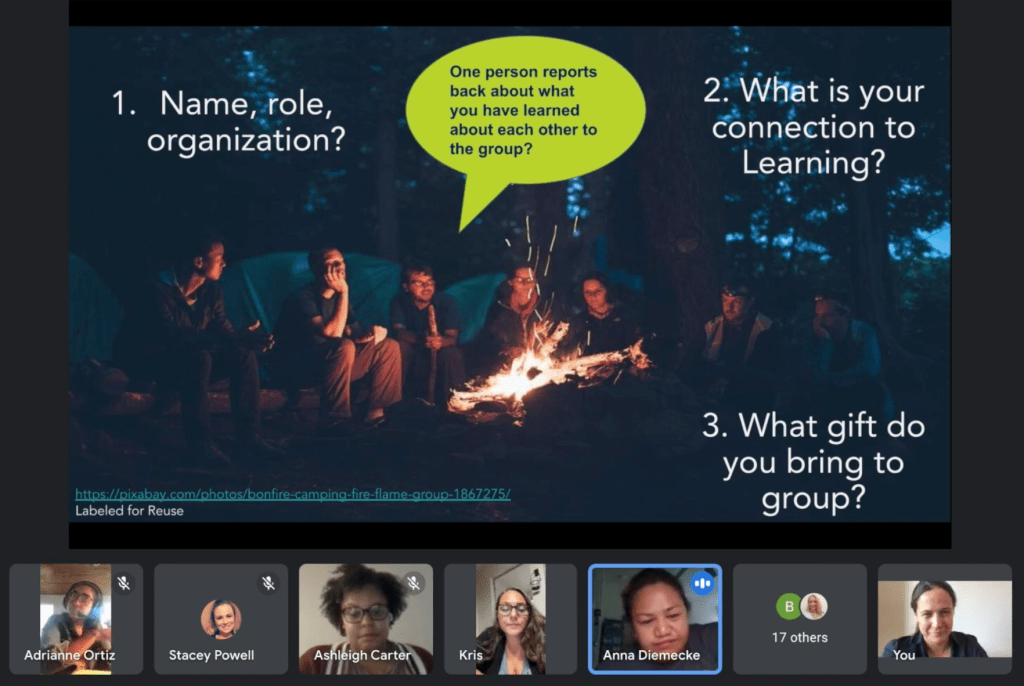
In our first class call we were asked to share what gift we bring to the course/our cohort.

I can not help but appreciate that intro discussion question about the gift we bring to this learning journey. This question about gifting taps into the passion that allows for learning naturally. I wonder how many of my adult learners (graduate students) would be willing to open up and share their answers to the same question. How about my colleagues? What giftings do they bring to the advising unit?  

Incorporating Daniel Pink’s “three factors for better performance in the workplace (autonomy, mastery, and purpose)” further provides an environment to cultivate and develop these valuable human resources (RSA, 2010). I have never considered that I have a learning environment. Through the content of this course and the program, I am beginning to identify the significant learning environment I can create in multiple areas. My students and I benefit from focusing on their learning environment from an advising perspective. I also see the benefit of creating a learning environment to foster the advising unit. Innovation can provide my audience (students/colleagues) an opportunity that comes from giving them control of the best way to process/provide information. Perhaps by tapping into the question of their gifting, they will each find the drive to continue to improve. Most of all, I want to help create an environment that produces happiness for students and advisors. From a professional perspective giving people the autonomy to communicate challenges by proposing solutions benefits the workplace culture and improves communication. This transparency further provides a foundation for building a trusted relationship between advisors and advisees customized to each learning situation or program requirement. Why not be the one that helps to create that culture? 

Videos like these are directly tied to my innovation proposal and fuel my desire to improve the systems and processes for everyone, myself included. Resources like these will continue to shape my reflections as I move toward creating my learning philosophy. 

As Sir Ken Robinson (TED, 2010) compares education to the standardization produced by a fast food model, I reflect on an undergraduate sociology text called The McDonaldization of Society. When reflecting on higher education, the author states, “the focus seems to be on how many students (the “products”) can be herded through the system” (Ritzer, 2000, p. 66). We lose humanity when all aspects of life focus on maximum efficiency and consistent output. Humans cannot be standardized, as doing so is the antithesis of customized learning, which aids natural/organic learning, growth, and personal evolution. 

In closing, the quote about dreams shared by Sir Ken Robinson (TED, 2010) reinforces my passion for advising. I have the opportunity to help solve problems, translate policy, and provide options while pointing out potential unintended consequences of those different prospects. My students are sacrificing so much to return for their degree or certification. Many students face additional examinations and licensure requirements after their academic studies. Many have families and careers while pursuing their motivations, passions, and purpose. The accomplishments that come from my students persevering in the face of life’s challenges are also dreams upon which “we should tread softly” (TED, 2010). 

References

Ritzer, G. (2000). The McDonaldization of Society (New Century Edition). SAGE Publications, Inc.

RSA. (2010, April 1). RSA ANIMATE: Drive: The surprising truth about what motivates us [Video]. YouTube. https://www.youtube.com/watch?v=u6XAPnuFjJc

TED. (2010, May 24). Bring on the learning revolution! | Sir Ken Robinson [Video]. YouTube. https://www.youtube.com/watch?v=r9LelXa3U_I

ADL Program, Advising, Collective, Professional, Reflecting

Consortiums – Networks?


Collectives! Ah ha!

I was trying to figure out what exactly I would call my core group of colleagues from across the institution. When I have a question about a Graduate Studies policy, I have a person I can call. When I have a Records retention or release question, I have a person I can call. There are advisors that I provided on-board training to as they began their advising career at our institution, that I can still call and who still call me. I learn more as a result of every inquiry, question, or conversation related to my role. I have friends and colleagues at all levels of the university structure who simply care about students and all want to help one another serve them better. I absolutely love that I can be a resource to them and that they are to me.

This collective is so valuable to me. Thank you to each and every one of you!