ADL Program, Contributions, Goals, Growth, Learner's Mindset, Learning

Quality Course Design


Tutorial on the application of Dee Fink’s Taxonomy to “Design courses that promote significant learning”

Just sharing a beautiful resource I discovered while doing additional research on learning outcomes and significant learning environments. This is a beautiful resource for those who may feel overwhelmed by the process of working through L. Dee Fink’s Self-Directed Guide to. Designing Courses for Significant Learning since the information is broken into smaller pieces with activities embedded to assist in the development phases.


Click the image below and we can work through the process together.


Here’s a fun little tool for creating learning objectives or goals for Step 2: Learning Goals

ADL Program, Advising, Collective, Contributions, ePortfolios, Goals, Growth, Innovation Plan, Learner's Mindset, Learning, Learning Community, Personal, Professional, Reflecting

Connecting the Dots


I am working toward the learner’s mindset. I do everything possible to learn and absorb as many sources of information as possible on each topic with which we are presented. I seek outside resources, follow links from links, and reference farm for additional sources to provide more context for greater understanding. However, a part of this is my personality type. I am still learning and seeking ways to instill this mindset in my learners and learning environment. I hope to take my learners to the authentic space we experience here in the ADL Program. I want to create that inquisitive place where they actively seek to understand and make sense of their learning journey/experience. 

While I consider myself an independent learner, I believe my learners are dependent. Unfortunately, I think that I am to blame for creating some of this dependency. I am highly responsive and helpful as a person. Therefore, my learners can sometimes become lazy in seeking information because they know I will respond and provide information. I believe a portion of this comes from a customer service mentality of “keeping the students happy.” Still, it may also stem from working with incoming first-year students when I initially became an advisor. I have worked to provide guidance and direction more than just giving the answer since I began in the ADL Program, knowing that if I equip them with the knowledge of how to find information, there is a chance of them becoming independent learners. I can say from my experience that struggling through the process is how we learn the most. Upon reflection, in another sense of the word, I can say that I was a very independent learner when I began the program. Still, the learning community component has taught me how helpful the collective can be in thinking about our thinking. I struggle with finding the level of collaboration and communication that would make my experience even more meaningful. I am a bit of an outsider since I don’t work in the K-12 system, but I feel like this is an aspect that could be significantly improved by collaborating with others. I struggle with how to incorporate peer learning opportunities due to FERPA regulations. I love the idea of the collective and our learning communities. Unfortunately, I cannot disclose students’ names, majors, etc., needed to form collaborative peer groups. Still, I have been brainstorming other ways to make this happen through my ePortfolio. If the student opts into an organization or group on their own accord, then I wouldn’t be disclosing any personal information or if there were a means of creating a message board or some system without student names. I also have concerns that students might share personal/private information like student ID numbers, grades, GPAs, and negative comments about professors or the institution. I guess that is where moderation would be a factor. I realize students are entitled to all of those interactions. Still, as an institution representative, I’m not sure I can facilitate collaboration if those issues arise. I am still struggling to determine how students could collaborate and support one another.

[Learners Mindset]. (2021, January 18). Collecting dots vs connecting dots [Video]. YouTube. Retrieved October 8, 2022, from https://www.youtube.com/watch?v=_7o3Jh1KZLw

A factor I am trying to pay close attention to is the one about expert biases. In higher education, there is a whole culture that utilizes terms and jargon that everyone knows, but that is unfair to everyone who isn’t in the know. Even as I try to translate policy and procedure into laypeople’s terms, many internal phrases remain out of touch with our learners. I can completely understand how those “blind spots” or biases would be something to be very aware of and that I will need feedback from students/users throughout the development process. 

Additionally, I have been considering how to align outcomes, activities, and assessments, but I am still trying to wrap my head around my learning outcomes. What do I teach? How do I make that engaging and active? So much of what I have to share with students is currently information dumping. “Here is a massive amount of information; read it thoroughly, and let me know if you have any questions,” but many do not read the information provided. I have spent a year working with graduate students, being stunned by the lack of ownership some of my students accept in their learning journey. I have students who miss deadlines and delay their degree programs. I am the outlet for frustration and confusion about the program requirements and departmental expectations, which are entirely out of my control or my area. While I inform my students of their program’s requirements, I am not the content provider or developer of the necessary resources and information. I translate where and what the students need to know, but that doesn’t always lend itself to a clear set of learning outcomes. Speaking with Dr. Grogan has helped me conceptualize how I could create benchmarks and modules for different stages of the student’s journey. I don’t know if this means creating multiple courses and having key points where those courses are deployed or if creating one giant course that students progress through as needed where the modules can be selected as needed along the program path. The benefit of the second option is some learners may want to familiarize themselves with the whole process at the start. In contrast, the benefit of the first option is that students might not feel so overwhelmed by the amount of information with which the students need to become familiar. 

My goal is to embrace the opportunity to create a significant learning environment, so my innovation can be successful and hopefully improve the student experience, alleviate stress, and make room for other, more meaningful opportunities. By keeping the learners focused on the overall goal of the course(s), I can help them maintain clarity for why they will be participating in the learning activities outlined. Through these BHAG’s, learners can draw connections to experiences and information they already know and look ahead to what they will gain throughout our course or program. As I work through the worksheet and documents on creating significant learning environments, I am learning how important it is to focus on learning outcomes first and foremost. By working backward with outcomes in mind, I am learning that I can plan learning objectives and activities that align with those learning goals/outcomes.

Just in the few classes I have completed here in the ADL program, I believe there has been plenty of proof that the collect the dots method does not lead to long-term learning or understanding. Therefore, the only reasonable explanation is data points/quantifiable proof of “learning,” which we all now know is not what those test results show. Surveillance is, in my opinion, exactly why collecting dots is still the focus. Education has to have a quantifiable method to show parents, taxpayers, state agencies, and the federal department of education that they are meeting learning objectives. We have become so focused on the output that we have lost sight of the point or learning outcomes.

A New Culture of Learning, ADL Program, Advising, Collective, Contributions, Evolution, Goals, Growth, Growth Mindset, Learner's Mindset, Learning, Learning Community, Personal, Professional, Reflecting

What am I?


In my last post, I explained that looking back on my undergraduate psychology and sociology degree program. I recognized that I connected most with those courses that involved me in the learning process and required my reflection and personal interpretation/experience with the materials. I feel like my own learning preference is for one of authentic ownership, as we experience in the ADL Program

Reflecting on my beliefs about my role in the learning of others makes me wonder which learning theory aligns with my professional beliefs as an advisor. Examining my years as an advisor, I can honestly say that I only know what I have been exposed to through my experience and professional organizations.

My professional experience

When I was hired into higher education, I worked at a centralized first two-year advising center that believed in intrusive advising. Our role was to identify those most at risk and provide support and guidance as they transitioned into college students. I jumped into this role by organizing tours for advisors to visit support services offered across campus. I wanted to know the individuals I could contact when a student needed support. I wanted a first-person understanding of the facility, delivery, and offerings to describe them to my students in ways that would alleviate any trepidation about being labeled, being afraid, and preventing them from being comfortable trying something new or uncomfortable. There were occasions when I would walk with my students to these service locations for a personalized handoff. We had frequent communication with our assigned advisees and much smaller cohort sizes. I frequently participated with the college department I represented at the advising center again to keep my students informed about student organizations and other opportunities to bond with their community of interest.

Despite this genuine passion for student success, I have never been able to connect with advising theories about student development. I participate in my professional organization by attending conferences, sessions, and webinars about topics that interest me or seem suitable to my situation or students. The theories and resources always appeared to me as if they were written for faculty advisors and people who have long depth conversations and relationships with students and their curriculum. I typically interact with a student three times a year, around registration time, if they don’t have questions, need support, or show signs of being at risk academically. My literature review caused a crisis of self. As I read research about advising, I could not help but wonder if I have been a good advisor without employing any formal theory over the years.

Through the active learning process that is the ADL, we are presented with resources, information, references, and perspectives. Still, we are left to seek and search for many more. Thus far, my three program instructors have all identified as constructivist. I can’t honestly say I had ever learned of these theories. I silently panicked that this is something taught in Pedagogy since many in my program cohort are teachers at various levels and institutions.

This is a challenging experience for many, including myself. We are left thinking, “Wait, aren’t you going to teach me?” (Lecture) and “How am I supposed to create that?” (Checklist). Nonetheless, I attempted to embrace the challenge of learning by doing within an unlimited boundary of an assignment or course.

We are encouraged to create our own learning communities, and now I better recognize them as collectives. This constructivist approach of making an environment where learners can learn leaves many still trying to fit into the regurgitation education model. How many discussion comments? How many blog posts? Do we have to prove that we held learning community meetings? As learners, we have been duped into believing that learning is about the assessment of the professor or the program. I get it. It is in the sense that we are all here with hopes of degree attainment, but, in the process, we miss out on the genuinely hands-on, authentic, make it yours experience we have here.

I recently searched for Simon Sinek and found he offers a 4 session course on finding your why. I thought, “hot diggity, I can get ahead of the curve!” by preparing for the class that utilizes his book Start with Why. Our experience here, in just that single component/regard, is valued at $4,900ish for four sessions. We get around eight sessions in our eight-week coursework. I want to absorb every morsel of knowledge, experience, and content our instructors want to throw at us. I want to learn about their learning experience, success tips, and tricks. I want to grow, learn, and experience what this program is presenting. Knowing and embracing that I can really make a difference. That is what this whole advising thing has always been about for me. That is what makes me a good advisor. I care, I want to make a difference, and if I don’t know the answer, I will do my best to find it or connect you with someone who can.

Don’t get me wrong, I have no life outside of work and school, but the journey is what you make it, right? I’m in. I am all in. I want to change the world, one learner at a time. I want to use my current position, the challenges, and the opportunities it holds and make it better for my students and my colleagues. I want to be a catalyst for change.

So which theory is going to help me accomplish that?

A New Culture of Learning, ADL Program, Collective, Contributions, Evolution, Growth, Learning, Learning Community, Reflecting

Learning Revolution


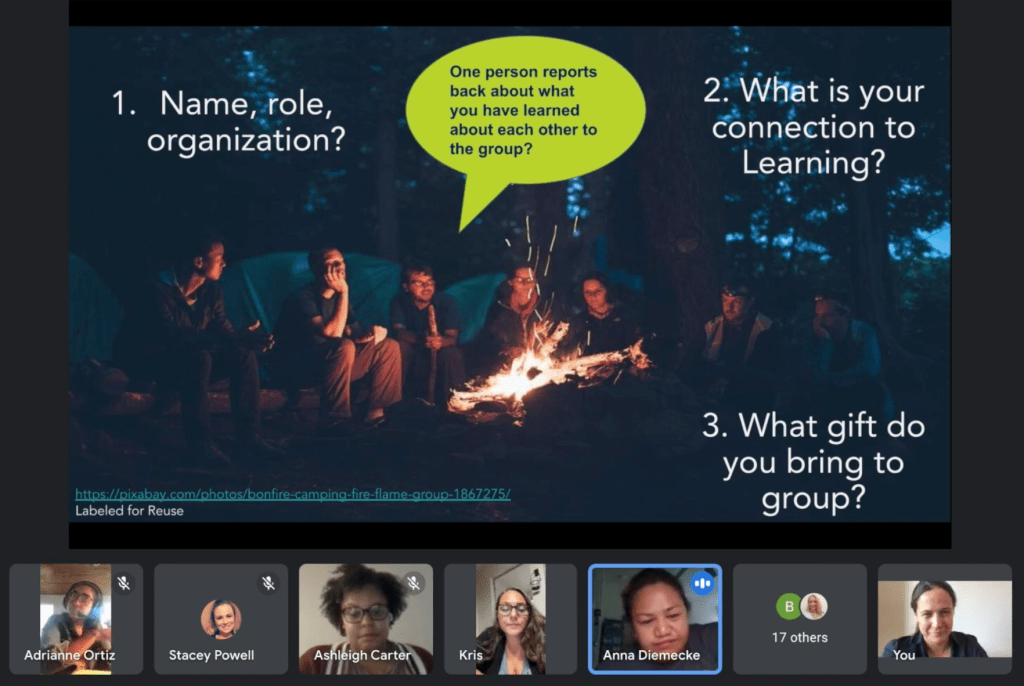
In our first class call we were asked to share what gift we bring to the course/our cohort.

I can not help but appreciate that intro discussion question about the gift we bring to this learning journey. This question about gifting taps into the passion that allows for learning naturally. I wonder how many of my adult learners (graduate students) would be willing to open up and share their answers to the same question. How about my colleagues? What giftings do they bring to the advising unit?  

Incorporating Daniel Pink’s “three factors for better performance in the workplace (autonomy, mastery, and purpose)” further provides an environment to cultivate and develop these valuable human resources (RSA, 2010). I have never considered that I have a learning environment. Through the content of this course and the program, I am beginning to identify the significant learning environment I can create in multiple areas. My students and I benefit from focusing on their learning environment from an advising perspective. I also see the benefit of creating a learning environment to foster the advising unit. Innovation can provide my audience (students/colleagues) an opportunity that comes from giving them control of the best way to process/provide information. Perhaps by tapping into the question of their gifting, they will each find the drive to continue to improve. Most of all, I want to help create an environment that produces happiness for students and advisors. From a professional perspective giving people the autonomy to communicate challenges by proposing solutions benefits the workplace culture and improves communication. This transparency further provides a foundation for building a trusted relationship between advisors and advisees customized to each learning situation or program requirement. Why not be the one that helps to create that culture? 

Videos like these are directly tied to my innovation proposal and fuel my desire to improve the systems and processes for everyone, myself included. Resources like these will continue to shape my reflections as I move toward creating my learning philosophy. 

As Sir Ken Robinson (TED, 2010) compares education to the standardization produced by a fast food model, I reflect on an undergraduate sociology text called The McDonaldization of Society. When reflecting on higher education, the author states, “the focus seems to be on how many students (the “products”) can be herded through the system” (Ritzer, 2000, p. 66). We lose humanity when all aspects of life focus on maximum efficiency and consistent output. Humans cannot be standardized, as doing so is the antithesis of customized learning, which aids natural/organic learning, growth, and personal evolution. 

In closing, the quote about dreams shared by Sir Ken Robinson (TED, 2010) reinforces my passion for advising. I have the opportunity to help solve problems, translate policy, and provide options while pointing out potential unintended consequences of those different prospects. My students are sacrificing so much to return for their degree or certification. Many students face additional examinations and licensure requirements after their academic studies. Many have families and careers while pursuing their motivations, passions, and purpose. The accomplishments that come from my students persevering in the face of life’s challenges are also dreams upon which “we should tread softly” (TED, 2010). 

References

Ritzer, G. (2000). The McDonaldization of Society (New Century Edition). SAGE Publications, Inc.

RSA. (2010, April 1). RSA ANIMATE: Drive: The surprising truth about what motivates us [Video]. YouTube. https://www.youtube.com/watch?v=u6XAPnuFjJc

TED. (2010, May 24). Bring on the learning revolution! | Sir Ken Robinson [Video]. YouTube. https://www.youtube.com/watch?v=r9LelXa3U_I

ADL Program, Contributions, ePortfolios, Growth Mindset, Growth Mindset Plan, Learner's Mindset, Learning, Learning Community, Learning Manifesto, Professional, Reflecting

Contributions, 5302


Concepts of Ed Tech Course

  • Summer 2022
  • Course Number: EDLD 5302
  • Course Title: Concepts of Educational Technology

Contributions to learning and learning community.

I am giving myself a score of 95 out of 100


Crediting Group Members: Bethany Eisele, Lera Longbottom, Nastarja Tyler, Rachael Lancon, and Stacey Powell


Key and Supporting Contributions

Reflecting on my third course in the ADL Program, I have to say that I am finally feeling more confident about the COVA approach to this program and learning in general. This is not to say that it is always comfortable working this way, but I can see how much in-depth knowledge is gained through this approach. I actively seek information and teach myself more than just the minimum required readings/videos in search of greater understanding. I am constantly working to see if there is more information that I can add to my knowledge base. I think about my thinking through reflections and revisit assignments on an ongoing basis to continue making connections. 

The part I feel I could do better is finding value and making deeper connections from the discussion posts. There is too much of a status quo learning (regurgitation) aspect to the post and comment expectation which always seems to lack the intended connection between students. Initially, the discussions provide a way to find people with common interests or goals. Still, once our communities are formed, they seem to lack substance since it can be several weeks before someone sees comments thereby lacking engagement in meaningful dialogs. While keeping up with the posts and comments, I feel something more valuable could be discovered or utilized to increase that aspect of the program. 

I actively contributed and took on a leadership role wherever possible within my core collaboration group. I continued the shared google drive from last semester, purchasing additional storage space, and creating weekly to-do lists, discussion prompts, and video/reading notes for continued shared collaboration. Utilizing a group chat and google docs/drive, our core learning community maintained a collaborative group that welcomed new members (Nastaja and Stacey) and continually provided feedforward on all assignments. While discussing questions about previous experience in the program, we revisit our previous projects and make continuous improvements on past coursework. 

As I embrace ownership of this Portfolio, I strive toward an ownership perspective to my innovation. As I experience the freedom of choice that promotes this portfolio ownership, I am inspired to provide my students with options along their academic paths. As I revise and review my content, I realize that I can further improve my message and model that through as many interactions as possible. I can apply the knowledge obtained this semester (growth mindset, learning manifesto, feedforward, learning networks) to strengthen my voice. This improves the communication, information, and resources I provide through my synchronous (phone/virtual) and asynchronous (email/portfolio) interactions, which helps to build trusted advisor-advisee relationships. From a technical skills perspective, it has also been rewarding to continue improving the aesthetic and function of the Portfolio with my intended audience in mind. I started updating past and current learning network opportunities to my Portfolio, which has allowed me to reflect upon the benefits of these collaborative/professional networks and makes me want to strive to do better in my contributions to these networks.   

I completed all of the course readings, videos, and additional resources. I often researched other content for topics that interested me in more detail, such as Universal Learning Design, the ISTE standards, and everything I could get my hands on about the Growth Mindset. This self-driven desire to learn and understand helped me meet the deadlines for all projects, assignments, and posts, further providing the opportunity for more collaboration, mentorship, and reflection. 


Learning Community Key and Supporting Contributions

In addition to meeting all of the support contributions and taking a leadership role in my core learning group, I have found a new role as a facilitator for our learning cohort. I have always considered myself helpful, but now I have found a way to gain even more insight and understanding by helping others. My learning community has expanded to every classmate that joined the ADL 2021-2023 GroupMe. I created this group and posted an open invitation to the student lounge after being inspired by a similar DLL group last semester made up of those more advanced in the program. I knew I wanted to help create a culture that encouraged and supported one another throughout the program. Since I am not pursuing the accelerated option, I hoped for a group of positive collaborators from all levels to facilitate mentorship and mentoring opportunities. I found a wonderful sense of purpose through this course and by taking accountability for myself and my learning community through this expanded collaboration. I have encouraged my classmates via this group, and I modeled feedforward behavior with all the group members, hoping they would do the same. I hosted multiple zoom sessions for this course, upgraded to zoom pro to host longer sessions, and began hosting other sessions for those in the Innovation Course. I helped connect students who had not yet identified their core learning community with others in the same situation. The most exciting time came when members began hosting sessions for one another, providing the type of encouragement I hoped to foster.  

ADL Program, Contributions, Growth, Learning, Learning Community, Reflecting

Contributions, 5303


ePortfolio Course

  • Spring 2022
  • Course Number: EDLD 5303
  • Course Title: Applying Digital Technology Portfolio

On a background of blue sky with fluffy white clouds are green street signs. One has arrows pointing in opposite directions and the other reads "take and give."

Contributions to learning and learning community.

I am giving myself a score of 93 out of 100


Crediting Group Members: Bethany Eisele, Lera Longbottom, and Rachael Lancon


Key and Supporting Contributions

Reflecting on this ePortfolio course my second of the ADL program, I can say with confidence that I worked throughout the semester to be sure I read all of the assigned materials, watched all of the accompanying videos, and followed the subsequent links. I would sometimes ask about a link deep down the links trail to find that not everyone link dived as deeply as I. It took a while to create a systematic method to go through the material to avoid getting lost. I am doing my best to adapt the skills, knowledge, and information I learn into my ePortfolio development and personal learning. I revised all assignments and reflected on being deliberate with the choice of content on my ePortfolio by taking complete ownership of my authentic experience, which helped me develop my voice.

I believe I helped build our core group by reaching out via course mail after our first class meeting. A few classmates contributed to the class conversation and just had a generally positive perspective that made me want to collaborate with them. After a few days of coordination, we formed our core learning community. Having worked in a learning community in the first course, I quickly jumped on creating a GroupMe channel for our group and set up a google drive so that we could share documents and collaborate. I made a “getting to know one another” ice breaker type document within the google drive to allow group members to share and start building relationships. We had cute short bios, including photos that allowed us to connect on a personal level. We gave information about ourselves, our ePortfolio platform, and our innovation strategy. Our core group was great about contributing to weekly group discussions and provided commentary on each other’s thoughts. As we discussed weekly content, we explored further our thoughts, our learning, and our ePortfolio development, leading to additional ideas, blog posts, and blackboard discussion posts. We each worked to give one another timely feedback on discussions and our ePortfolios. I created weekly to-do list to help our learning community keep track of course content, readings, discussion posts, group discussions, and blog suggestions from the weekly modules.

Sharing two classes with my learning cohort allowed us to get to know one another through class discussions. The last two weeks of discussion posts were the most collaborative our cohort has been. It was amazing to see the class come together to help one another with ePortfolio feedforward suggestions. The part that I think I could do better would have been to offer group collaboration sessions regularly for the whole class. I did post in the student lounge that I was interested in mentorship and mentoring opportunities. I connected with several classmates via course mail in the first few weeks of the course, but none grew into the mentoring/mentorship type collaboration I envisioned.


Learning Community Key and Supporting Contributions

I was able to take leadership responsibility in my group in various ways. First, by creating communication avenues and a place to collaborate, as previously described. Then, as the most experienced member of our group (which is quite humorous considering I had only completed one course at the time), I provided feedback on my learning communities’ innovation coursework.

I set up weekly zoom meetings for Tuesdays at 7 pm immediately following the class meeting. I contributed to all learning activities and opportunities and actively participated in the meetings and discussions. Through our group discussions, I was able to dive more deeply into the content of the weekly modules and reflect upon my learning process.

I attended a literature review information session hosted by the Mary and John Gray Library. I informed my learning community about it since I knew they were working on that component in their innovation course. I shared my thoughts, feelings, and struggles with my learning community. Their support through having a peer group discuss content, vent about frustrations, celebrate victories, and with whom to share the learning experience with has been valuable. I only wish for more; more collaboration, more discussions, and more interaction.

I still struggled to keep up with discussion posts once I had added mine to the LMS. However, I eventually figured out how to subscribe to the discussion posts and was able to respond in real-time to my classmates’ posts. I even created a discussion post in the student lounge and a blog post, hoping to help current and future classmates who struggle with this aspect. Had I figured this out earlier in the semester I may have experienced more real-time dialog about the course material.


ADL Program, Contributions, ePortfolios, Evolution, Growth, Learning, Learning Community, Personal, Reflecting

Hugs


Two women wearing black shirts embrace in a hug. Photo by Ketut Subiyanto on Pexels.com

I always do my best to shine a little light, encouragement, and love with those willing to connect. Tonight, I stopped at the local drug store. The employee was having a rough night, and I asked how much longer her shift was (10:30 pm with 7 am return).

My husband picked up chocolate peanut butter ice cream, and she said she would come over to cry and help me eat it. She said something about being a hug person, and I lamented how much I also miss hugs.

As I was preparing to leave, I asked, “can I give you a hug?” She accepted and met me at the end of the counter for a genuine hug.


My favorite days are the days I get to hug strangers. I’ve missed it so much.


As I said goodbye to my classmates Tuesday night (our last class meeting), I had to say out loud that I would miss seeing many of them next semester (accelerated post coming soon). Some will be graduating by December, and our classes no longer overlap. Tonight, I reflected on our one-two sessions together, our growth and vulnerabilities.

Then I realized that some of them will walk at the commencement ceremonies. I volunteer at those events and hug strangers at those events. Surely, I will get to meet some classmates at graduation! I started to imagine the next two years! Three ceremonies a year, potentially meeting the people with whom I will undoubtedly grow so much.

  • Who will we be after completing another class? What about two classes from now? Four?
  • Can you imagine looking at our final projects, reflections, innovation plans, and these digital babies (our ePortfolios)?
  • How much will they/we change through the evolution of this program?

  • How are you feeling?
  • Have you taken a good deep breath lately?
  • Have you hugged a stranger? (Okay, I know that the last one’s not for everyone)
ADL Program, Blackboard, Contributions, Learning, Tips

Discussion posts


May 2, 2022

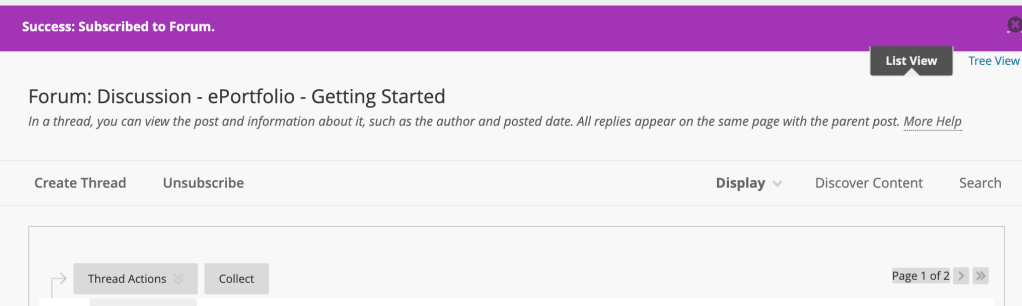
Seventy-one! That is how many discussion posts I made this weekend. How do I know? Because I finally found this handy little trick that allows you to subscribe to discussion posts in Blackboard.

If you have also had a difficult time keeping up with discussion posts that are made/added after your last review, then maybe this little trick will prove helpful to you too.

Update!! (June 2022)

Now that the Blackboard System has updated to Ultra, the subscription feature is no more. However, there is still a way to be notified when new discussion posts are made.

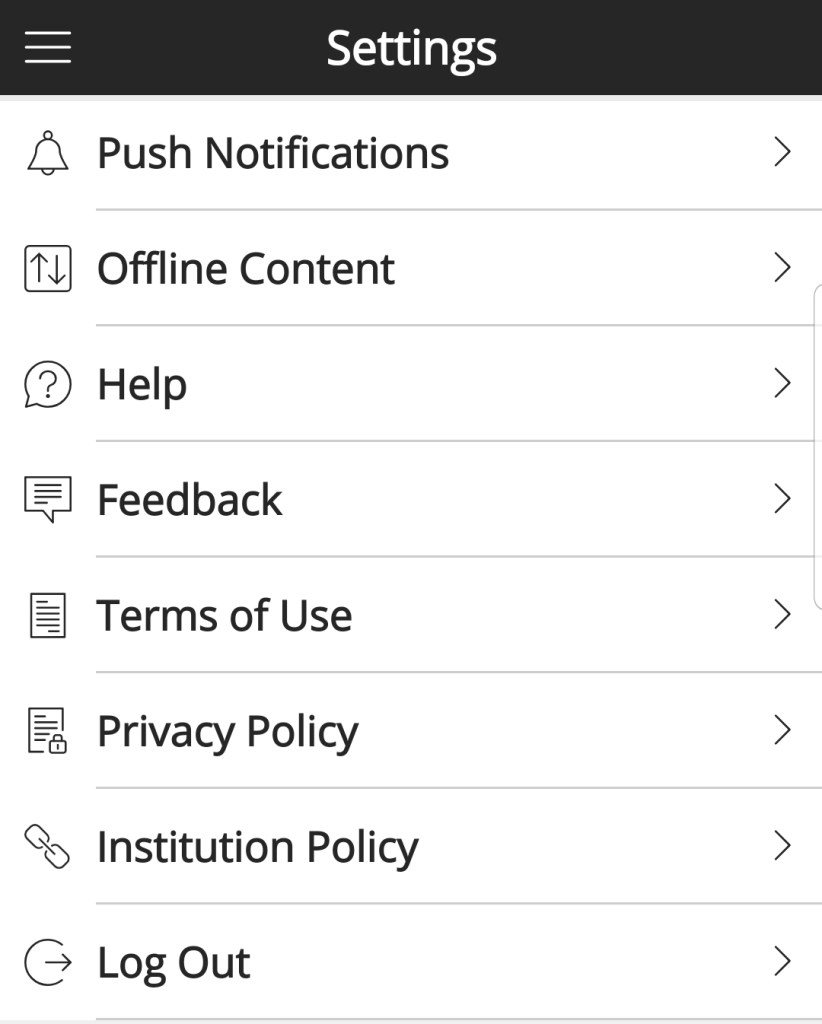
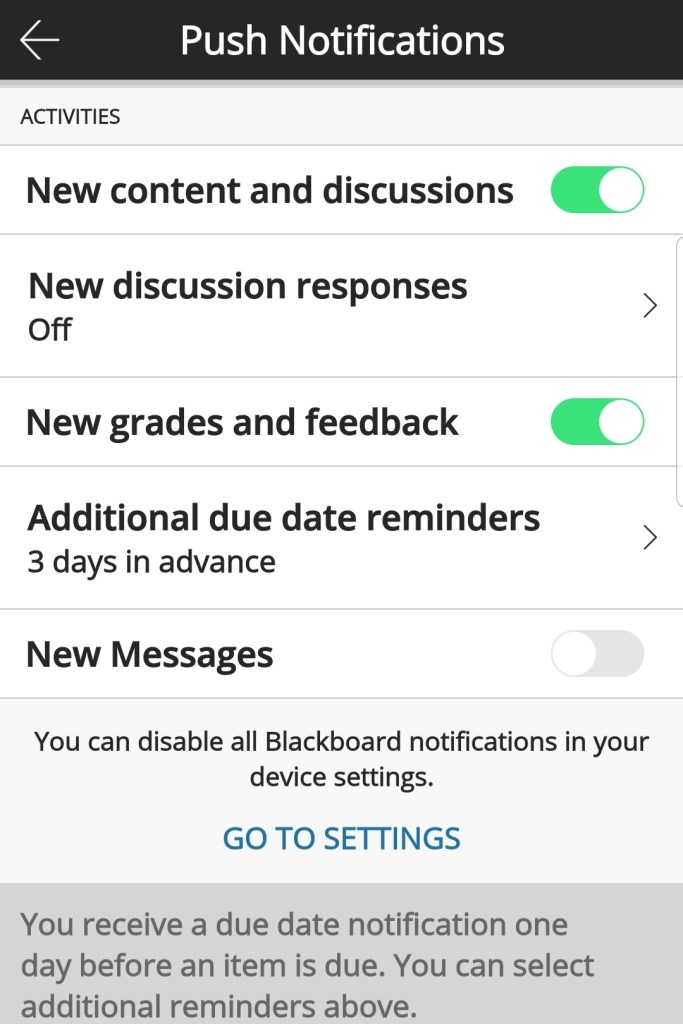
Option 1: Blackboard App

  • Open Blackboard App
    • Click Settings
    • Push Notifications
    • New discussion responses >
      • Toggle on/off

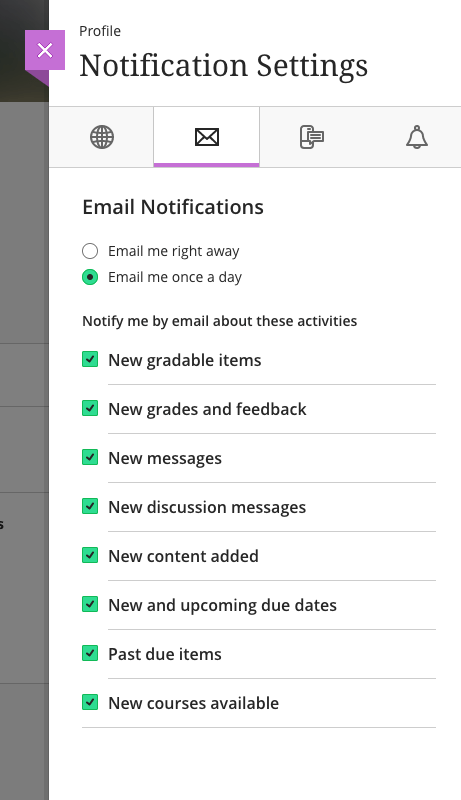
Option 2: Desktop version

As of 06/28/2022, this option did not work for me, as I do not have discussions messages in my list of notification settings

  • LU Connect
    • LU Learn (Blackboard)
    • Click your name
    • Click Global Notification Settings/Email Notifications
    • Check the box next to new discussion messages
    • Confirm settings for email once a day vs right away
    • Save changes

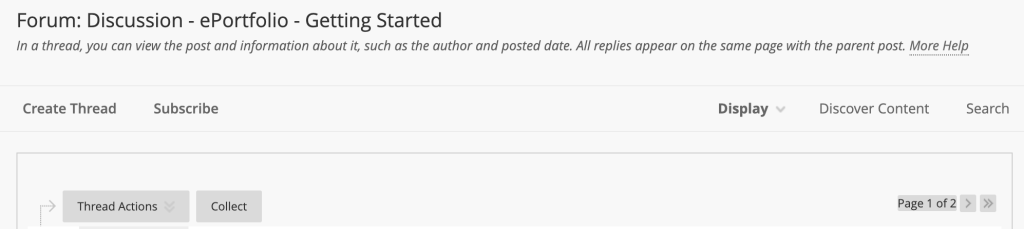
Blackboard (Old, non-ultra systems)

To subscribe to a discussion board post:

  • LU Connect
    • LU Learn (Blackboard)
    • Courses
    • Click on the Course Name
    • Click on Discussions
    • Click the discussion thread you plan to follow
    • Click Subscribe

Before

After


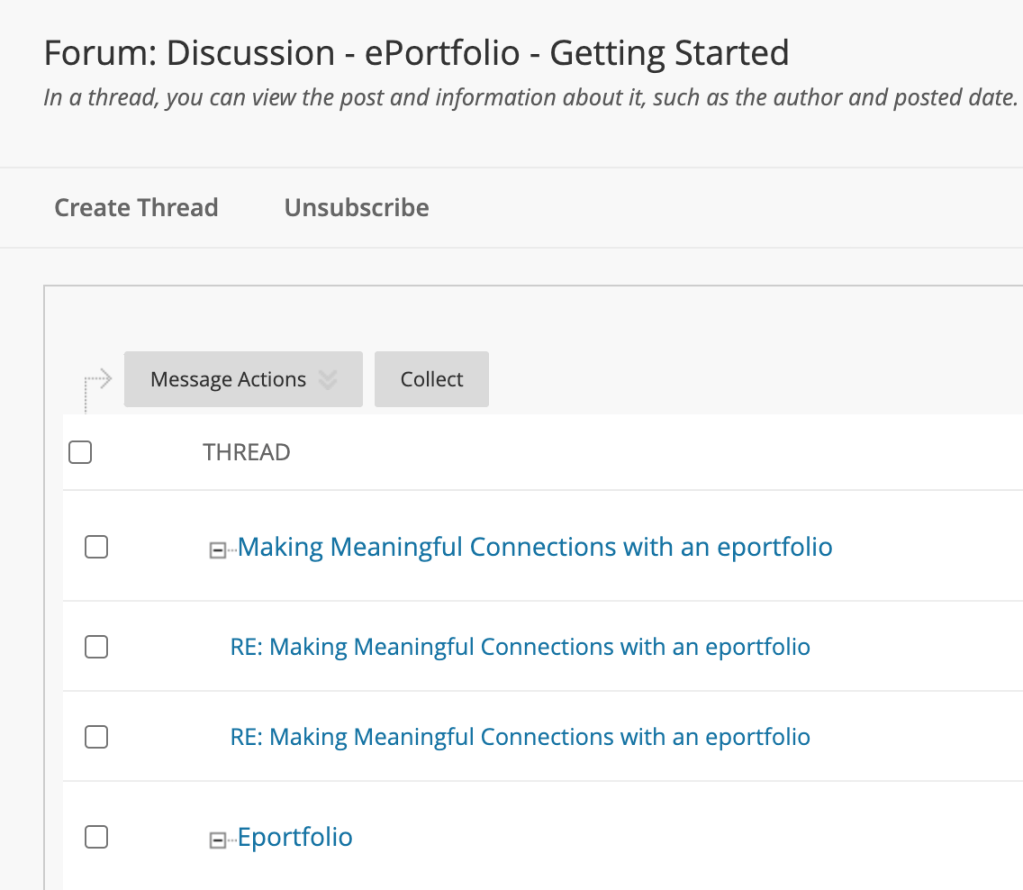
As I was creating these screenshots, the inquisitive and experimental nature that is encouraged through the ADL program is paying off. I noticed the “list view” and wondered what that feature might do. *click*


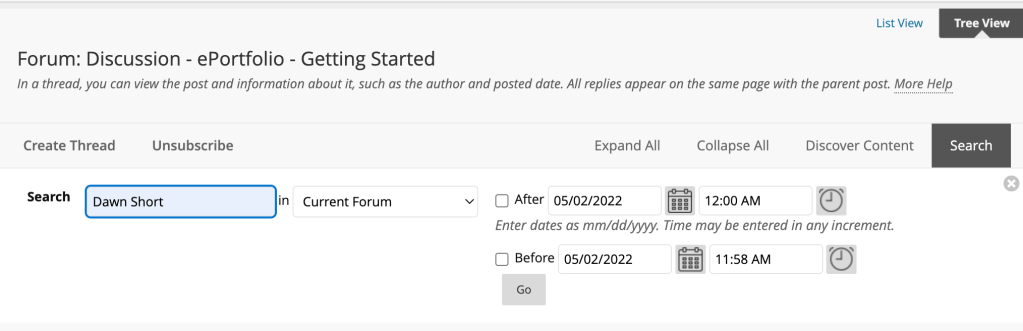
Turns out the tree view may be really helpful in determining which threads have not yet been reviewed or commented on previously.


There is a search feature as well.


Do you have any favorite Blackboard tricks you can share in the comments section?

ADL Program, Contributions, Learning, Learning Community, Reflecting

Watch party, as collaboration?


I’m just reflecting on the discussion boards, our group discussions, the weekly class discussions, and the content we explore in the ADL Program. I always wish for a more interactive discussion of our weekly course content. That made me wonder if anyone has ever considered a watch party-type weekly collaboration.

Would anyone attend a class watch party? It seems like a group of classmates (or even the learning community members) could turns reading chapters, content, and screen share for videos and examples.

I’ve always wondered what class would be like if we all had that additional time to build trusted relationships while actively engaging with the content and discussing it in real-time. I think we could even record our session to rewatch our own ideas for later personal learning reflections.

I know that I get so many ideas, thoughts, and inspirations in our breakout sessions and individually while reviewing the information through each week’s modules and associated links.

I enjoy learning from all of you and seeing your perspectives.