
ADL Program, Advising, ePortfolios, Evolution, Growth, Growth Mindset, Learning Community, Personal, Professional, Reflecting

Reflecting


I came to the ADL Program hoping to understand better what my students experience in online graduate programs at LU. I assumed that I might pick up a few technology skills here and there, but my primary focus was on having a first-person experience so that I could better relate. I have been blown away by the relevance and value that just these first three classes have provided to my daily job duties as an advisor. The most valuable aspect of this program has been finding creative ways to meet my students’ needs 24/7 via my Portfolio. I have developed my Portfolio as questions arise or when different semester times come near (i.e., final grades, graduation, etc.). The ability to make my projects authentic and valuable has been an unexpected and highly appreciated aspect of the program. The shift from regurgitation to real-life projects was not one I expected when beginning this academic journey. The COVA model has been the educational experience I did not know I was missing, yet one I have longed for my whole life. The ownership that comes from this real-life need, the choice in how I will present my information and learning, and the incredible personal voice that is developing through the process of reflection are not things I expected to find while working on a graduate degree.

This program taught me more about collaboration and mentoring, in just these first three courses, than I ever expected (or honestly wanted) to learn. I am finding that by helping others, I can help myself. I am learning to stop being the stubborn silent student who only focuses on getting their work done to be a valuable member of a learning community and class cohort. I have thoroughly enjoyed this aspect of the program.

The most significant aspect of the COVA Model I hope to incorporate into my ePortfolio is the ownership and choice aspects that allow my advisees to have their authentic path to degree completion. I want to develop resources that give students a choice on their preferred delivery method and equip them with information to make informed decisions along their academic path.

I can see that creating a Portfolio sheerly to meet this program’s requirements would lead to a lack of persistence. Reading the studies on Portfolio persistence makes me strive to keep this an authentic part of my personal and professional life so that my Portfolio can continue to grow and evolve to serve those I serve. I am lucky that our program allows us to use real-world learning situations to create a Portfolio that will help us for years to come, should we embrace it.

I think the most valuable personal lesson that I am carrying with me is the one of a growth mindset. I can learn to do anything I put my mind to if I remember that I don’t need to be perfect or know everything. There are so many opportunities that become available once the message of yet is accepted.

I look forward to my continued evolution as a learner, and I’m excited to see how that will impact my advisees.


Harapnuik, D., Thibodeaux, T., & Cummings, C. (2018). Choice, ownership, and voice through authentic learning. Creative Common License.
ADL Program, Advising, ePortfolios, Growth Mindset, Innovation Plan, Professional, Reflecting

Technology and Advising


The wildly important goal related to technology integration I am focused on is encouraging my advisees to take ownership of their degree program, the path to attainment, and to set goals for themselves. Too many of my students begin programs with little to no understanding of the requirements they need to research and prepare (such as internships). The students’ lack of knowledge and information causes hostility and confusion as they reach those later points in their programs.

My goal is to integrate technology into my advising practices to guide them through the research and information-gathering processes needed to succeed. Universal Design for Learning allows all learners to utilize the what, how, and why of learning as they engage with active learning by incorporating technology into the classroom and learning opportunities. This shifts the one size fits all approach to learning, does not meet learners where they are and doesn’t consider diversity. Technology integration allows for different types of media to be used to engage students in the learning process. We must have a purpose to stay involved and engaged in our learning journey until we obtain mastery of our given goals.

When asked whether I thought I had a fixed or growth mindset last semester, I believed I was primarily a growth mindset individual. I am optimistic about most things. However, upon learning of the false growth mindset and further evaluation this semester, I can honestly say that many of my internal dialogs and personal expectations fall more in line with a fixed mindset. I can feel quite defensive when challenged professionally, and I know that comes from personal insecurity. I am very growth mindset oriented when assisting others but often hold myself to an unrealistic expectation of perfection. The more I learn about the growth mindset, the more I aspire to replace my perfectionist thinking with a perspective that allows for trial and error along with failing toward my goals. The messages about praising progress and avoiding a false growth mindset are also beneficial because I began focusing on effort as the key to a growth mindset. Now, I know that progress is the key to praise. Perfectionist thinking has held me back from achieving important goals throughout my life. I have been on and off weight loss plans for almost all my adult life. When I am super strict and losing weight, I can fool myself into believing I have a growth mindset, but one slip-up or terrible choice can immediately trigger me into a fixed mindset. I have entirely spiraled into a weekend of junk food binging over a minor setback. Don’t even get me started on October through December (Halloween candy leads right into the holidays), and fixed mindset thinking can derail all prior progress. To avoid a false growth mindset, I will focus on praising the process and progress over simply praising effort. The suggestion of tying praise to strategies, persistence, and performance will assist me in avoiding the development of a false growth mindset. 

There have been times that I have made decisions in life to avoid failure. Now I see that failure is just a part of learning and an opportunity for my brain to grow. I would say that avoiding situations was my go-to defense mechanism back in high school and college. I struggle severely with mathematics and will still find myself avoiding situations that test my abilities. I definitely could have used a growth mindset perspective as I fought through multiple levels of remedial math, desperately trying to grasp concepts that escaped me. Even pursuing a graduate degree was something that I avoided for fear of failure. I have to constantly give myself a pep talk about growth and perseverance regarding the program and the vague nature of assignments. I know the design of projects and assignments creates an environment for deeper learning through the process of researching and finding answers. Still, in the heat of the moment, my fixed mindset thinking can flare and try to convince me of all the old terrible things I would tell myself in my internal dialog growing up. It helps to learn that I can name that inner voice and “recruit it to collaborate on your challenging goals instead of letting it undermine you with doubts and fears.” 

With almost every new thing I’m learning, I tend to turn to YouTube and internet search engines to inform myself. I also seek out podcasts and books on different topics that interest me. I have watched the Learner’s Mindset Discussions on the growth mindset topic and sought additional YouTube resources such as TEDTalks. I will follow a rabbit hole by clicking links off of links to other resources. Additionally, I have begun actively seeking additional research related to advising via google scholar.

Reference

Dweck, C. (2016, January 11). Recognizing and overcoming false growth mindset. Edutopia. Retrieved June 7, 2022, from https://www.edutopia.org/blog/recognizing-overcoming-false-growth-mindset-carol-dweck 

ADL Program, ePortfolios, Learning, Reflecting

What we say vs. what is heard


As I reflect on the final Creating and Sharing Your ePortfolio assignment of the second course of the ADL program, I have re-read and reviewed my notes from our final class discussion and the submission page within the Learning Management System (LMS) and what I’m understanding is a compilation post (or page) leading to everything outlined is the expectation. “Quickly summarize everything you’ve done and what has been accomplished through your ePortfolio experience” is what I find in my class notes.

Silhouettes of two human profiles face one another. One has curved shapes from the mouth area that get wider as they near the other head. The other has an oversized ear outlined.

I am curious what others heard and understood because I know that as humans we have a tendency to interpret words and meanings differently based on our experiences. Now that I’m looking at learning and influence I think this would help with my concerns about email communication.

How do I get to the point and still relay sincerity? I guess this is where digital content would be beneficial. I could answer questions and give tips where non-verbal communication would be evidenced. Hmm, food for thought.

ADL Program, Contributions, ePortfolios, Evolution, Growth, Learning, Learning Community, Personal, Reflecting

Hugs


Two women wearing black shirts embrace in a hug. Photo by Ketut Subiyanto on Pexels.com

I always do my best to shine a little light, encouragement, and love with those willing to connect. Tonight, I stopped at the local drug store. The employee was having a rough night, and I asked how much longer her shift was (10:30 pm with 7 am return).

My husband picked up chocolate peanut butter ice cream, and she said she would come over to cry and help me eat it. She said something about being a hug person, and I lamented how much I also miss hugs.

As I was preparing to leave, I asked, “can I give you a hug?” She accepted and met me at the end of the counter for a genuine hug.


My favorite days are the days I get to hug strangers. I’ve missed it so much.


As I said goodbye to my classmates Tuesday night (our last class meeting), I had to say out loud that I would miss seeing many of them next semester (accelerated post coming soon). Some will be graduating by December, and our classes no longer overlap. Tonight, I reflected on our one-two sessions together, our growth and vulnerabilities.

Then I realized that some of them will walk at the commencement ceremonies. I volunteer at those events and hug strangers at those events. Surely, I will get to meet some classmates at graduation! I started to imagine the next two years! Three ceremonies a year, potentially meeting the people with whom I will undoubtedly grow so much.

  • Who will we be after completing another class? What about two classes from now? Four?
  • Can you imagine looking at our final projects, reflections, innovation plans, and these digital babies (our ePortfolios)?
  • How much will they/we change through the evolution of this program?

  • How are you feeling?
  • Have you taken a good deep breath lately?
  • Have you hugged a stranger? (Okay, I know that the last one’s not for everyone)
ADL Program, ePortfolios, Growth, Learning, Reflecting

Selfish reflection


As I move toward the final culmination assignment for the ePortfolio course in the ADL Program, I cannot help but feel that I have been a bit selfish. I am reflecting on the process of making decisions about what to include and how to relay my genuine care for my students. Finding my voice. I will admit there have been times that I allowed myself to become bogged down in my own crisis of self process. It is not easy reconciling my choices, taking ownership of my learning and figuring out how I can assist in my students’ learning; finding my voice; while maintaining an authentic learning experience.

I keep hearing Dr. Harapnuik’s voice encouraging students to “make it real” and saying “don’t try to fake it” from our weekly class discussions. This course has provided such an opportunity to explore within the ePortfolio itself. The call to action in front of us through our ePortfolio course is so compelling. I just keep hearing the voice of Dr. Harapnuik sharing his wisdom:

“most importantly, make this your own. This is your ePortfolio. This is your opportunity. Take advantage of the choice. Take advantage of the opportunity to take ownership. Find your voice. Embrace this opportunity to find the courage that it takes to find your voice. And embrace this ePortfolio this authentic opportunity that you can you can use for years even decades to come to make a difference in your world and to share that with your colleagues and more importantly with the learner that you have influence over as well.”

I just feel so grateful for this opportunity to grow and learn through the COVA/CSLE experience provided by this program.


Reference

CSLE2COVA. (2019, August 9). EDLD 5303 Week 4 Learning from Leaders Tips [Video]. YouTube. https://www.youtube.com/watch?v=BJ98azhUcZ8

ADL Program, Advising, ePortfolios, Goals, Growth, Learning, Professional, Reflecting

Feedforward

This morning I am reviewing some of my classmates in the ADL program‘s ePortfolios in hopes of actually providing helpful feedforward. I found myself inspired as I viewed tristandixson.com‘s recent blog post on feedforward and how a shift in focus could significantly impact the review process in professional environments.

I work at a state institution which means we have very structured review requirements. We are asked to evaluate ourselves and set professional goals for the next academic year. I have always dreaded these exercises because I would much rather have a constructive review of what is working and what could be better, as I am a solution-oriented employee. I find little benefit in the culture of who’s to blame or who is right. I really appreciate the focus on solutions. Solutions feed my soul; otherwise, it isn’t productive. Just grumbling and complaining. 

Thinking about my self-assessments, I never see the point of reflecting on “accomplishments” but instead, strive for new goals and ways to grow and assist with the continued improvement of the system. Implementing the feedforward concept into the review process would assess the current system’s efficiency and effectiveness, student and employee satisfaction, accurate and transparent communication, and what each member can contribute toward proposed solutions.

ADL Program, ePortfolios, Learning, Reflecting

Voice


I am constantly struggling to find the voice of my ePortfolio. I get focused on the purpose of the portfolio, and then I get confused over who my audience is. On the one hand, I want to refer my students to the portfolio for my tips and information. Yet, on the other hand, I want to utilize my portfolio professionally to showcase my development as a professional. Then on the third hand, I also want to personalize my portfolio and share my growth and learning as a student. 

Because I come from an older generation where you didn’t want to give away too much personal information online, I am still struggling to find what voice my portfolio will fulfill for myself and my audience. As discussed in chapter 11 of the COVA book, I need “formative feedback/feedforward and encouragement” to continue to develop my voice.

I have realized that while trying to figure out what I’m supposed to be reflecting/blogging about, I have not started implementing my Advisors Tips/Innovation plan. The only way I will be to apply the information I am learning in this ePortfolio course is by authentically living with and using it. I have started phase one of finding my voice by taking the most common information I share with students on a daily basis to build those sections on my website. I will immediately be able to start sending links to this portfolio and obtain feedback with the users it is intended to help.

I feel like this portfolio changes almost daily as I implement different aspects and tweak different placement, information, links, and functions. Once again, I am just trusting the process and hoping that as I exercise this muscle, I will gain confidence and find my voice through and beyond the ADL program. 

References:

Harapnuik, D., Thibodeaux, T., & Cummings, C. (2018). COVA: Choice, Ownership, and Voice, through Authentic Learning.

Advising, ePortfolios, Goals, Professional

Better late than never…

In December 2021, I attended a virtual professional development drive-in hosted by my professional organization, TEXAAN, titled Advising a life long profession: Proactively planning and investing in career growth and development. One of the sessions hosted during the webinar was titled Building your personalized advising portfolio by Sarah B. Sanche. Little did I realize, but less than a month later, I would finally take the leap of faith to embark upon my project-based learning graduate program and would be building my own ePortfolio.

I am finding her suggestions very valuable and inline with our goals here in the ADL program. She suggests the following (some paraphrased):

  • Find a notebook and pen of your choosing (or in our case create a wordpress blog)
  • Write down thoughts 3-4 times per week
  • Write about the day
  • After a month, go back and review previous writings
  • Continue with the routine for 6 months and evaluate the content of your writing
  • Connect with others
  • Stay dedicated to the reflection process…

In her presentation, Sarah Sanchez also sites a checklist from a NACADA article titled Advisor portfolio examples by Catherine Buyarski. In her article, Catherine Buyarski sites the following goals for an advising portfolio:

  1. To allow each advisor to document and accomplishments and contributions to students […] and the education profession;
  2. To define expectations for advisor performance and reinforce the priorities of [the institution and advising team];
  3. To encourage professional reflection and goal-setting; and
  4. To allow for assessment of advisor needs to provide input into [institutional] planning.

Buyarski, C. (2014). Advisor Portfolio Examples. NACADA | Clearinghouse of Academic   Advising. Retrieved from https://nacada.ksu.edu/Resources/Clearinghouse/View-Articles/Advisor-Portfolio-Examples.aspx

Sanchez, S. B. (2021). Building your personalized advising portfolio.

ADL Program, ePortfolios, Evolution, Growth, Learning

Unlearn


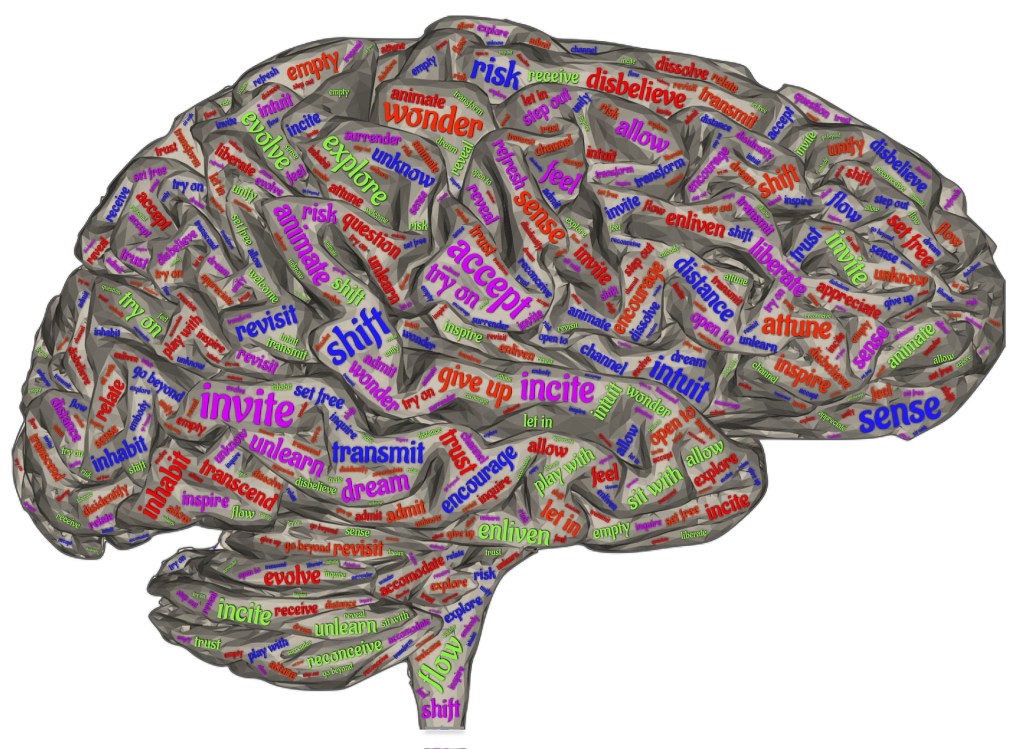
Rendered cross section of human brain with colorful words written everywhere. Some of the words are how, shift, revisit, inhabit, inspire, transcend, unlearn, transmit, distance, wonder, explore, allow, evolve, try on, enliven, and several others as well as smaller words that are difficult to read.

I just completed my graduate training requirement titled “Mental Well-Being” from getinclusive.com as required by the Dean of Students and the Student Health Center.


Reflecting on this training, I realize that everything now passes through this new learning lens. In the training there was a section on the need to unlearn. I could not help but think about all of us in the ADL Program. Aren’t we unlearning everything we previously thought about learning? Aren’t we unlearning previous expectations and measures of our learning and our students?

How is your unlearning journey going? I struggle with myself as I try to figure out the goal, objective, or expectation of a given assignment when I’m just supposed to be observing my my learning process.

I’m learning to reconnect with my inquisitive and creative mind and recognize that it takes time to break those old established learning ideas.


Change is difficult at first, but it is worth it.


Harapnuik, D. (2010, January 12). Innovation Starts with a Focus on Creativity. Harapnuik.org. Retrieved April 9, 2022, from https://www.harapnuik.org/?p=474

Harapnuik, D. (2020, December 12). Want To Change the World – Tell a Good Story. Harapnuik.org. Retrieved April 9, 2022, from https://www.harapnuik.org/?p=8441

Harapnuik, D. (2021, August 16). Assessment OF/FOR/AS Learning. Harapnuik.org. Retrieved April 8, 2022, from https://www.harapnuik.org/?page_id=8900

ADL Program, ePortfolios, Reflecting

Mine!


Having ownership of my ePortfolio allows me to become the visionary and voice for my ideas. Through the full ownership of my creation, I can experiment with what I want my digital identity to say about me. I am empowered to explore and experiment through the creation of my ePortfolio—both in form and function. I ultimately control the visual aesthetic, and the tone of the information shared because I own my ePortfolio. Because I own my ePortfolio, the knowledge and information I post is mine to take with me no matter where I work, present, or promote myself. By owning my ePortfolio, I am the “system administrator for [my] digital [life] (Campbell, 2009) and the IT department of my institution is not “the steward for [my] work (Watters, 2015). 

References

Gardner, W. G. (2009, September 4). A personal cyberinfrastructure. EDUCAUSE Review. Retrieved April 7, 2022, from https://er.educause.edu/articles/2009/9/a-personal-cyberinfrastructure  

Watters, A. (2015, July 15). The web we need to give students. Medium. Retrieved April 7, 2022, from https://medium.com/bright/the-web-we-need-to-give-students-311d97713713