ADL Program, Collective, Evolution, Goals, Growth, Growth Mindset, Learner's Mindset, Learning, Learning Community, Personal, Professional, Reflecting

Educational Trauma


This morning in my daily scroll, I saw the following come up in a random group I follow. I couldn’t help but extrapolate this to our learning experience and the difficulty we all confront as we form Learning Communities and try to form trusted relationships for feed-forward. I suppose not everyone struggles with these aspects of trust, but I certainly do. Therefore, I wanted to share this here in hopes that it helps you as you form connections and build trust.

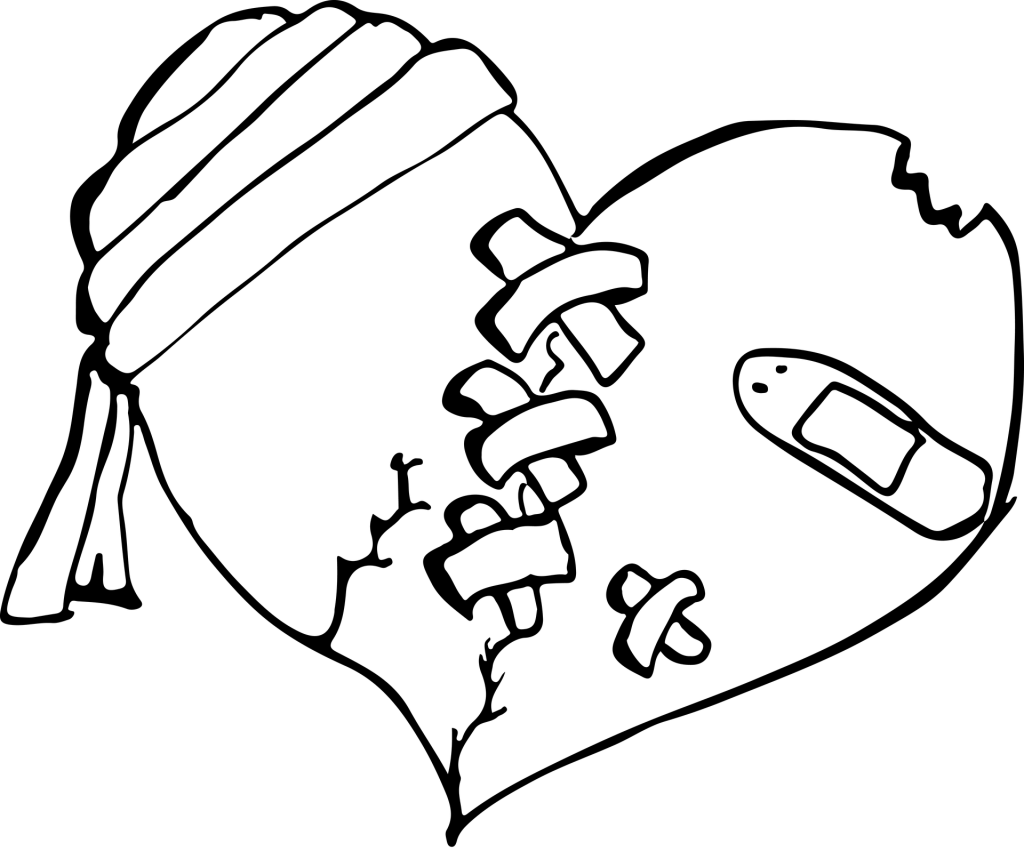
The image of a cartoon heart is band-aided and stitched with cracks and a small piece is missing.

“The inability to receive support from others is a trauma response.

Your “I don’t need anyone, I’ll just do it all myself” conditioning is a survival tactic.

And you needed it to shield your heart from abuse, neglect, betrayal, and disappointment from those who could not or would not be there for you.

From the parent who was absent and abandoned you by choice or the parent who was never home from working three jobs to feed and house you.

From the lovers who offered sexual intimacy but never offered a safe haven that honored your heart.

From the friendships and family who ALWAYS took more than they ever gave.

From all the situations when someone told you “we’re in this together” or “I got you” then abandoned you, leaving you to pick up the pieces when shit got real, leaving you to handle your part and their part, too.
From all the lies and all the betrayals.

You learned along the way that you just couldn’t really trust people. Or that you could trust people, but only up to a certain point.

Extreme-independence IS. A. TRUST. ISSUE.

You learnt: if I don’t put myself in a situation where I rely on someone, I won’t have to be disappointed when they don’t show up for me, or when they drop the ball… because they will ALWAYS drop the ball EVENTUALLY right?

You validated your core belief that you can’t really trust people! That is how much you believe it! Your wiring is hooked up to this belief system.

You may even have been intentionally taught this protection strategy by generations of hurt ancestors who came before you.

Extreme-independence is a preemptive strike against heartbreak.
So, you don’t trust anyone.

And you don’t trust yourself, either, to choose people.

AND you don’t trust life itself maybe? Does Life have your back?

To trust is to hope, to trust is to be vulnerable.

“Never again,” you vow. Consciously or subconsciously.

But no matter how you dress it up and display it proudly to make it seem like this level of independence is what you always wanted to be, in truth it’s your wounded, scarred, broken heart behind a protective brick wall.

Impenetrable. Nothing gets in. No hurt gets in. But no love gets in either.
Fortresses and armor are for those in battle, or who believe the battle is coming.

It’s a trauma response.

It is an old wounding layer in your system that needs new wiring, a do over.

The good news is trauma that is acknowledged is trauma that can be healed.

You are worthy of having support.

You are worthy of having true partnership.

You are worthy of love.

You are worthy of having your heart held.

You are worthy to be adored.

You are worthy to be cherished.

You are worthy to have someone say, “You rest. I got this.”

And actually deliver on that promise.

You are worthy to receive.

You are worthy to receive.

You are worthy.

You don’t have to earn it.

You don’t have to prove it.

You don’t have to bargain for it.

You don’t have to beg for it.

You are worthy.

Worthy.

Simply because you exist.”

The words "You are enough" are written above the image of two teal and brown chairs and a table that has a matching flower vase atop filled with purple folowers.
ADL Program, Advising, ePortfolios, Evolution, Goals, Growth, Growth Mindset, Learner's Mindset, Learning, Learning Manifesto, Personal, Professional, Reflecting, Why

What is my Why?


I decided the best way to get in touch with my why would be to explore my ePortfolio to see where the why has come up.

Colorful question marks are formed into clusters that form the word "WHY"

Allow me to share some of those purposes, beliefs, and why statements; thoughts, actions, and intended results I have shared and identified since beginning the ADL Program:

I sincerely love helping people and strive to empower them.

The Advisor That Cares, Bio

To help students navigate the complex and unknown world of higher education in order to help them achieve their academic goals.

The Advisor That Cares, Advising Philosophy

I have a passion for helping people.

The Advisor That Cares, An Invitation to Innovate Advising

I hold my role as an honor and a privilege.

The Advisor That Cares, An Invitation to Innovate Advising

I want to affect the heart of my audience by sharing my heart for people and my desire to make a difference.

The Advisor That Cares, I am Change 02/10/2022

We must constantly send out updates and find other ways to communicate excitement and a sense of urgency about our plan.

The Advisor That Cares, Communicating Vision 02/15/2022

My goal is to empower students and to act as an advocate until they learn enough to advocate for themselves.

The Advisor That Cares, Why ePortfolio 04/03/2022

I sincerely care about people and I want my kindness and caring to show through the resources and information I share throughout my portfolio.

The Advisor That Cares, Why ePortfolio 04/03/2022

I have the privilege of encouraging students, supporting my colleagues, and trying to make a difference to my fellow human.

The Advisor That Cares, Creating a Learning Manifesto 06/29/2022

Encouraging my advisees to take ownership of their degree program, the path to attainment, and to set goals for themselves.

The Advisor That Cares, Technology and Advising 06/10/2022

I value my role in others lives.

The Advisor That Cares, Creating a Learning Manifesto 06/29/2022

[My innovation plan is] born out of a desire to resolve student complaints, issues, and perceptions of a lack of information.

The Advisor That Cares, Creating a Learning Manifesto 06/29/2022

So that I can make a difference.

The Advisor That Cares, Creating a Learning Manifesto 06/29/2022

Helping students find their way through university jargon to make well-informed decisions about their paths and futures is paramount to me.

The Advisor That Cares, Creating a Learning Manifesto 06/29/2022

I believe that I have an opportunity to make a difference in the lives of those around me.

The Advisor That Cares, Creating a Learning Manifesto 06/29/2022

I believe that we each have an opportunity to play a valuable role in our student’s journey.

The Advisor That Cares, Creating a Learning Manifesto 06/29/2022

My innovation plan intends to shift learning to foster more proactive, active engagement for my learners.

The Advisor That Cares, The New Culture of Learning & Me 08/22/2022

Inspiring students to take ownership of their education and learning journey by improving learners’ engagement.

The Advisor That Cares, The New Culture of Learning & Me 08/22/2022

Advising is one of the first places students experienced the university. Embracing the learner’s mindset will allow us all to aspire toward endless innovation goals as an institution.

The Advisor That Cares, Growth Mindset Revisited 10/08/2022

In addition to making sure learners have a positive advising experience, we can help create a strong learning foundation that learners carry with them into their academic subjects and beyond to their lives and futures.

The Advisor That Cares, Creating a Significant Learning Environment
ADL Program, Advising, ePortfolios, Evolution, Goals, Growth, Growth Mindset, Growth Mindset Plan, Innovation Plan, Learner's Mindset, Learning, Learning Manifesto, Personal, Professional, Reflecting, Why

Head vs. Heart


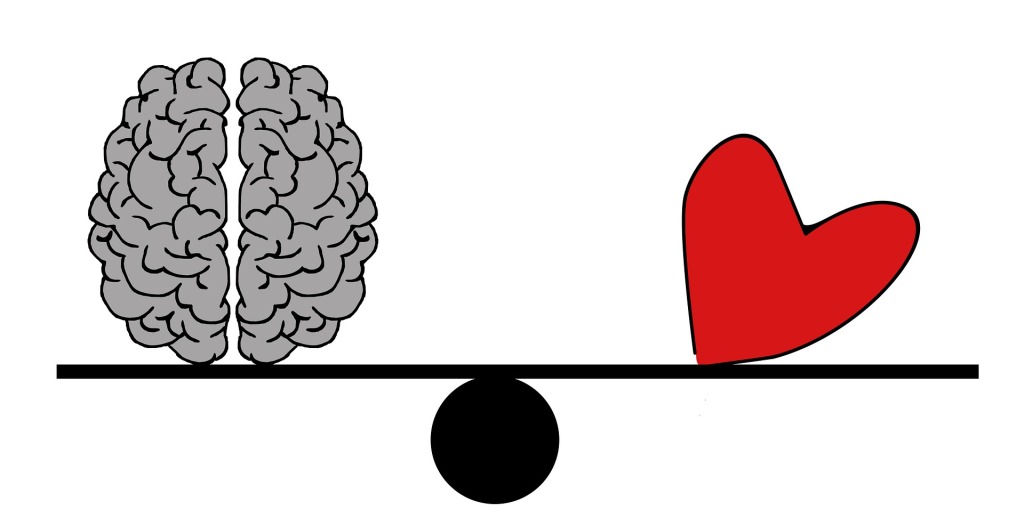
An illustration of a gray brain (2 lobes) on the left of a balanced beam (level line over a circle) with a red heart at opposite end (right side).

While reading and watching the content for this, my fifth course in the ADL program, I found myself feeling a bit conflicted and frustrated. The research process that helped me identify my learning philosophy had me pulling away from my behavioral psychology undergraduate roots. Yet here I am, immediately thrust me back into concepts of behavioral change?

Wait a minute.

Stamp like image read in red "Don't Panic"

The Influencer book provides a framework for behavioral changes. As behavioral and social scientists, the authors share research findings, stories, and strategies that support change efforts. I am re-watching the Behavioral Science guys’ reminder that information overload and appeals to the head are not ways to inspire changes in behavior. Instead, we must appeal to the heart through “influential questions” (Crucial Learning, 2015).

But I thought I identified that I most align with humanistic and constructivist learning theories. Now I am returning to behaviorism? Behavioral change?

Fortunately, Dr. Dwayne Harapnuik’s post the head won’t go where the heart hasn’t been allowed me to explore connections of behavioral change through a cognitive lens which helped alleviate some panic. In this post, Dr. Harapnuik relays that “the science community is beginning to recognize the importance of the affective domain” (Harapnuik, 2015). To clarify, “the affective domain includes factors such as student motivation, attitudes, perceptions and values” (The Affective Domain in the Classroom, n.d.).


In this first assignment, I must balance and allocate the heart and the mind for change initiatives/strategies. Specifically, my innovation plan. The first task is identifying and articulating our Why, How, and What statements.

TEDx Talks. (2009, September 29). Start with why — how great leaders inspire action | Simon Sinek | TEDxPugetSound [Video]. YouTube. Retrieved from https://www.youtube.com/watch?v=u4ZoJKF_VuA

Simon Sinek defines why with the following questions:

  • What is your purpose?
  • What is your cause?
  • What is your belief?
  • Why does your organization exist? [Which I extend to include – why does your innovation exist?]

Using the neuroscience of the human brain, Simon Sinek illustrates the importance of starting with why through a golden circle, in which he explains that our feeling and emotional, limbic brain is “the part of the brain that controls behavior” (TEDx Talks, 2009). Sinek points out that by sharing our purpose and beliefs, we will attract others with those commonalities. He illustrates his point with a beautiful example from Reverend Martin Luther King Jr.’s (MLK) I have a dream speech. He points out that MLK “didn’t go around telling people what needed to change… he told people what he believed” (TEDx Talks, 2009).

Now to connect with what I believe? How do I get people to feel the way I feel? What is my why? While this seems big and overwhelming, I find encouragement in Simon Sinek’s call to action that “those who start with why… have the ability to inspire those around them…” (TEDx Talks, 2009).


Contemplating Tom Asacker’s questions on behavior change, I agree that “it is our personal narratives that move us to change the world and to improve our lives and the lives of others (TEDx Talks, 2014). I believe my own experience with learning gives me the purpose and passion for empowering my learners.


I want to help revolutionize advising. Dr. John Kotter argues that to enact change, one must “win over the hearts and minds of people” (Dr. John Kotter, 2011). Much like Sinek’s Golden Circle illustration, Kotter references two parts of the brain responsible for different functions (emotions/feeling vs. rational/thinking) and encourages change efforts must remember to focus on both aspects. Kotter (2012) urges that the “heart provides the energy to make something big, a big leap happen.” Kotter (2013) recommends that change agents work to create excitement and energy through transparency for the need and desire to strive for something better.


You see, I am all in.

“This is not an easy process but we owe it to our children and to the young men and women who are going to our universities and colleges with dreams of building a better world”

(Harapnuik, 2014).

References

Dr. John Kotter. (2011, March 23). John Kotter – the heart of change [Video]. YouTube. Retrieved from https://www.youtube.com/watch?v=1NKti9MyAAw

Dr. John Kotter. (2012, February 6). The biggest mistake I see: strategy first, urgency second. YouTube. Retrieved from https://www.youtube.com/watch?v=Qx46Z2daVtQ

Dr. John Kotter. (2013, August 15). Leading change: establish a sense of urgency [Video]. YouTube. Retrieved from https://www.youtube.com/watch?v=2Yfrj2Y9IlI

Harapnuik, D. (2014, September 16). People who like this stuff. . .like this stuff. It’s About Learning. Retrieved from https://www.harapnuik.org/?p=5198

Harapnuik, D. (2015, January 9). The head won’t go where the heart hasn’t been. It’s About Learning. Retrieved from https://www.harapnuik.org/?p=5461

TEDx Talks. (2009, September 29). Start with why — how great leaders inspire action | Simon Sinek | TEDxPugetSound [Video]. YouTube. Retrieved from https://www.youtube.com/watch?v=u4ZoJKF_VuA

TEDx Talks. (2014, June 30). Why TED Talks don’t change people’s behaviors: Tom Asacker at TEDxCambridge 2014 [Video]. YouTube. Retrieved from https://www.youtube.com/watch?v=W0jTZ-GP0N4

The affective domain in the classroom. (n.d.). Teach the Earth. Retrieved from https://serc.carleton.edu/NAGTWorkshops/affective/index.html

ADL Program, Evolution, Growth, Learner's Mindset, Learning, Personal, Professional, Reflecting, Tips

Authority vs Influence


When I begin a new course, I almost always go looking for “Learners Mindset Discussions” on the topic. Here is a lovely nugget related to the Organizational Change course beginning this week.

CSLE2COVA. (2019, August 17). LMD EP27 Authority vs Influence. YouTube. https://www.youtube.com/watch?v=dZOslhVzujs

References

CSLE2COVA. (2019, August 17). LMD EP27 Authority vs Influence. YouTube. Retrieved October 17, 2022, from https://www.youtube.com/watch?v=dZOslhVzujs

ADL Program, ePortfolios, Evolution, Goals, Growth, Learner's Mindset, Learning, Personal, Professional, Reflecting

Why I’m here…


“Inspire people to walk in purpose” (Michael Jr., 2017).

Michael Jr. (2017, January 9). Know Your Why | Michael Jr. YouTube. Retrieved October 17, 2022, from https://www.youtube.com/watch?v=1ytFB8TrkTo

Shew! I’m one video in on my next course and already I’m teary eyed.

The ADL Program does not cease to amaze me in its depth and fulfillment. This program is truly life changing! I wonder how many people recognize the holistic transformation opportunity.

“When you know your why, your what becomes more impactful because you are walking towards or in your purpose” (Michael Jr., 2017).


References

Michael Jr. (2017, January 9). Know Your Why | Michael Jr. YouTube. Retrieved October 17, 2022, from https://www.youtube.com/watch?v=1ytFB8TrkTo

ADL Program, Collective, Contributions, Evolution, Growth, Growth Mindset, Learner's Mindset, Learning, Learning Community, Personal, Reflecting

Contributions, 5313


Creating Significant Learning Environments (CSLE) Course

  • Fall 2022
  • Course Number: EDLD 5313
  • Course Title: Creating Significant Learning Environments

Square orange sign tilted so that one point of the square points upward, centered are the words "Detour Ahead"

Contributions to learning and learning community.

I am giving myself a score of 96 out of 100


Crediting Core Group Members: Kristin Winzer, Patrick Rodriguez

Crediting Collective Members: https://advising.blog/collaborations/


Key Contribution

I met all activity deadlines and requirements throughout the semester by their posted deadline. Each semester I work to review and revise my previous work. As I gain a greater understanding of the task (this learning approach), I can evaluate and determine if my past work is meeting those outcomes and objectives. This course has provided a greater understanding of the importance of the learning environment I am creating. Everything we do should focus on learning, and how we approach subjects can tap into a learner’s thirst for learning or squelch it. I want to help reignite that natural love of learning so that my learners can be both successful and lifelong learners. 

What worked

In addition to completing all course readings, videos, and supporting research, I embraced research this semester. I found that the best way to understand the different topics was to give myself as much context and related information as possible. In doing so, I watched/read the provided content, followed all the associated links, researched for related information, watched relevant media, and took many notes. This means of forming context allowed me to better synthesize my understanding of everything. I faced several projects that were entirely new for me. These new concepts and tasks made me work extra hard to teach myself as much as possible. This course was my first of really long study nights and limited sleep. If there is one thing that this program has taught me: I have the power to learn and improve when I feel weak or unfamiliar with something. For example, I believe my academic writing skills could use improvement. Therefore, in addition to my typical YouTube search to learn about “how to write an argumentative paper?,” “How to write a response,” and “What is an annotation?” I attended an online writing workshop to try and help with my ability to paraphrase and improve my overall writing skills.

I am trying to keep up with blogging and tracking some of my thought processes (thinking about my thinking). I am trying to embrace and trust the ADL program (COVA+CSLE). I recognize that reflection is a crucial aspect of learning. I have also hoped that I could further help facilitate learning how to learn by documenting the stages and steps in my learning process. Additionally, those proved very helpful in the compilation because those blogs helped me reflect upon the process and my facets of understanding to see myself in each piece of that learning opportunity. 

What could be better

I still struggle quite a bit with the best way to keep up with academic research. I have a variety of folders and drives just full of PDF documents. I have been saving my research related to different assignments or projects. Still, I think having a better system to organize my research would allow me to draw from multiple overlapping resources as relevant and needed. I tried a couple of online research systems. Still, they all seemed very time intensive, with multiple entries required for each resource. I am considering starting a gigantic, annotated bibliography since that was something we have done in a couple of classes thus far. I can see how the summary of why the source is relevant to me could be beneficial. 

I am also finding that I lack the confidence I think I need to synthesize information effectively into my own words. I struggle with not just creating a quote-fest and submitting it as an assignment because the source material is all so new to me. I feel that I’m still really finding it a challenge to process and paraphrase (with citations) instead of just direct quoting. 

I recognize this semester that I need to work harder to keep the forward progression in the modules. Instead of focusing on a given week’s readings/discussions/projects, the future modules don’t get addressed until the previous one is complete. I recognized that this provides additional context and increases the synthesis of information instead of trying to keep everything so compartmentalized between projects/modules. I can get too focused on the immediate that I can forget to consider/plan for the long term.

I’m unsure if I should actively seek comments on my blogs/EP. I know from our ePortfolio class that likes, reshares, and comments are what drives the audience. Should I ask my classmates to visit my blog and leave comments, or am I just hoping to connect with readers with common interests? I feel like this is an area where I could improve my understanding and ensure that my ePortfolio functions as a learning space, a personal narrative, and a place to help others in their learning journeys. 


Supporting Contributions

I think I will address my supporting contributions in reverse order since I am already reflecting on what could have been better. Plus, then I get to wrap everything up on a positive note. 

What could be better

I feel terrible admitting this, but I have committed to transparency in my learning journey. I genuinely believe I can learn from this first reflection what I could have done better. I completely dropped the ball on my learning community this semester. I spoke with my group last semester, and we were all set to collaborate again this session. We continued with our chat and google drive. Our last class was the Concepts of Educational Tech course, and I created shared documents for our group discussions. Still, no one interacted with them, as we had in our Applying Digital Tech /ePortfolio course. Last semester, there didn’t seem to be as much focus on the blog posts and group discussions as there was in the ePortfolio course. I thought I would try this session again, so I created a few module reminders/guides/checklists and started group discussion threads.

The first one or two discussions passed without interaction, and I assumed the group was meeting and collaborating in another fashion. Since everyone else was a K-12 teacher with similar innovation plans, they took two classes instead of one. In past semesters, they explained that they often met about the class I wasn’t in and covered questions/material for both courses. I am embarrassed to admit that I just assumed the worst and leaned into the ADL 2021-2023 group chat to share my assignments, seek collaboration/support, and feed-forward. During my breakdown crisis of self over the UbD template assignment, one of my previous groupmates said, “I know you haven’t been sharing your assignments as we have, but ours are there if you think more examples will help you.” I didn’t even realize they were uploading assignments to our shared drive. After a couple of weeks of no interaction in the early part of the semester, I stopped checking. I felt like such a jerk; I had no idea. My groupmate was utterly kind and supportive, which was so amazing in my moment of dismay. I am fortunate to be in this program with wonderful people who extend grace and understanding. I learned a valuable lesson on the importance of communication and transparency. I should have just asked, are we still collaborating? Is there another group chat somewhere? Am I missing something? 

What could be better? I recognize that I need to speak up instead of just retreating into my feelings and making assumptions. 

However, I did find a few different things that worked this semester. 

What worked

I continued leadership responsibilities within the online ADL 2021-2023 group chat, which helped me connect with the ADL cohort. I wanted to stay connected with my cohort as I have seen previous cohorts remain connected and supportive throughout every program stage. Additionally, selfishly my learning cohort will change every two semesters or so. So I needed to find a way to foster new relationships, develop opportunities to mentor and for mentorship, and maintain connections with the incredible network I am making. I also wanted to provide that level of community connection for others who might be returning to the program. I recognize that in groups, there can be any number of personalities, schedules, and other dynamics of the human dimension. It is important to me that there is a place open to everyone so that no one goes without that collective component that seems so integral and valuable to the learning process. I appreciate that we have students from all levels in the chat, allowing students further along in the program to give guidance and context for questions that arise.

The group has become an incredible collective and support system for many of us. At almost any hour (day or night), we can reach out and get feed-forward, ideas, and input from one another. Additionally, we can provide the same for those progressing further behind us. It has been nice to see our cohort share professional challenges and opportunities. 

I enjoy the role of learning facilitator and resource. Throughout the semester, I would post reminders to the group chat about discussion posts, due dates, comment deadlines, and upcoming assignments. I would individually reach out to people who had not yet posted or commented by those deadlines for the first week or two. I enjoy being that helpful friend who understands how busy life can make us. I believe this allowed most of us to successfully keep up with the timely postings and active contributions for myself and the group. Seeing the group take ownership of that chat and step up to support and mentor one another has been gratifying. I think that ongoing collaboration helps in the bond our cohort shares. 

Through our class meetings and the group chats, I identified Kristin, another non-classroom educator. I reached out her via course mail a few times and expressed a sincere interest in working together. We bonded and built a learning community over our connection and struggles of translating what we teach and our learning environments from application in K-12 education settings. Kristin said that she was collaborating with Patrick and that it would be great for us to all see how we could support one another. I was in a group chat with Patrick, started by Jasmin, so I was excited to share my assignments and struggles with each of them. I finally tried to do a better job of not just providing support but also asking for support. I recognized this as something that could be better in my last contributions to learning reflection, so I pushed myself to share more vulnerability in this area. The payoff was so rewarding. I watched my learning community members grow and expand their portfolios and confidence with each passing conversation and assignment. 

I feel a special place in my heart for this course and this learning experience. I felt the connection in this course, maybe because of the vulnerability and openness we shared, or perhaps it was just all the communication and collaboration. I also tried to stay tuned to the student/faculty discussion thread and keep conversations active in class meetings, chats, and course mail. I am excited to continue learning, applying, and revising my work and understanding as we progress through the program. 

I guess the advice I want to leave here for myself and others is to Embrace the process, accept the change, and in the wise words of our fearless facilitator, “Say yes!” (Grogan, 2022).

ADL Program, Advising, Evolution, Goals, Growth, Growth Mindset, Growth Mindset Plan, Innovation Plan, Learner's Mindset, Learning, Personal, Professional, Reflecting

Growth Mindset Revisited


I’m not going to lie; I felt a little frustrated as I read the two meta-analyses on the growth mindset. I thought, “well then, why in the world did we read the growth mindset book and do so much work focused on the growth mindset?!?” Then I realized that I most likely would not have made it to this fourth course in the ADL Program without that opportunity to embrace my growth mindset.

As I move along in the program and contemplate how the growth mindset fits within my innovation and my daily interaction with students, I know that I have to help my learners understand the growth mindset and really work to overcome their fixed mindset voices, but creating significant learning environments has taught me that without carrying that mindset and those actions forward into a holistic learning environment the growth mindset won’t have the opportunity it needs to ignite the learners’ mindset. Everything I hope to do with my innovation to advising seeks to empower the learner to take ownership of this, their authentic learning opportunity. I want to model, foster, and cultivate their big-picture understanding of how they learn. I want them to seek and find the connections those opportunities and understandings provide in all aspects of life.

I cannot fully articulate the dichotomy that is in this program. It is one of the most challenging and frustrating processes for every assignment. There is so much to process, and you must seek as much context as you require to understand all the lessons available. The growth mindset revisited could not have come at a better time. As I wrestled through the 3 Column Table and UbD Template portions of Creating Significant Learning Environments, I appreciated every encouraging message of yet. I was grateful that I knew cognitively, based on research, that intelligence is something earned through hard work. As I reflect on my learning experience, I cannot help but keep asking:

“How do we make advising authentic?”

The choice, ownership, and voice this authentic innovation project provides me continues to inspire me to provide my learners with the same opportunity. I want to utilize the advising experience as potentially the first place a student could experience such an understanding of the learning process. From personal experience, I know the shift that takes place affects every other aspect of your life. You start seeing relationships, communication, and interactions all as potential opportunities to be a catalyst for change and improvements.

Advising is one of the first places students experience the university. Embracing the learners’ mindset will allow us all to aspire toward endless innovation goals as an institution.


Sisk, V. F., Burgoyne, A. P., Sun, J., Butler, J. L., & Macnamara, B. N. (2018). To what extent and under which circumstances are growth mind-sets important to academic achievement? Two meta-analyses. Psychological Science, 29(4), 549–571. https://doi.org/10.1177/0956797617739704

ADL Program, Evolution, Goals, Growth, Growth Mindset, Learner's Mindset, Learning

Adopting a Growth Mindset


“Learner’s Mindset – a state of being where people act on their intrinsic capacity to learn and respond to their inquisitive nature that leads to viewing all interactions with the world as learning opportunities. This state enables one to interact with and influence the learning environment as a perpetual learner who has the capacity to use change and challenges as opportunities for growth” (Harapnuik, 2021).

How to reignite the learners’ mindset is a question with which I am constantly struggling—translating lesson plans and content from educational standards to create a learning environment where there are no standards to meet is liberating and limiting. I know, I know, classroom educators are screaming that the process of igniting and reigniting the learners’ mindset is a challenge due to the standards I wish were structuring the work I am hoping to do through my innovation. After completing the first three ADL program courses, I thought that my innovation would be chalked full of growth mindset messaging and modeling. However, the more information I absorbed this week, the more I recognized that I did not want to spend all my investments on cultivating a growth mindset in my learners. The meta-analyses, research, and other criticisms seem to illustrate that growth mindset lessons, messaging, and words alone do not lead to lasting change. Dr. Harapnuik pushes the message in the Learners’ Mindset discussions that without changes to the learning environment, it is difficult for authentic, meaningful change to occur in both ourselves and our learners (CSLE2COVA, 2019). We have to really want to learn. We have to help our learners really want to learn. The authentic tasks that reignite the learners’ mindset are where I honestly struggle with how to create an environment that helps my learners “turn life’s challenges into an opportunity for growth and development” (Harapnuik, 2021). 

I would like to believe that daily, through my learning journey, I am embracing and reigniting my learner’s mindset, which will help me instill those values and beliefs in my learners. This whole process is exactly what lead me to the ADL program.

References 

CSLE2COVA. (2019, April 5). LMD EP20 Growing A Growth Mindset. YouTube. https://www.youtube.com/watch?v=yR7uCZGPZ5k

Harapnuik, D. (2021, February 9). Learner’s Mindset Explained. Harapnuik.org. https://www.harapnuik.org/?page_id=8616

ADL Program, Collective, Evolution, Goals, Growth, Growth Mindset, Growth Mindset Plan, Learner's Mindset, Learning, Learning Community, Learning Manifesto, Personal, Professional, Reflecting

Revisiting Reflections


This week, we are revisiting some of our previous Growth Mindset content and reflections. As I re-watch the Learners Mindset Discussions, Episode 20, I am almost overcome with confirmation of so many things going through my mind these days.

When I was struggling with the thought of enrolling in the ADL Program, I watched so many LMD and ADL content, just trying to get a sense of the program. Dr. Thibodeaux‘s vulnerability spoke directly to my fixed mindset, to my wall of fear, to my heart. This discussion topic was the subject that sealed the deal for me.

Now I review the discussion and have a whole new perspective on the conversation. I understand what the instructors mean when they say that the environment we can create for our learners is the key to transformation, transference, and triumph (I wanted to say success but couldn’t resist the 3T’s). I understand it because they provided that very environment to learn for me.

We now get to create the environment through our essential questions/understandings. It is overwhelming. It is exceptionally challenging. But aren’t we “smashing through the walls of fear?” Aren’t we “setting our course by the light of the stars?” Aren’t we here “to change the world?” That is big and overwhelming, but our instructors believe in us. We believe in each other. And just because I know I need to hear it and you might too, I believe in you!

CSLE2COVA. (2019, April 5). LMD EP20 Growing A Growth Mindset. YouTube. https://www.youtube.com/watch?v=yR7uCZGPZ5k

References

CSLE2COVA. (2019, April 5). LMD EP20 Growing A Growth Mindset. YouTube. https://www.youtube.com/watch?v=yR7uCZGPZ5k