ADL Program, Collective, Contributions, Evolution, Growth, Growth Mindset, Humor, Learner's Mindset, Learning, Learning Community, Personal, Reflecting, Tips

UbD Collaboration


In one of our final course meetings, a classmate expressed some serious reservations about their final major assignment. Another fantastic community member messaged me, heartbroken about how we could help a classmate through their struggle. I created a zoom call and rallied the troops so that we could be supportive sounding boards to provide as much feed-forward as possible. This meeting took place after an hour-long class call and lasted another 40-45 minutes. I believe we all left the session with a better understanding of the assignment.

I wanted to share our discussion because I think it illuminates the purpose of our learning community component. As we discuss our ideas with others, we obtain clarity on our plans. As we support others in finding clarity for their ideas, we fortify our own.

Course Info

  • Course Number: EDLD 5313
  • Course Title: Creating Significant Learning Environments
  • Instructor: Dr. Kelly Grogan
  • LU’s Applied Digital Learning Program
  • Fall 2022, first eight-week session
  • UbD Template – Assignment
ADL Program, Evolution, Innovation Plan, Learner's Mindset, Learning, Reflecting, Tips

Ub… kidding me?


I want to inspire my students to seek digital learning opportunities by modeling that behavior and showing the value of seeking multiple sources and applications of different aspects of learning. I know I better understand content and material when I can view it through different lenses and processes until it makes sense.

For example, here is my process for beginning the UbD Assignment. I first go to YouTube and search for each individual author and UbD. Then I search on the associated channels for the ADL program discussions. Here are some of the sources that I first used to frame the project.

After taking pages and pages of notes, I think reviewed the assigned chapters (Intro, 1 and 3) but I did not stop there. As I began trying to work my way through the assignment, I quickly found myself reading and taking notes on almost the entire book. This thirst to understand and to try to do right by my learners pushes me to consider more from the innovation to innovate advising.

I want to inspire the learners I have influence over to become digital learners too. Through combined formalized education and informal learning opportunities, I believe our learners have a more significant chance for understanding and skill transfer. As our learners experience authentic learning and connect informal learning, they will be more likely to carry those skills to the next challenge or task to be addressed. By giving our learners real-world learning opportunities, they will become the “self-evolving learners” that Grant Lichtman identifies (TEDx Talks, 2013). I am striving to increase curiosity and questioning by using questions. I hope that by prompting learners with questions instead of just providing information, they will begin to tap into their inquisitive mindsets and seek additional information and ask more questions. Through reigniting that curious mindset, I hope learners will be inspired to think outside the box and actively seek further information, verification, and clarification sources. 

References

TEDx Talks. (2013, March 21). What 60 Schools Can Tell Us About Teaching 21st Century Skills: Grant Lichtman at TEDxDenverTeachers. YouTube. https://www.youtube.com/watch?v=UZEZTyxSl3g&t=2s

ADL Program, Evolution, Learning, Reflecting

Embracing Change


The findings of visiting 60 schools video proves that we need to get better at preparing our learners for unknown futures. As Grant Lichtman describes, by forming both “self-evolving learners and self-evolving organizations,” we can grow and change as learning, education, technology, and society continue to change will prepare us all simultaneously for the future as well as the present (TEDx Talks, 2013). I want to inspire my students to seek digital learning opportunities by modeling that behavior and showing the value of seeking multiple sources and applications of different aspects of learning. I know I better understand content and material when I can view it through different lenses and processes until it makes sense. By providing those sources and opportunities to my learners, I hope to inspire them to become digital learners too. Through this type of combined formalized education and informal learning opportunities, I believe our students have a more significant chance for information and skill transfer. As our learners experience authentic learning and connect informal learning, they will be more likely to carry those skills to the next challenge or task to be addressed. By giving our students real-world learning opportunities, they will become the “self-evolving learners” that Grant Lichtman identifies (TEDx Talks, 2013). I am striving to increase curiosity and questioning by using questions. I hope that by prompting students with questions instead of just providing information, they will begin to tap into their inquisitive mindsets and seek additional information and ask more questions. Through reigniting that curious mindset, I hope students will be inspired to think outside the box and actively seek further information, verification, and clarification sources. 

References

21stEducator. (2009, April 2). 21st Century Education vs. 20th Century Education. YouTube. https://www.youtube.com/watch?v=HiD1UqLPrOg

TEDx Talks. (2013, March 21). What 60 Schools Can Tell Us About Teaching 21st Century Skills: Grant Lichtman at TEDxDenverTeachers. YouTube. https://www.youtube.com/watch?v=UZEZTyxSl3g&t=2s

Advising, Collective, Evolution, Learner's Mindset, Learning, Learning Community, Personal, Professional, Reflecting, Tips

Cultivating Dreams


This afternoon I had the pleasure of attending the following Coffee Chat with my professional organization. I found the resources shared so valuable and timely that I wanted to post some of the links and ideas to reflect upon as I address learning outcomes in my upcoming assignment.

Excellent small group discussions with advising colleagues and brainstorming session on dream inducing questions like:

  • What did you always want to do/be when you grew up? And why?
  • What does good academic standing look like to you this semester, and how does that bring you one step closer to your dream/ideal profession?
  • What inspired you to come to this institution, and how does that “why” drive you closer to your dream?
  • What are things that you loved to do when you were young?
  • What do you do when you lose track of time? (accessing flow)
  • Where do you find yourself most creative? 
  • What brings you joy? 
  • What courses have you enjoyed the most and what did you enjoy about them?
  • If money was not an issue, what would your ideal job be?
  • Does anybody out there already have your dream job and what do they do?
  • What do you love to do?
  • Who is a role model in your field of interest that you want to emulate, and how can you “walk in their footsteps” this semester?
  • What do all the things you are interested in have in common?
A New Culture of Learning, ADL Program, Advising, Collective, Contributions, Evolution, Goals, Growth, Growth Mindset, Learner's Mindset, Learning, Learning Community, Personal, Professional, Reflecting

What am I?


In my last post, I explained that looking back on my undergraduate psychology and sociology degree program. I recognized that I connected most with those courses that involved me in the learning process and required my reflection and personal interpretation/experience with the materials. I feel like my own learning preference is for one of authentic ownership, as we experience in the ADL Program

Reflecting on my beliefs about my role in the learning of others makes me wonder which learning theory aligns with my professional beliefs as an advisor. Examining my years as an advisor, I can honestly say that I only know what I have been exposed to through my experience and professional organizations.

My professional experience

When I was hired into higher education, I worked at a centralized first two-year advising center that believed in intrusive advising. Our role was to identify those most at risk and provide support and guidance as they transitioned into college students. I jumped into this role by organizing tours for advisors to visit support services offered across campus. I wanted to know the individuals I could contact when a student needed support. I wanted a first-person understanding of the facility, delivery, and offerings to describe them to my students in ways that would alleviate any trepidation about being labeled, being afraid, and preventing them from being comfortable trying something new or uncomfortable. There were occasions when I would walk with my students to these service locations for a personalized handoff. We had frequent communication with our assigned advisees and much smaller cohort sizes. I frequently participated with the college department I represented at the advising center again to keep my students informed about student organizations and other opportunities to bond with their community of interest.

Despite this genuine passion for student success, I have never been able to connect with advising theories about student development. I participate in my professional organization by attending conferences, sessions, and webinars about topics that interest me or seem suitable to my situation or students. The theories and resources always appeared to me as if they were written for faculty advisors and people who have long depth conversations and relationships with students and their curriculum. I typically interact with a student three times a year, around registration time, if they don’t have questions, need support, or show signs of being at risk academically. My literature review caused a crisis of self. As I read research about advising, I could not help but wonder if I have been a good advisor without employing any formal theory over the years.

Through the active learning process that is the ADL, we are presented with resources, information, references, and perspectives. Still, we are left to seek and search for many more. Thus far, my three program instructors have all identified as constructivist. I can’t honestly say I had ever learned of these theories. I silently panicked that this is something taught in Pedagogy since many in my program cohort are teachers at various levels and institutions.

This is a challenging experience for many, including myself. We are left thinking, “Wait, aren’t you going to teach me?” (Lecture) and “How am I supposed to create that?” (Checklist). Nonetheless, I attempted to embrace the challenge of learning by doing within an unlimited boundary of an assignment or course.

We are encouraged to create our own learning communities, and now I better recognize them as collectives. This constructivist approach of making an environment where learners can learn leaves many still trying to fit into the regurgitation education model. How many discussion comments? How many blog posts? Do we have to prove that we held learning community meetings? As learners, we have been duped into believing that learning is about the assessment of the professor or the program. I get it. It is in the sense that we are all here with hopes of degree attainment, but, in the process, we miss out on the genuinely hands-on, authentic, make it yours experience we have here.

I recently searched for Simon Sinek and found he offers a 4 session course on finding your why. I thought, “hot diggity, I can get ahead of the curve!” by preparing for the class that utilizes his book Start with Why. Our experience here, in just that single component/regard, is valued at $4,900ish for four sessions. We get around eight sessions in our eight-week coursework. I want to absorb every morsel of knowledge, experience, and content our instructors want to throw at us. I want to learn about their learning experience, success tips, and tricks. I want to grow, learn, and experience what this program is presenting. Knowing and embracing that I can really make a difference. That is what this whole advising thing has always been about for me. That is what makes me a good advisor. I care, I want to make a difference, and if I don’t know the answer, I will do my best to find it or connect you with someone who can.

Don’t get me wrong, I have no life outside of work and school, but the journey is what you make it, right? I’m in. I am all in. I want to change the world, one learner at a time. I want to use my current position, the challenges, and the opportunities it holds and make it better for my students and my colleagues. I want to be a catalyst for change.

So which theory is going to help me accomplish that?

ADL Program, Evolution, Growth, Learner's Mindset, Learning, Personal, Professional, Reflecting

What was I?


While attempting to identify which learning theory aligns with my beliefs about learning, I am finding a real internal struggle between the past and the future.

Looking back at my undergraduate experience, I see powerful behavioral influences in most of my studies. I still have a few textbooks, such as:

  • Learning & Behavior, 5th Edition, Paul Chance (2003)
  •  Behavior Modification: Principles and Procedures, Raymond G. Miltenberger (2004)
  •  Sniffy: The Virtual Rat, Lite Version 2.0, Alloway, et al., (2005)

I also remember an exciting class called Brain and Behavior which focused on more biology/neurology of the brain and subsequent behavior. Needless to say, I should emphatically declare I’m a behaviorist. Yet, I’m not.

While studying both Psychology and Sociology, there are very few classes that I can remember specific details about.

  • Dr. Tulsi Sural’s classes with transpersonal foundations. Semester after semester of exploring transpersonal psychology by actively experiencing the different techniques. Each class began with a different type of meditation or practice that aligned with the approach. We then discussed our experiences and journaled about their impact of them.
  •  Dr. Dula Espinosa’s advanced sociology special topics. In her classes, we reviewed Supreme Court rulings on socially impact populations. We wrote papers and reflections on the justices’ rulings, reasonings, and interpretations of written vs. executed law.

Looking back on these experiences, they were both transformative because instead of a “sage on the stage” learning approach, these classes all involved me getting into the experience, the content, reflecting upon it, and then outlining what I learned, believed, or thought about it.

Next up, What am I?

ADL Program, Evolution, Goals, Growth, Learner's Mindset, Learning, Personal, Tips

Anno-what?


So for the next assignment we will be identifying our learning philosophy and including an annotated bibliography. While I did create a simplified version for the innovation course, I feel like there is much more I can learn about it.

Annotate = to take notes

Therefore, I’m once again, turning to my favorite writing resource: Smart Student

Additionally, it is long past time for me to review and brush up on my paraphrasing skills! Lord knows my last paper was a quote-fest with weak attempts at paraphrasing. I feel like it may have been a much strong assignment if I could clearly articulate my research into my own words.

A New Culture of Learning, ADL Program, Collective, Contributions, Evolution, Growth, Learning, Learning Community, Reflecting

Learning Revolution


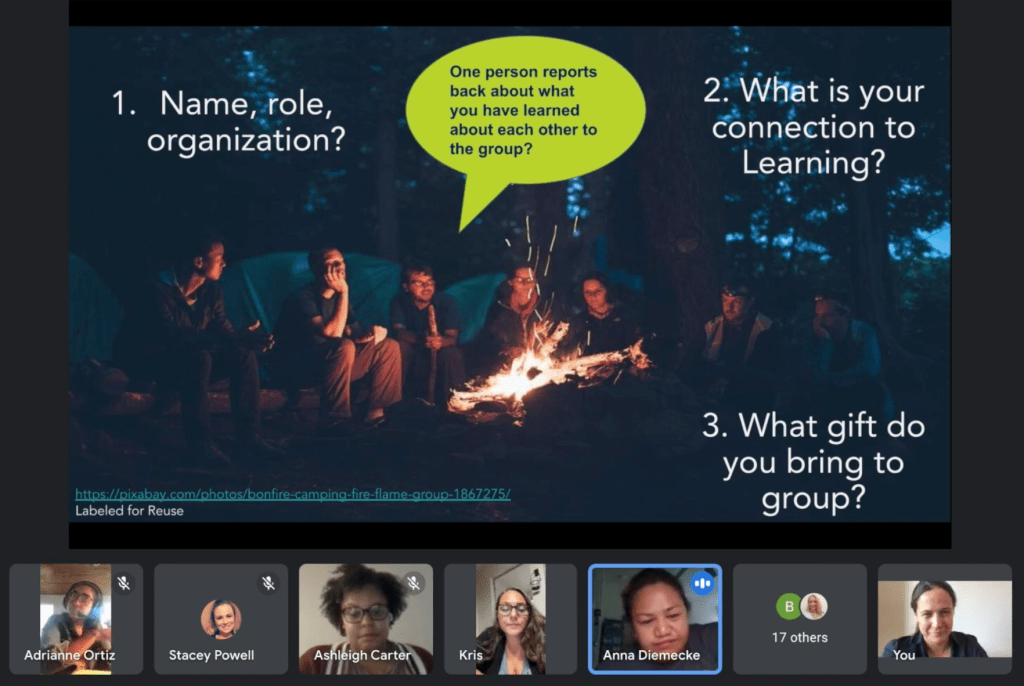
In our first class call we were asked to share what gift we bring to the course/our cohort.

I can not help but appreciate that intro discussion question about the gift we bring to this learning journey. This question about gifting taps into the passion that allows for learning naturally. I wonder how many of my adult learners (graduate students) would be willing to open up and share their answers to the same question. How about my colleagues? What giftings do they bring to the advising unit?  

Incorporating Daniel Pink’s “three factors for better performance in the workplace (autonomy, mastery, and purpose)” further provides an environment to cultivate and develop these valuable human resources (RSA, 2010). I have never considered that I have a learning environment. Through the content of this course and the program, I am beginning to identify the significant learning environment I can create in multiple areas. My students and I benefit from focusing on their learning environment from an advising perspective. I also see the benefit of creating a learning environment to foster the advising unit. Innovation can provide my audience (students/colleagues) an opportunity that comes from giving them control of the best way to process/provide information. Perhaps by tapping into the question of their gifting, they will each find the drive to continue to improve. Most of all, I want to help create an environment that produces happiness for students and advisors. From a professional perspective giving people the autonomy to communicate challenges by proposing solutions benefits the workplace culture and improves communication. This transparency further provides a foundation for building a trusted relationship between advisors and advisees customized to each learning situation or program requirement. Why not be the one that helps to create that culture? 

Videos like these are directly tied to my innovation proposal and fuel my desire to improve the systems and processes for everyone, myself included. Resources like these will continue to shape my reflections as I move toward creating my learning philosophy. 

As Sir Ken Robinson (TED, 2010) compares education to the standardization produced by a fast food model, I reflect on an undergraduate sociology text called The McDonaldization of Society. When reflecting on higher education, the author states, “the focus seems to be on how many students (the “products”) can be herded through the system” (Ritzer, 2000, p. 66). We lose humanity when all aspects of life focus on maximum efficiency and consistent output. Humans cannot be standardized, as doing so is the antithesis of customized learning, which aids natural/organic learning, growth, and personal evolution. 

In closing, the quote about dreams shared by Sir Ken Robinson (TED, 2010) reinforces my passion for advising. I have the opportunity to help solve problems, translate policy, and provide options while pointing out potential unintended consequences of those different prospects. My students are sacrificing so much to return for their degree or certification. Many students face additional examinations and licensure requirements after their academic studies. Many have families and careers while pursuing their motivations, passions, and purpose. The accomplishments that come from my students persevering in the face of life’s challenges are also dreams upon which “we should tread softly” (TED, 2010). 

References

Ritzer, G. (2000). The McDonaldization of Society (New Century Edition). SAGE Publications, Inc.

RSA. (2010, April 1). RSA ANIMATE: Drive: The surprising truth about what motivates us [Video]. YouTube. https://www.youtube.com/watch?v=u6XAPnuFjJc

TED. (2010, May 24). Bring on the learning revolution! | Sir Ken Robinson [Video]. YouTube. https://www.youtube.com/watch?v=r9LelXa3U_I

ADL Program, Evolution, Personal, Reflecting

I am a digital learner


Reflecting on The New Culture of Learning, I realize I am a digital learner. Don’t get me wrong; I did not grow up in this age of “almost unlimited access and resources to learn about anything” (Thomas & Brown, 2011). I was around 20 years old. It was around 1996 when I got my first personal computer and dial-up internet connection.

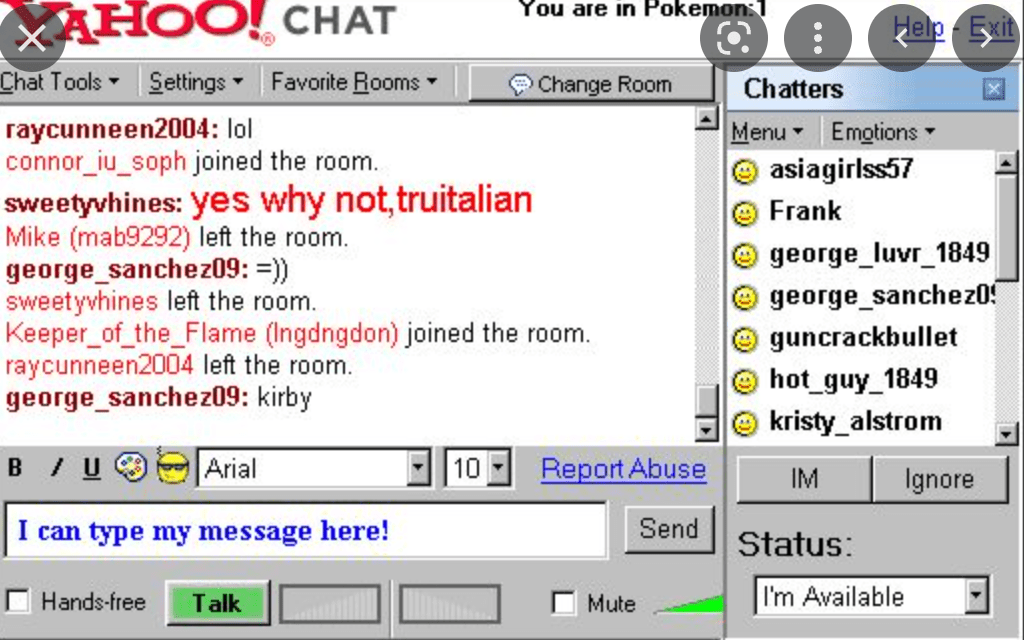
I never really enjoyed AOL instant messenger, but YAHOO chat was an exciting tool at the time. When I began exploring the internet, chats were web-based chat rooms. Those later evolved into a friends list and functioned more like the AOL system. I remember being able to listen to music posted to your status, allowing conversations with others who noticed the playing track and growth in musical tastes. As a small town girl from a tiny town (410 population), this online world opened my mind, viewpoints, and influences to people from other states and countries. Many online friends are still friends to this day, 25 years later.

I taught myself basic HTML to create multiple GEOCITIES websites. These digital presences pre-date MYSPACE and any current social options preferring anonymity via pseudonyms. These were places where individuals posted about themselves, showcased their creativity, and annoyed the world over with music files that the user had no control over. I remember helping my mom create her GEOCITIES presence too. Those platforms utilized guestbooks where visitors could leave comments. I remember seeing guest logs from long-since passed family members who left encouraging words or random messages. It began with social networking, collaboration, community, and collectives.

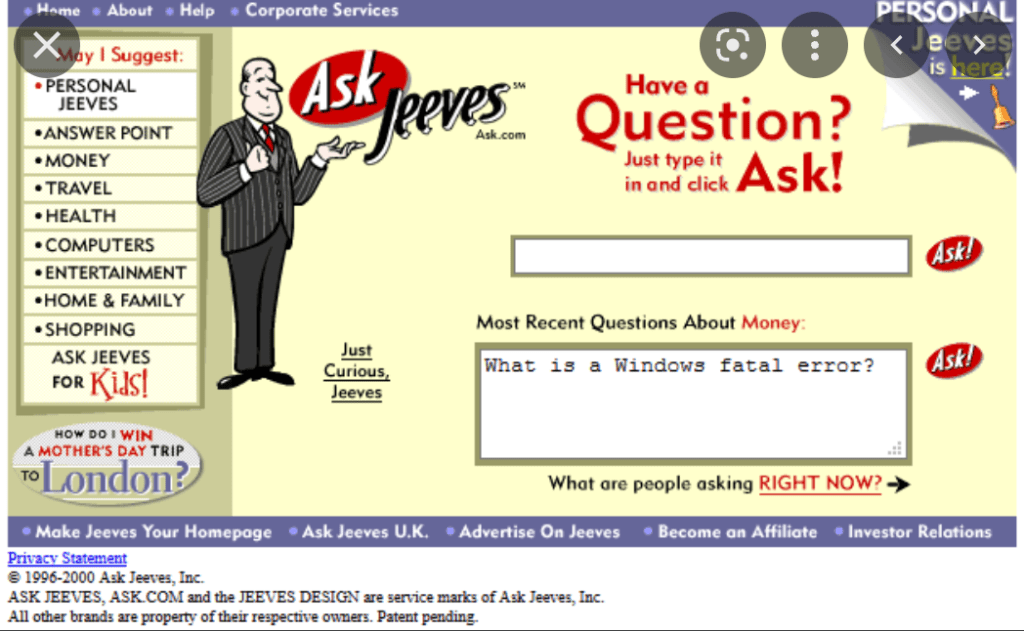
I remember the birth of multiple search engines. ASK JEEVES sticks out, probably due to television advertisements. I can not say I specifically remember when GOOGLE took over the search engine space, but I can say I fully embraced a “GOOGLE it” mindset about the world.

I never knew what autodidactic meant until Dr. Harapnuik explained this program and our goals for creating significant and authentic learning environments. Reading The New Culture of Learning, I realized that my habit of searching for errors indicated my inquisitive nature.

In my 30s, while dating my now husband from 2.5 hours away, we played WORLD OF WARCRAFT throughout the week as it provided social interaction and time. We also met people worldwide to go on quests and raids together.

2006 – For the Horde!

I could not help but reflect on the problem-solving and collaboration we experienced during our time in the early days of this massively multiplayer online game. Fifteen years later, we still stay in contact with several friends from the game in real life and have celebrated many milestones together from afar. We raised our daughter with learning games and online gaming.

I am living in The New Culture of Learning.

References

Learners Mindset. (2020, December 24). Assessment as Learning [Video]. YouTube. https://www.youtube.com/watch?v=WLmxREQLizk

Thomas, D., & Brown, J. S. (2011). A New Culture of Learning: Cultivating the Imagination for a World of Constant Change (1st ed.). CreateSpace Independent Publishing Platform.