ADL Program, Growth, Growth Mindset, Growth Mindset Plan, Learning

Growing your Mindset


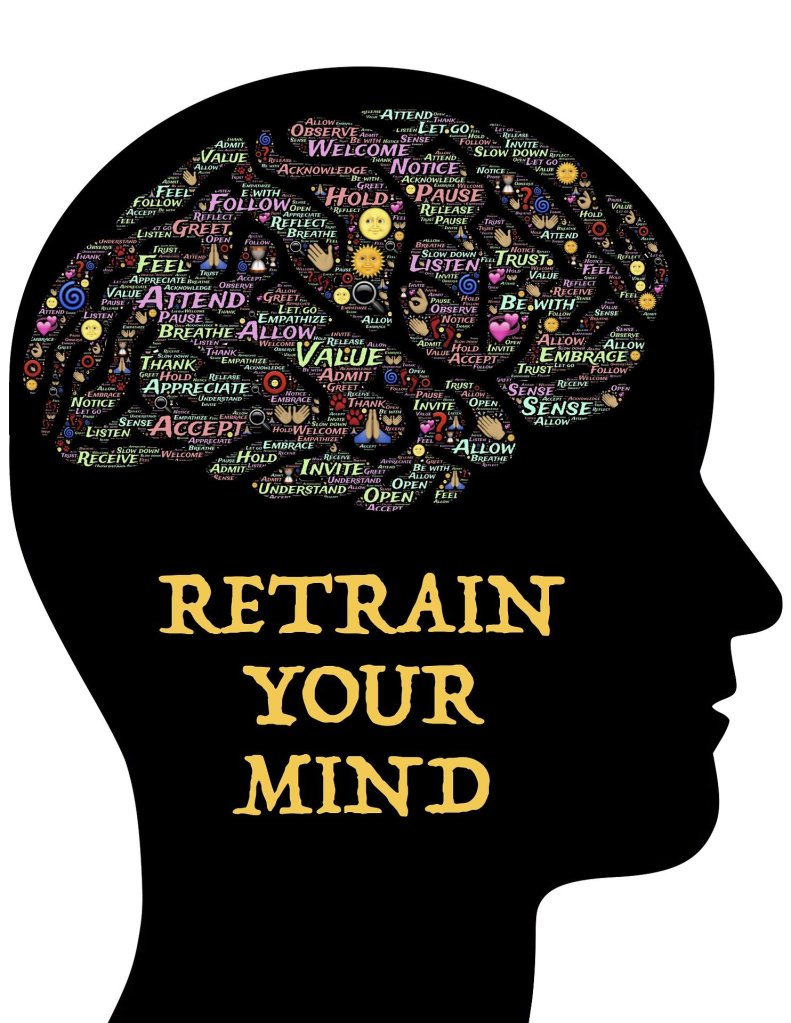
Dark silhouette of a human head as colorful words (attend, allow, value, listen, pause, release, hold, follow, greet, trust, be with, embrace, sense, invite, open, allow, appreciate, accept, etc.) are shaped to resemble the human brain's gyri and sulci. In large letters "Retrain your mind" is visible on the silhouette.

In the ADL Program, we have been asked to create our own growth mindset plans.

Carol Dweck offers the following statements to help us determine our Mindset in her book by the same title. Let us see which of these resonates with us while thinking about our intelligence (quoted from page 12):

  1. Your intelligence is something very basic about you that you can’t change very much.
  2. You can learn new things, but you can’t really change how intelligent you are.
  3. No matter how much intelligence you have, you can always change it quite a bit.
  4. You can always substantially change how intelligent you are.

“Questions 1 and 2 are the fixed mindset questions. Questions 3 and 4 reflect the growth mindset”

You can also answer these same questions about other personal attributes you possess (or believe you don’t possess).


Dweck asks similar questions about personality and character (quoted from page 13), lets see which of these resonates with us.

  1. You are a certain kind of person, and there is not much that can be done to really change that.
  2. No matter what kind of person you are, you can always change substantially.
  3. You can do things differently, but the important parts of who you are can’t really be changed.
  4. You can always change basic things about the kind of person you are.

“Here, questions 1 and 3 are the fixed-mindset questions and question 2 and 4 reflect the growth mindset. Which did you agree with more?”


Do you find that you have a mixed mindset? Do you view your intelligence one way but your character in another light? How about when you look at other abilities? I would love to hear your thoughts in the comments.


While reviewing Scott Jeffrey’s guide How to Establish a Growth Mindset he proposes the following four step process to changing a fixed mindset to a growth mindset:

  • Step 1: Learn to hear your fixed mindset “voice.”
  • Step 2: Recognize that you have a choice.
  • Step 3: Talk back to it with a growth mindset voice.
  • Step 4: Take the growth mindset action.

In this guide, Scott Jeffrey suggests the following questions to “activate a growth mindset” which he cites were “collected from various sections throughout the Mindset book:”

  • What can I learn from this?
  • What steps can I take to help me succeed?
  • Do I know the outcome or goal I’m after?
  • What information can I gather? And from where?
  • Where can I get constructive feedback?
  • If I had a plan to be successful at [blank], what might it look like?
  • When will I follow through on my plan?
  • Where will I follow through on my plan?
  • How will I follow through on my plan?
  • What did I learn today?
  • What mistake did I make that taught me something?
  • Is my current learning strategy working? If not, how can I change it?
  • What did I try hard at today?
  • What habits must I develop to continue the gains I’ve achieved?

As we prepare to create our growth mindset plans, the assignment asks us to consider the following questions:

  • Why is the growth mindset so important?
  • How will you incorporate the four steps?
  • How will you communicate the message of “yet” to your others?
  • What resources (content, video, media, etc.) will you use to promote the growth mindset?
  • When and how often will you promote the growth mindset?
  • How will the growth mindset influence or impact the way you approach your work in this course and the program?  

I look forward to hearing your thoughts on this topic and your answers to these questions as you being to think about your mindset and consider developing your own growth mindset plan.


Dweck, C. S. (2016). The Mindsets. In Mindset (Updated Edition, pp. 12–13). Ballantine Books.

Jeffrey, S. (2020, June 23). Change your fixed mindset into a growth mindset [complete guide]. Scott Jeffrey. Retrieved June 14, 2022, from https://scottjeffrey.com/change-your-fixed-mindset/
ADL Program, Evolution, Growth, Humor, Learning

Y is for Yet…


This read-along undoubtedly meant for grade school children, can help those of us working on developing our growth mindset.


  • A – Ability
  • B – Brain
  • C – Challenges
  • D – Determined
  • E – Effort
  • F – Feedback
  • G – Growth Spurt
  • H – Help
  • I – Imagination
  • J – Journey
  • K – Knowledge
  • L – Learn
  • M – Mindset
  • N – Notice
  • O – Optimism
  • P – Progress
  • Q – Questions
  • R – Resilient
  • S – Setting Goals
  • T – Trying
  • U – Until
  • V – Visualize
  • W – Work
  • X – eXtra
  • Y – Yet
  • Z – Zany

Children’s Read Alouds by Brittany. (2021, September 27). Y IS FOR YET, A Growth Mindset Alphabet – Read Aloud [Video]. YouTube. https://www.youtube.com/watch?v=XekYdto3JNA

ADL Program, ePortfolios, Learning, Reflecting

What we say vs. what is heard


As I reflect on the final Creating and Sharing Your ePortfolio assignment of the second course of the ADL program, I have re-read and reviewed my notes from our final class discussion and the submission page within the Learning Management System (LMS) and what I’m understanding is a compilation post (or page) leading to everything outlined is the expectation. “Quickly summarize everything you’ve done and what has been accomplished through your ePortfolio experience” is what I find in my class notes.

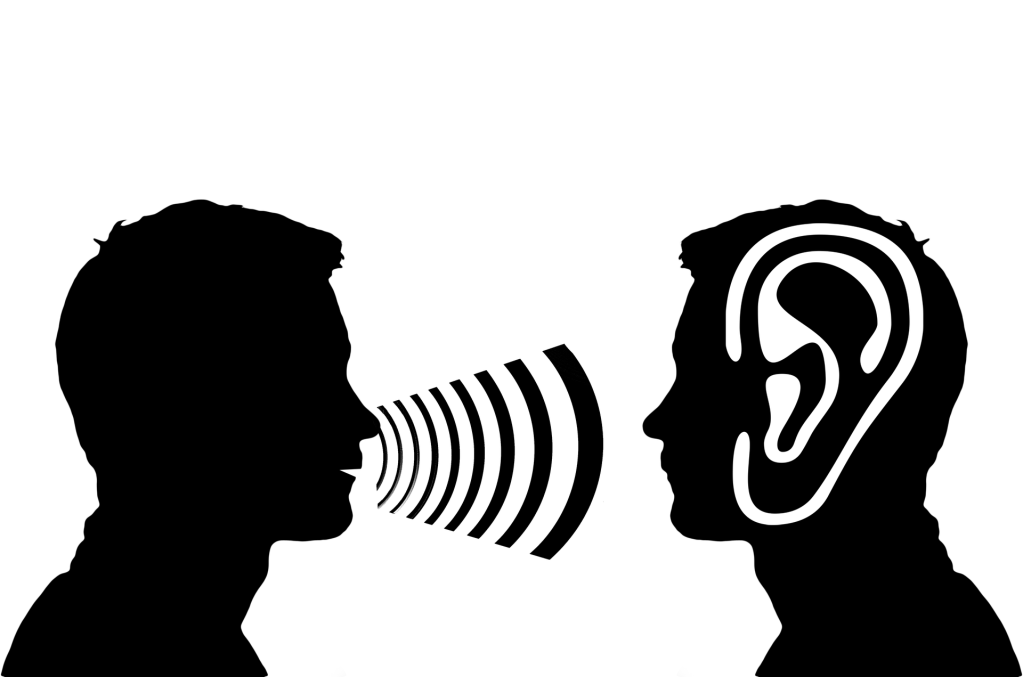
Silhouettes of two human profiles face one another. One has curved shapes from the mouth area that get wider as they near the other head. The other has an oversized ear outlined.

I am curious what others heard and understood because I know that as humans we have a tendency to interpret words and meanings differently based on our experiences. Now that I’m looking at learning and influence I think this would help with my concerns about email communication.

How do I get to the point and still relay sincerity? I guess this is where digital content would be beneficial. I could answer questions and give tips where non-verbal communication would be evidenced. Hmm, food for thought.

ADL Program, Contributions, Growth, Learning, Learning Community, Reflecting

Contributions, 5303


ePortfolio Course

  • Spring 2022
  • Course Number: EDLD 5303
  • Course Title: Applying Digital Technology Portfolio

On a background of blue sky with fluffy white clouds are green street signs. One has arrows pointing in opposite directions and the other reads "take and give."

Contributions to learning and learning community.

I am giving myself a score of 93 out of 100


Crediting Group Members: Bethany Eisele, Lera Longbottom, and Rachael Lancon


Key and Supporting Contributions

Reflecting on this ePortfolio course my second of the ADL program, I can say with confidence that I worked throughout the semester to be sure I read all of the assigned materials, watched all of the accompanying videos, and followed the subsequent links. I would sometimes ask about a link deep down the links trail to find that not everyone link dived as deeply as I. It took a while to create a systematic method to go through the material to avoid getting lost. I am doing my best to adapt the skills, knowledge, and information I learn into my ePortfolio development and personal learning. I revised all assignments and reflected on being deliberate with the choice of content on my ePortfolio by taking complete ownership of my authentic experience, which helped me develop my voice.

I believe I helped build our core group by reaching out via course mail after our first class meeting. A few classmates contributed to the class conversation and just had a generally positive perspective that made me want to collaborate with them. After a few days of coordination, we formed our core learning community. Having worked in a learning community in the first course, I quickly jumped on creating a GroupMe channel for our group and set up a google drive so that we could share documents and collaborate. I made a “getting to know one another” ice breaker type document within the google drive to allow group members to share and start building relationships. We had cute short bios, including photos that allowed us to connect on a personal level. We gave information about ourselves, our ePortfolio platform, and our innovation strategy. Our core group was great about contributing to weekly group discussions and provided commentary on each other’s thoughts. As we discussed weekly content, we explored further our thoughts, our learning, and our ePortfolio development, leading to additional ideas, blog posts, and blackboard discussion posts. We each worked to give one another timely feedback on discussions and our ePortfolios. I created weekly to-do list to help our learning community keep track of course content, readings, discussion posts, group discussions, and blog suggestions from the weekly modules.

Sharing two classes with my learning cohort allowed us to get to know one another through class discussions. The last two weeks of discussion posts were the most collaborative our cohort has been. It was amazing to see the class come together to help one another with ePortfolio feedforward suggestions. The part that I think I could do better would have been to offer group collaboration sessions regularly for the whole class. I did post in the student lounge that I was interested in mentorship and mentoring opportunities. I connected with several classmates via course mail in the first few weeks of the course, but none grew into the mentoring/mentorship type collaboration I envisioned.


Learning Community Key and Supporting Contributions

I was able to take leadership responsibility in my group in various ways. First, by creating communication avenues and a place to collaborate, as previously described. Then, as the most experienced member of our group (which is quite humorous considering I had only completed one course at the time), I provided feedback on my learning communities’ innovation coursework.

I set up weekly zoom meetings for Tuesdays at 7 pm immediately following the class meeting. I contributed to all learning activities and opportunities and actively participated in the meetings and discussions. Through our group discussions, I was able to dive more deeply into the content of the weekly modules and reflect upon my learning process.

I attended a literature review information session hosted by the Mary and John Gray Library. I informed my learning community about it since I knew they were working on that component in their innovation course. I shared my thoughts, feelings, and struggles with my learning community. Their support through having a peer group discuss content, vent about frustrations, celebrate victories, and with whom to share the learning experience with has been valuable. I only wish for more; more collaboration, more discussions, and more interaction.

I still struggled to keep up with discussion posts once I had added mine to the LMS. However, I eventually figured out how to subscribe to the discussion posts and was able to respond in real-time to my classmates’ posts. I even created a discussion post in the student lounge and a blog post, hoping to help current and future classmates who struggle with this aspect. Had I figured this out earlier in the semester I may have experienced more real-time dialog about the course material.


ADL Program, Growth, Learning, Personal, Reflecting

Getting personal


I find myself re-reading the COVA book and reflecting on my ePortfolio experience and my first semester in the ADL program. Before starting the ADL Program, Dr. Harapnuik’s digital story, Not Suited for School but Suited for Learning, resonated with me and my personal learning experience.


I was in grade school in the 80s in a tiny town. I remember going through diagnostic testing at school, but I couldn’t begin to tell you what any of my diagnoses would have been. I believe my small-town American school was more concerned with hiding my struggles than helping me with them. I definitely adopted the label and the identity of being learning disabled.

I didn’t read my first complete sentence aloud in school until the third grade. In hindsight, I feel Ms. Leffler was an innovative teacher as she was the only one to finally get through to me. I remember how excited and proud she was of me/for me that she took me across the hall to read to my 2nd-grade teacher (undoubtedly after a whole school year of trying with me). Throughout every public school level, I spent many evenings sitting at the kitchen table, crying my eyes out in frustration, just simply not understanding a given subject or assignment. I truly felt I was also not suited for school, and I felt unsuited for learning.

It wasn’t until I transitioned from community college to university that I realized that I was taking classes and accumulating knowledge for my own benefit. I could not only select the days and times of my courses, the electives I chose, and research topics related to my personal interests. I picked a major that I was interested in learning more about and finally freed myself of some of the labels I let define me through high school and community college. As I watched John Hattie’s Visible Learning, I realized what an impact those labels had on my learning (Bell, 2011, 3:38).

If only someone had instilled a growth mindset through the power of yet, as described by Carol Dweck (Stanford, 2014, 4:34). If only I had the opportunity to learn in this constructivist way in my early education, I would approach challenges with excitement. Just as Carol Dweck explained, “learning a growth mindset [transforms] the meaning of effort and difficulty. [What] used to mean they were dumb, and now it means they had a chance to get smarter” (Stanford, 2014, 7:48).

I am very grateful to have this opportunity to get smarter and reevaluate my learning.


Mike Bell. (2011, December 1). John Hattie, Visible Learning. Pt 2: effective methods. [Video]. YouTube. https://www.youtube.com/watch?v=3pD1DFTNQf4

Harapnuik, D., Thibodeaux, T., & Cummings, C. (2018). Choice, ownership, and voice through authentic learning. Creative Common License.

Stanford Alumni. (2014, October 9). Developing a Growth Mindset with Carol Dweck [Video]. YouTube. https://www.youtube.com/watch?v=hiiEeMN7vbQ

ADL Program, Contributions, ePortfolios, Evolution, Growth, Learning, Learning Community, Personal, Reflecting

Hugs


Two women wearing black shirts embrace in a hug. Photo by Ketut Subiyanto on Pexels.com

I always do my best to shine a little light, encouragement, and love with those willing to connect. Tonight, I stopped at the local drug store. The employee was having a rough night, and I asked how much longer her shift was (10:30 pm with 7 am return).

My husband picked up chocolate peanut butter ice cream, and she said she would come over to cry and help me eat it. She said something about being a hug person, and I lamented how much I also miss hugs.

As I was preparing to leave, I asked, “can I give you a hug?” She accepted and met me at the end of the counter for a genuine hug.


My favorite days are the days I get to hug strangers. I’ve missed it so much.


As I said goodbye to my classmates Tuesday night (our last class meeting), I had to say out loud that I would miss seeing many of them next semester (accelerated post coming soon). Some will be graduating by December, and our classes no longer overlap. Tonight, I reflected on our one-two sessions together, our growth and vulnerabilities.

Then I realized that some of them will walk at the commencement ceremonies. I volunteer at those events and hug strangers at those events. Surely, I will get to meet some classmates at graduation! I started to imagine the next two years! Three ceremonies a year, potentially meeting the people with whom I will undoubtedly grow so much.

  • Who will we be after completing another class? What about two classes from now? Four?
  • Can you imagine looking at our final projects, reflections, innovation plans, and these digital babies (our ePortfolios)?
  • How much will they/we change through the evolution of this program?

  • How are you feeling?
  • Have you taken a good deep breath lately?
  • Have you hugged a stranger? (Okay, I know that the last one’s not for everyone)
ADL Program, Blackboard, Contributions, Learning, Tips

Discussion posts


May 2, 2022

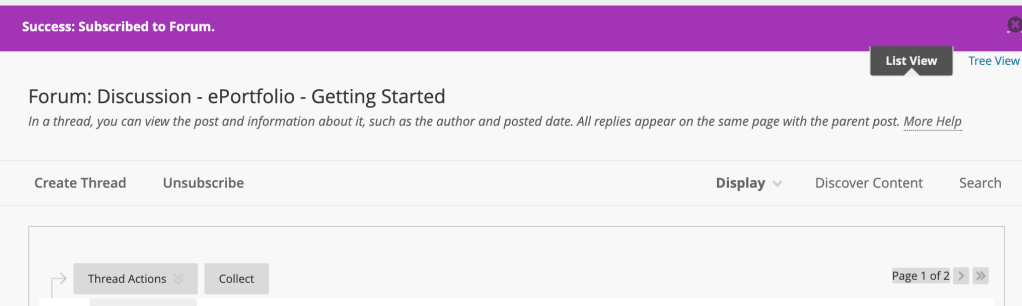
Seventy-one! That is how many discussion posts I made this weekend. How do I know? Because I finally found this handy little trick that allows you to subscribe to discussion posts in Blackboard.

If you have also had a difficult time keeping up with discussion posts that are made/added after your last review, then maybe this little trick will prove helpful to you too.

Update!! (June 2022)

Now that the Blackboard System has updated to Ultra, the subscription feature is no more. However, there is still a way to be notified when new discussion posts are made.

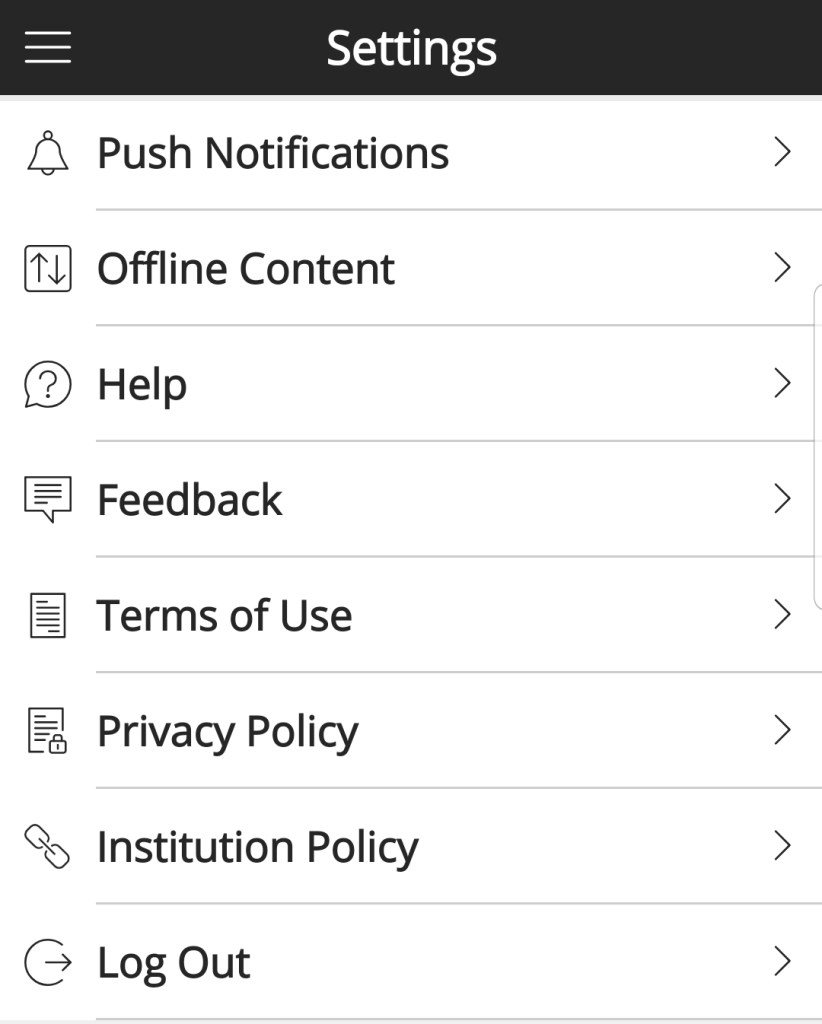
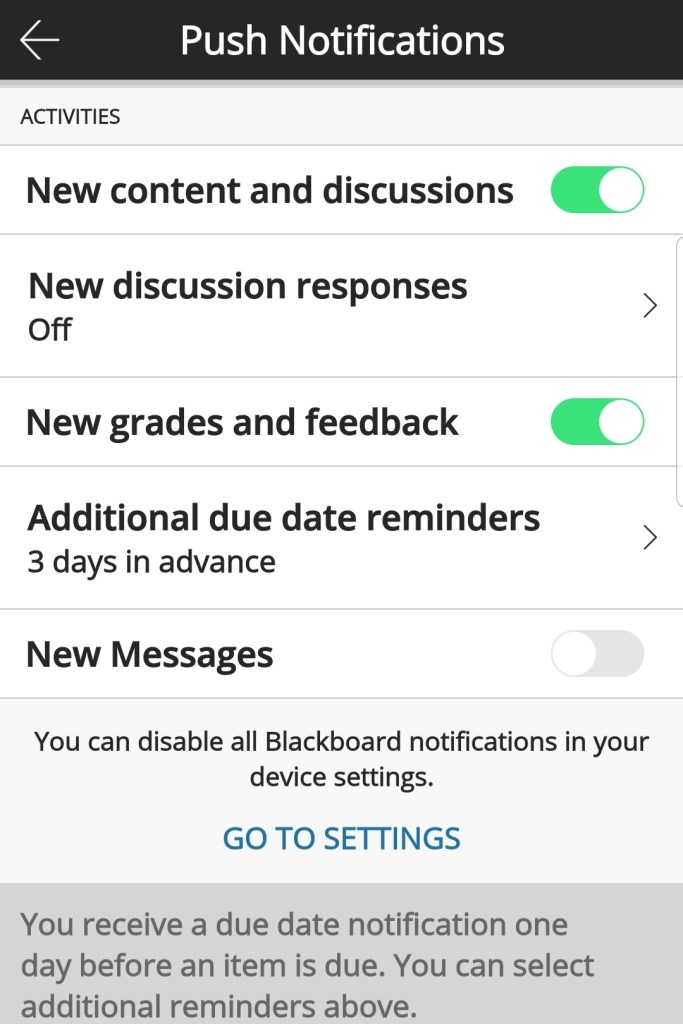
Option 1: Blackboard App

  • Open Blackboard App
    • Click Settings
    • Push Notifications
    • New discussion responses >
      • Toggle on/off

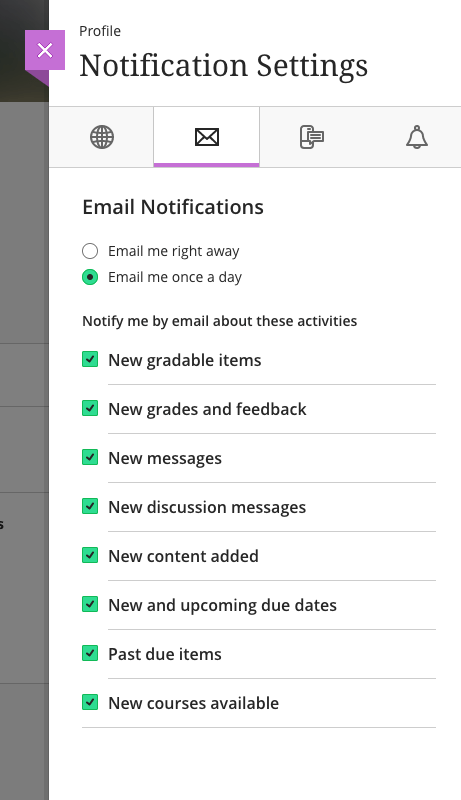
Option 2: Desktop version

As of 06/28/2022, this option did not work for me, as I do not have discussions messages in my list of notification settings

  • LU Connect
    • LU Learn (Blackboard)
    • Click your name
    • Click Global Notification Settings/Email Notifications
    • Check the box next to new discussion messages
    • Confirm settings for email once a day vs right away
    • Save changes

Blackboard (Old, non-ultra systems)

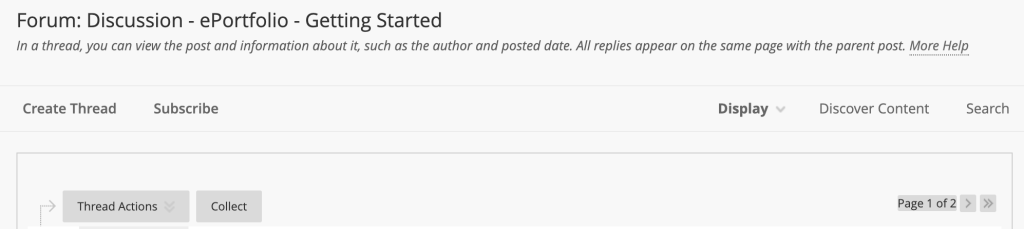
To subscribe to a discussion board post:

  • LU Connect
    • LU Learn (Blackboard)
    • Courses
    • Click on the Course Name
    • Click on Discussions
    • Click the discussion thread you plan to follow
    • Click Subscribe

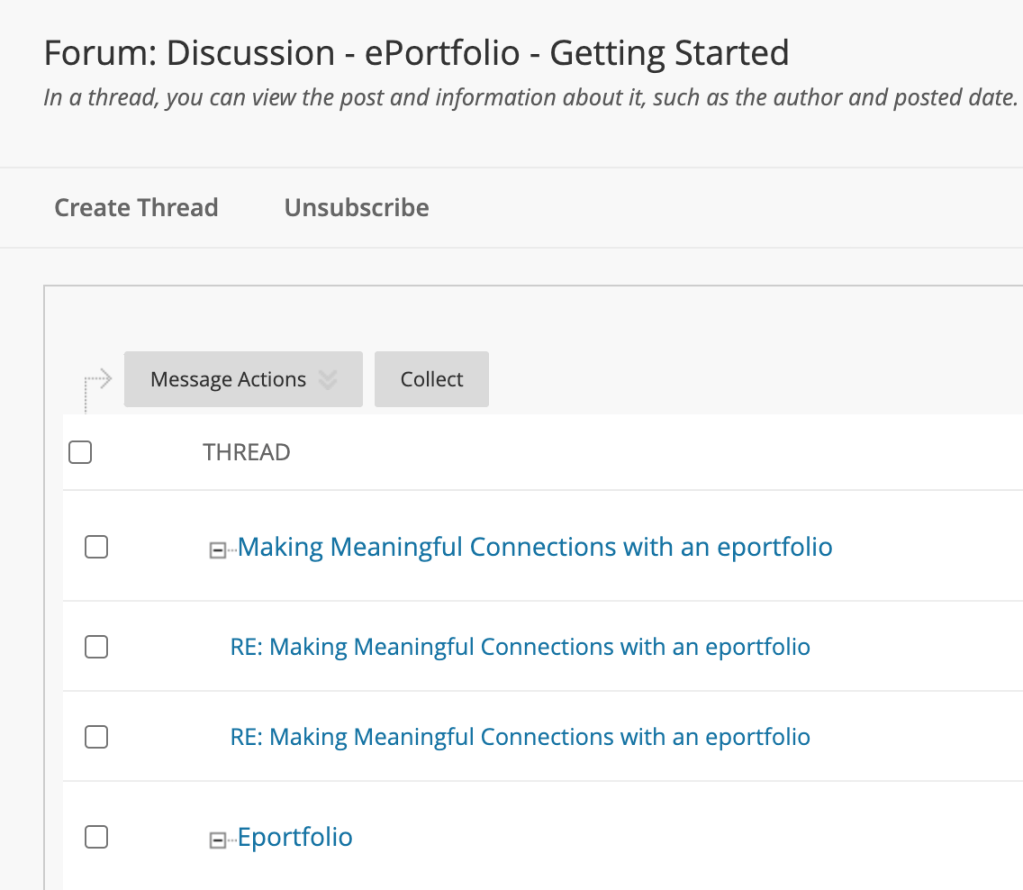
Before

After


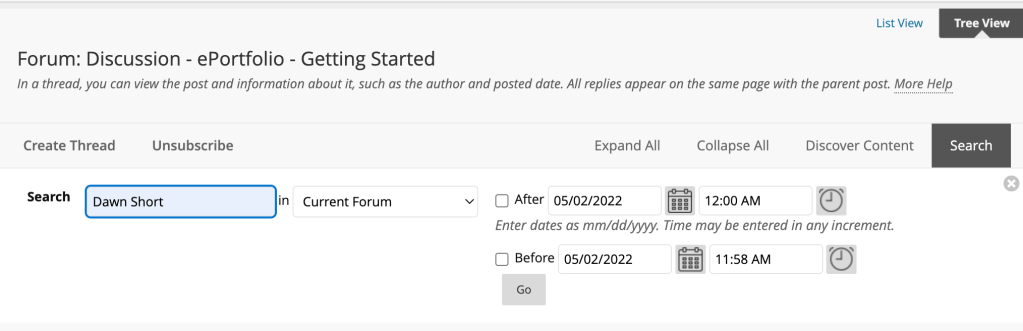
As I was creating these screenshots, the inquisitive and experimental nature that is encouraged through the ADL program is paying off. I noticed the “list view” and wondered what that feature might do. *click*


Turns out the tree view may be really helpful in determining which threads have not yet been reviewed or commented on previously.


There is a search feature as well.


Do you have any favorite Blackboard tricks you can share in the comments section?

ADL Program, ePortfolios, Growth, Learning, Reflecting

Selfish reflection


As I move toward the final culmination assignment for the ePortfolio course in the ADL Program, I cannot help but feel that I have been a bit selfish. I am reflecting on the process of making decisions about what to include and how to relay my genuine care for my students. Finding my voice. I will admit there have been times that I allowed myself to become bogged down in my own crisis of self process. It is not easy reconciling my choices, taking ownership of my learning and figuring out how I can assist in my students’ learning; finding my voice; while maintaining an authentic learning experience.

I keep hearing Dr. Harapnuik’s voice encouraging students to “make it real” and saying “don’t try to fake it” from our weekly class discussions. This course has provided such an opportunity to explore within the ePortfolio itself. The call to action in front of us through our ePortfolio course is so compelling. I just keep hearing the voice of Dr. Harapnuik sharing his wisdom:

“most importantly, make this your own. This is your ePortfolio. This is your opportunity. Take advantage of the choice. Take advantage of the opportunity to take ownership. Find your voice. Embrace this opportunity to find the courage that it takes to find your voice. And embrace this ePortfolio this authentic opportunity that you can you can use for years even decades to come to make a difference in your world and to share that with your colleagues and more importantly with the learner that you have influence over as well.”

I just feel so grateful for this opportunity to grow and learn through the COVA/CSLE experience provided by this program.


Reference

CSLE2COVA. (2019, August 9). EDLD 5303 Week 4 Learning from Leaders Tips [Video]. YouTube. https://www.youtube.com/watch?v=BJ98azhUcZ8

ADL Program, Advising, ePortfolios, Goals, Growth, Learning, Professional, Reflecting

Feedforward

This morning I am reviewing some of my classmates in the ADL program‘s ePortfolios in hopes of actually providing helpful feedforward. I found myself inspired as I viewed tristandixson.com‘s recent blog post on feedforward and how a shift in focus could significantly impact the review process in professional environments.

I work at a state institution which means we have very structured review requirements. We are asked to evaluate ourselves and set professional goals for the next academic year. I have always dreaded these exercises because I would much rather have a constructive review of what is working and what could be better, as I am a solution-oriented employee. I find little benefit in the culture of who’s to blame or who is right. I really appreciate the focus on solutions. Solutions feed my soul; otherwise, it isn’t productive. Just grumbling and complaining. 

Thinking about my self-assessments, I never see the point of reflecting on “accomplishments” but instead, strive for new goals and ways to grow and assist with the continued improvement of the system. Implementing the feedforward concept into the review process would assess the current system’s efficiency and effectiveness, student and employee satisfaction, accurate and transparent communication, and what each member can contribute toward proposed solutions.

ADL Program, ePortfolios, Learning, Reflecting

Voice


I am constantly struggling to find the voice of my ePortfolio. I get focused on the purpose of the portfolio, and then I get confused over who my audience is. On the one hand, I want to refer my students to the portfolio for my tips and information. Yet, on the other hand, I want to utilize my portfolio professionally to showcase my development as a professional. Then on the third hand, I also want to personalize my portfolio and share my growth and learning as a student. 

Because I come from an older generation where you didn’t want to give away too much personal information online, I am still struggling to find what voice my portfolio will fulfill for myself and my audience. As discussed in chapter 11 of the COVA book, I need “formative feedback/feedforward and encouragement” to continue to develop my voice.

I have realized that while trying to figure out what I’m supposed to be reflecting/blogging about, I have not started implementing my Advisors Tips/Innovation plan. The only way I will be to apply the information I am learning in this ePortfolio course is by authentically living with and using it. I have started phase one of finding my voice by taking the most common information I share with students on a daily basis to build those sections on my website. I will immediately be able to start sending links to this portfolio and obtain feedback with the users it is intended to help.

I feel like this portfolio changes almost daily as I implement different aspects and tweak different placement, information, links, and functions. Once again, I am just trusting the process and hoping that as I exercise this muscle, I will gain confidence and find my voice through and beyond the ADL program. 

References:

Harapnuik, D., Thibodeaux, T., & Cummings, C. (2018). COVA: Choice, Ownership, and Voice, through Authentic Learning.