ADL Program, Contributions, Learning, Learning Community, Reflecting

Watch party, as collaboration?


I’m just reflecting on the discussion boards, our group discussions, the weekly class discussions, and the content we explore in the ADL Program. I always wish for a more interactive discussion of our weekly course content. That made me wonder if anyone has ever considered a watch party-type weekly collaboration.

Would anyone attend a class watch party? It seems like a group of classmates (or even the learning community members) could turns reading chapters, content, and screen share for videos and examples.

I’ve always wondered what class would be like if we all had that additional time to build trusted relationships while actively engaging with the content and discussing it in real-time. I think we could even record our session to rewatch our own ideas for later personal learning reflections.

I know that I get so many ideas, thoughts, and inspirations in our breakout sessions and individually while reviewing the information through each week’s modules and associated links.

I enjoy learning from all of you and seeing your perspectives.

ADL Program, ePortfolios, Evolution, Growth, Learning

Unlearn


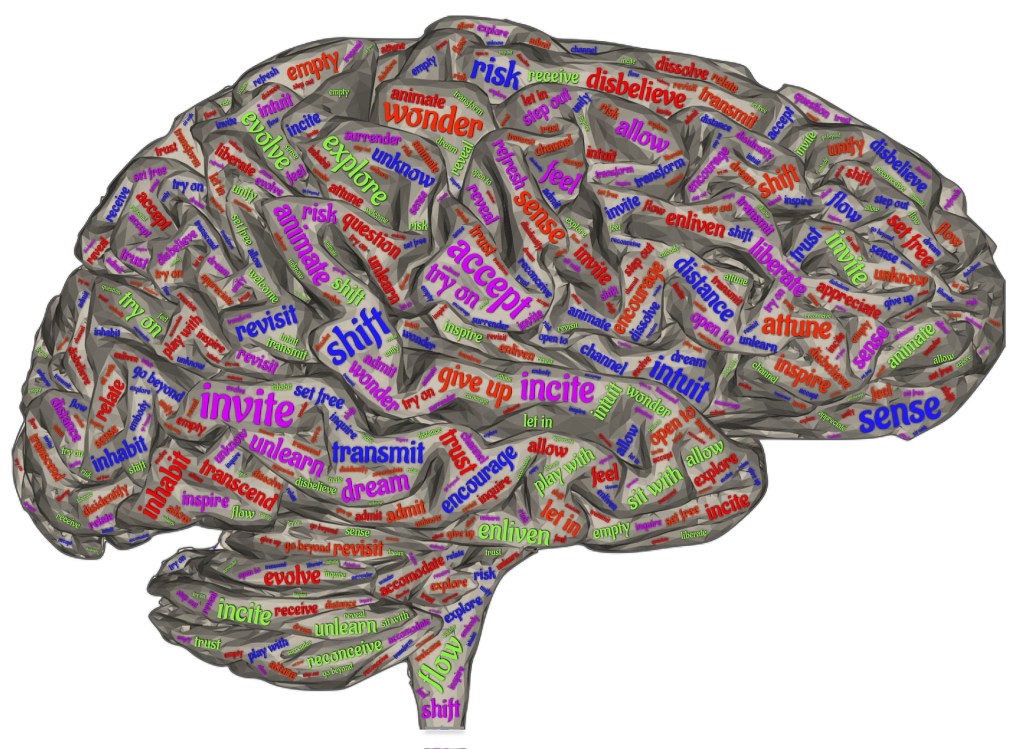
Rendered cross section of human brain with colorful words written everywhere. Some of the words are how, shift, revisit, inhabit, inspire, transcend, unlearn, transmit, distance, wonder, explore, allow, evolve, try on, enliven, and several others as well as smaller words that are difficult to read.

I just completed my graduate training requirement titled “Mental Well-Being” from getinclusive.com as required by the Dean of Students and the Student Health Center.


Reflecting on this training, I realize that everything now passes through this new learning lens. In the training there was a section on the need to unlearn. I could not help but think about all of us in the ADL Program. Aren’t we unlearning everything we previously thought about learning? Aren’t we unlearning previous expectations and measures of our learning and our students?

How is your unlearning journey going? I struggle with myself as I try to figure out the goal, objective, or expectation of a given assignment when I’m just supposed to be observing my my learning process.

I’m learning to reconnect with my inquisitive and creative mind and recognize that it takes time to break those old established learning ideas.


Change is difficult at first, but it is worth it.


Harapnuik, D. (2010, January 12). Innovation Starts with a Focus on Creativity. Harapnuik.org. Retrieved April 9, 2022, from https://www.harapnuik.org/?p=474

Harapnuik, D. (2020, December 12). Want To Change the World – Tell a Good Story. Harapnuik.org. Retrieved April 9, 2022, from https://www.harapnuik.org/?p=8441

Harapnuik, D. (2021, August 16). Assessment OF/FOR/AS Learning. Harapnuik.org. Retrieved April 8, 2022, from https://www.harapnuik.org/?page_id=8900

ADL Program, Evolution, Learning, Learning Community

Interesting observation

I put out a post at the start of this session asking for mentorship and offering mentoring. I have had a few correspondences with classmates but little ongoing collaboration outside weekly module discussions.

However, through my learning communities, I am finding a mentorship role. I really appreciate that I can share findings and tips from my own experience with the Innovation course. I don’t understand why (yet), but I can guide my group mates in finding their assertive voices. I can only assume because I struggle with writing in a passive voice. Even when I recognize my error, I can get stuck trying to reword the sentences or clarify the meaning.

I am very grateful that I have found an opportunity to glean the benefit of this program component.


Harapnuik, D. (2021, August 16). Assessment OF/FOR/AS Learning. Harapnuik.org. Retrieved April 8, 2022, from https://www.harapnuik.org/?page_id=8900

Harapnuik, D. (2021, October 9). ADL/EDLD 5305 Tips & Perspectives. https://www.Harapnuik.Org/. Retrieved April 8, 2022, from https://www.harapnuik.org/?page_id=8553

Stanford Alumni. (2014, October 9). Developing a Growth Mindset with Carol Dweck [Video]. YouTube. https://www.youtube.com/watch?v=hiiEeMN7vbQ

ADL Program, Humor, Learning

Collecting Knowledge vs. Learning

“Now What” from Ryan George reminded me of the topics we have been exploring through the ADL program. We are talking about how accumulating knowledge (collecting dots) is not at all the same thing as learning (connecting dots). Evaluation of the education systems as a whole shows that obtainment of a degree does not necessarily lead to guaranteed employment as painfully illustrated by generation jobless.


References

Bazzi Bazzi. (2022, January 12). Doc Zone Generation Jobless [Video]. YouTube. https://www.youtube.com/watch?v=eq4xoYmgatQ

Harapnuik, D. (2021a, January 18). Collecting dots vs connecting dots. https://www.harapnuik.org/?p=8672In-text citation

Harapnuik, D. (2021b, January 28). Applied Digital Learning. https://www.harapnuik.org/?page_id=8517

Learners Mindset. (2021, January 18). Collecting dots vs connecting dots [Video]. YouTube. https://www.youtube.com/watch?v=_7o3Jh1KZLw

ADL Program, Growth Mindset, Learning, Personal, Reflecting

Growth Mindset & Yet


I loved the closing statement in this video…

I have fought the ‘I can’t voice’ for so long, especially when faced with a learning challenge. There is a powerful shift when you add “yet” to that mindset. The growth mindset gives us permission to fail forward. We aren’t expected to be experts “yet.” We are striving to tap into our creative inquisitive thoughts, and try new things. We may not have made meaningful connections, “yet” but we will as we continue to reflect on our learning. Being open to failure frees us to experiment. Developing a growth mindset allows me to view a challenge as an exciting opportunity instead of a punishment. Learning from past attempts encourages me to create connections between concepts which deepens my learning so that I can develop higher order thinking/processing. 100%, I believe the growth mindset will help with the acceptance of feedback. With the growth mindset I realize feedback is an opportunity to correct faulty thinking, make improvements, assess bias, and think more deeply about the suggestions provided.

I am my own worst enemy when it comes to grades. Adopting a growth mindset can release students (myself included) from the perfectionist trap of all of nothing. I really dive head first into researching anything and everything I am interested in learning about. I was raised in a time before search engines so I’m always taking a question and plugging it in to either a search engine or google. So much of the growth mindset resonates with me personally, that I am looking forward to learning more about my own mindset. I learned from my Literature Review research in the innovation course of the ADL Program that using google scholar allows me to see others who have quoted a source and related articles. I think finding related sources or sited by sources would be an effective way to learn more about the growth mindset with relation an interest or innovation. 

Relating it all to life, we have an almost 12 acre property that we are trying to develop into a hobby farm. We don’t know anything about raising animals, building shelters, planning gardens, but we are willing to research (a lot of YouTube) and we use a lot of trial and error projects. I recognize that this growth mindset applies to all aspects of life and learning. 

ADL Program, Humor, Learning, Personal

Down the Rabbit Trail


I swear I get so lost along the way because I click, click, click, and go deeper down the rabbit trail. I’m struggling this week because I have followed so many links, watched content from this week’s posts/discussions, and prepared for next week’s content. Now I sit here with my notebook full of notes, and I cannot remember which content I am supposed to be posting about in my discussions and blogs. I guess I am missing the point since it all contributes to my learning.

ADL Program, Contributions, Growth, Learning, Learning Community, Reflecting

Contributions, 5305


Innovation Course

  • Spring 2022
  • Course Number: EDLD 5305
  • Course Title: Disruptive Innovation in Technology

Contributions to learning and learning community.

I am giving myself a score of 45 out of 50


Crediting Group Members: Deena B., Lorena R., and , Jose V.


Key and Supporting Contributions

Reflecting on my first course in the Applied Digital Learning program makes me realize how far I have come since those first painful weeks. I sincerely hate to admit it, but the painful process of learning how to do new things is indeed working. I cannot accurately describe how many times I would start a new assignment and think there is no way. I have figured out to do so many new things (like the Innovation ProposalLiterature ReviewImplementation Outline, and Digital Story). I learned so much by fighting my way through it. Reading and watching YouTube videos on how to use a new technology or write in a new way paid off.

I do not generally submit assignments against a deadline for fear of technology failure or other interruptions. I posted all of my discussions and feed-forward projects by their posted deadlines to allow enough time for group mates and classmates to respond so that I could make revisions and edits in time for the final deadline. Through this opportunity for reflection, I realized that I tended only to share where there are required feedback obligations. Still, if I was less insecure about feeling lost, I may have had earlier opportunities for clarity.

I wish the discussion thread were instead a group chat to share our ideas and understandings in a single location verse trying to scroll through posts repeatedly. Most of the discussions seem to remain somewhat surface level when I know there is more depth we would find through the back and forth more real-time conversations. 

I completed every course reading, video, and supportive resource throughout the semester. Often I wondered exactly how far down the rabbit trail I could fall following links. Sometimes I wondered if that was the real test to see how far and deep we would travel. I have attempted to absorb and synthesize every piece of information provided to help alleviate my insecurity with these new topics and tasks. I return to previous sources and discover a new meaning or more profound understanding each time I rewatch/review them. I have found new content, followed new links and information, and re-watched so much content throughout the semester. I am so grateful that I had the opportunity to watch until I finally understood. The whole concept of flipped learning has become an interest of mine to provide solutions to my advising unit, colleagues, and, most importantly, to my advisees due to my own experience learning by doing.   


I was a late bloomer, finally having an epiphany moment with how everything ties together and how the all the revisions along the way provided the foundation for learning and growth. There were so many revisions of the components that led to this innovation proposal compilation. Undoubtedly, there will be more revisions as I learn more and accumulate more skills to create more dynamic and engaging content. 

While I was not citing APA correctly in my initial discussion posts, I have learned so much about proper citations since. I am sure that I still make citation errors, but I have learned so much through the weekly posts and the assignments throughout this initial course. When classmates had questions, I made additional supportive postings in the student lounge and student/faculty lounge.


Learning Community Key and Supporting Contributions

I participated in all activities this semester. I would have attended more because every meeting provided clarity and community. I took a leadership role and sent multiple email correspondences to potential group members on time, delivery, and frequency of group meetings and attended every online or phone meeting scheduled to provide feedback on projects as updated throughout the semester. I sent emails to classmates whose “Introduce Yourself” posts resonated with me.

Group members completed discussions using conference calling and GroupMe chat. The group faced challenges throughout the semester as group members stopped responding. Thankfully a core group made feed-forward helpful. I made sure that my submissions were made by each posted deadline so that my group-mates would have time to review drafts. I provided feedback to my classmates through discussions and my group mates through meet-ups. We utilized the screen sharing capability of meet.goto.com. I received feedback from my group-mates through those same discussions and screen sharing means. I valued the input from both classmates and instructor to help me improve upon my ideas and think more creatively as they evolved. Additionally, I cannot express how helpful the instructor’s video feedback was for each assignment. I often hit submit, hoping that I understood the assignment/goal correctly and submitted the intended document.

While I contributed to every classmate’s experience, after reviewing each discussion post, I found two discussions in which I did not engage with my classmates. I now see that there is room for improvement to find a system to go back and review threads for new posts.

Originally posted March 11, 2022

ADL Program, Evolution, Learning, Professional, Reflecting

Progressive Education


I believe that people are resistant to change due to familiarity. I have friends in terribly toxic relationships, yet they remain in them because of their perceived comfort. I imagine the same is true when approaching our innovation situation. We will come across people who may be miserable with the current system yet vehemently hold on to it for fear of change. 

Listening to the 1940’s progressive education video, some of the things that struck me as they described traditional education were factors like grouping students into classrooms, repeatedly drilling lessons, and that students only “go to school because they have to” (Danieljbmitchell, 2007). As the video transitioned into descriptions of progressive education being presented in the 1940s, the idea of “learning by doing” struck me (Danieljbmitchell, 2007). I love that past the idea of progressive education included hands-on practice to make classroom skills relevant to real life. 

I have seen this exact desperate search for a passing grade in higher education through some of my previous coursework. It would seem that we have not seen more changes in education over the years because more focus seems to have been placed on standardizing the evaluation of learning (tests) instead of actual learning. Classmates would simply look up questions online or utilize groups to share answers. These students never even considered the cumulative nature of education. The basic concept that content builds upon itself and the whole point of education should be to seek knowledge instead of just chasing a test score, advancing to the next grade/level, or obtaining the next credential.

While we have seen technology advance, we have learned through our readings that many have just been additions to the classroom without successful implementation strategies and no thought to innovation. Therefore, these devices often provide no real change to learning. I often think we convince ourselves that our to-do lists are too long to implement new processes, techniques, or strategies for learning. Change is hard but often so very worth it.

Yes. There is a culture of “this is the way we have always done things” rampant in education, higher education, and business. Seth Godin said it best when he said, “people who like the place don’t want to hear you’re changing everything… (Godwin, 2014). In a previous role, I was charged with chairing a committee to evaluate the processes of our first and second-year advising center. I created an A-Z list of everything we attempted to cover with our incoming college students. Through a committee of collegues, under the direction of my executive director, we attempted to go item by item to see what processes could be outsourced, streamlined, eliminated, or improved. I would like you to picture the Finding Nemo Seagulls saying, “Mine, mine, mine.” The committee was not very effective at innovating the intake procedures for college students. My executive director was appalled and amazed that, on the one hand, people were screaming that they could not do everything that was expected of them, yet they were unwilling to relinquish any of their tasks. Change is hard. Marc Rosenberg explained it by saying, “Schools aren’t bad; they’re just having a very difficult time evolving. After all, they’ve worked so well for so long. And if it ain’t broke…” (Rosenberg, 2014). 

For me, education is a helping profession at heart. There should be room for innovation if everyone tries to find the best solution to the learning variations in their classrooms, among their students, or with their clients. Organizations must find their why. Simon Sinek’s explanation of the brain and the “golden circle” was fascinating to me (TED, 2010, 6:04). The inspiration begins when you “start with why” (TED, 2010). I want to help inspire change through innovation in my organization. 


References

Danieljbmitchell. (2007, August 01). Progressive Education in the 1940s [Video]. YouTube. https://www.youtube.com/watch?v=opXKmwg8VQM

Godin, Seth. (2014, September 16). People who like this stuff….https://seths.blog/2014/09/people-who-like-this-stuff/

Rosenberg, Marc. (2014, September 09). Marc My Words: Back to School – Technology Is Changing Learning, but Is It Changing Schooling? https://learningsolutionsmag.com/articles/1499/marc-my-words-back-to-schooltechnology-is-changing-learning-but-is-it-changing-schooling

TED. (2010, May 4). How great leaders inspire action | Simon Sinek [Video]. YouTube. https://www.youtube.com/watch?v=qp0HIF3SfI4&t=122s