While attempting to identify which learning theory aligns with my beliefs about learning, I am finding a real internal struggle between the past and the future.
Looking back at my undergraduate experience, I see powerful behavioral influences in most of my studies. I still have a few textbooks, such as:
Learning & Behavior, 5th Edition, Paul Chance (2003)
Behavior Modification: Principles and Procedures, Raymond G. Miltenberger (2004)
Sniffy: The Virtual Rat, Lite Version 2.0, Alloway, et al., (2005)
I also remember an exciting class called Brain and Behavior which focused on more biology/neurology of the brain and subsequent behavior. Needless to say, I should emphatically declare I’m a behaviorist. Yet, I’m not.
While studying both Psychology and Sociology, there are very few classes that I can remember specific details about.
Dr. Tulsi Sural’s classes with transpersonal foundations. Semester after semester of exploring transpersonal psychology by actively experiencing the different techniques. Each class began with a different type of meditation or practice that aligned with the approach. We then discussed our experiences and journaled about their impact of them.
Dr. Dula Espinosa’s advanced sociology special topics. In her classes, we reviewed Supreme Court rulings on socially impact populations. We wrote papers and reflections on the justices’ rulings, reasonings, and interpretations of written vs. executed law.
Looking back on these experiences, they were both transformative because instead of a “sage on the stage” learning approach, these classes all involved me getting into the experience, the content, reflecting upon it, and then outlining what I learned, believed, or thought about it.
So for the next assignment we will be identifying our learning philosophy and including an annotated bibliography. While I did create a simplified version for the innovation course, I feel like there is much more I can learn about it.
Annotate = to take notes
Therefore, I’m once again, turning to my favorite writing resource: Smart Student
Additionally, it is long past time for me to review and brush up on my paraphrasing skills! Lord knows my last paper was a quote-fest with weak attempts at paraphrasing. I feel like it may have been a much strong assignment if I could clearly articulate my research into my own words.
As inquisitive learners, we all research the skills that we may feel a bit weaker or maybe we have no earthly idea what in the world we are doing. I mean speaking for myself here, I last wrote or researched academically in 2006!
Here’s are two of my favorites: Smart Student and Scribbr – What are some of yours?
These are a few words that I am trying to bring into my learning journey. By being vulnerable and open about my own experience, I may actual help another in their journey to do the same.
I do not know if I have ever written “a response” before. I mean I suppose it is possible that it was a writing prompt somewhere in my journey through public school, but nothing remains (a nod to the current model of education). Therefore, as I prepare to write my response to A New Culture of Learning: Cultivating the Imagination for a World of Constant Change, by George Thomas and John Seely Brown, I must first figure out what in the world a response is and how I will go about combining this with an argument for the changes I have proposed through my innovation plan.
Here were the top two search results for “how do you write a response to a book”
By being inquisitive about the assignment “Create your response to A New Culture of Learning” I am expanding the learning opportunity presented by the assignment itself as part of the authentic learning environment provided through the ADL Program.
Reflecting on The New Culture of Learning, I realize I am a digital learner. Don’t get me wrong; I did not grow up in this age of “almost unlimited access and resources to learn about anything” (Thomas & Brown, 2011). I was around 20 years old. It was around 1996 when I got my first personal computer and dial-up internet connection.
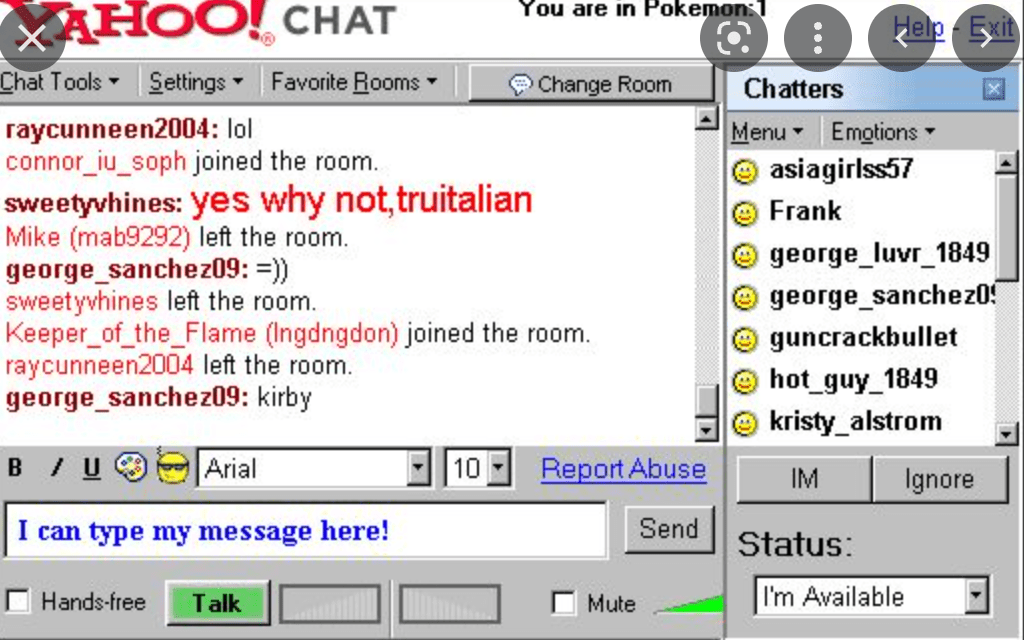
I never really enjoyed AOL instant messenger, but YAHOO chat was an exciting tool at the time. When I began exploring the internet, chats were web-based chat rooms. Those later evolved into a friends list and functioned more like the AOL system. I remember being able to listen to music posted to your status, allowing conversations with others who noticed the playing track and growth in musical tastes. As a small town girl from a tiny town (410 population), this online world opened my mind, viewpoints, and influences to people from other states and countries. Many online friends are still friends to this day, 25 years later.
I taught myself basic HTML to create multiple GEOCITIES websites. These digital presences pre-date MYSPACE and any current social options preferring anonymity via pseudonyms. These were places where individuals posted about themselves, showcased their creativity, and annoyed the world over with music files that the user had no control over. I remember helping my mom create her GEOCITIES presence too. Those platforms utilized guestbooks where visitors could leave comments. I remember seeing guest logs from long-since passed family members who left encouraging words or random messages. It began with social networking, collaboration, community, and collectives.
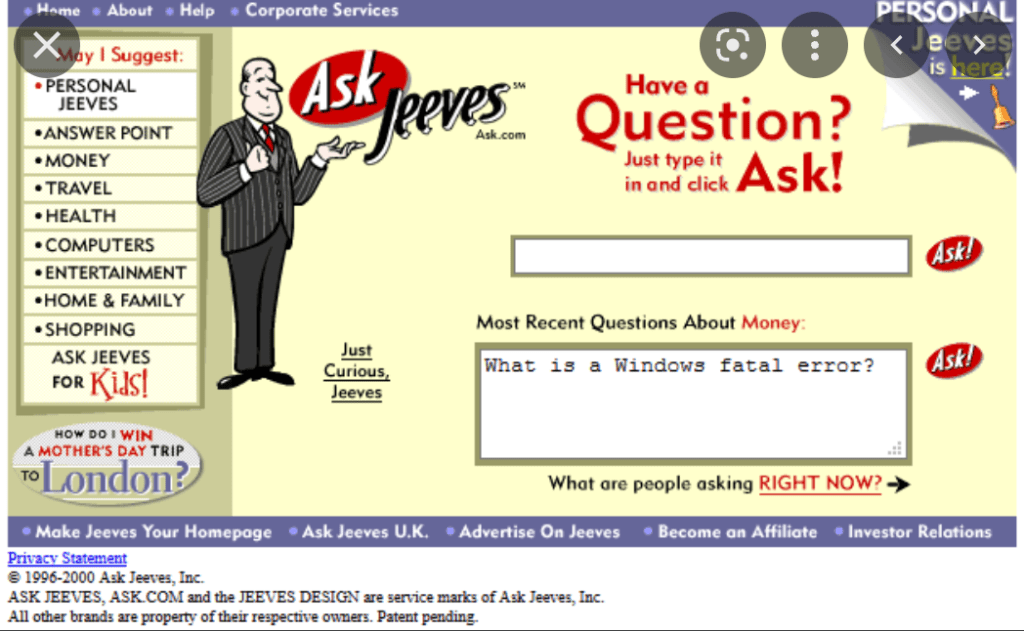
I remember the birth of multiple search engines. ASK JEEVES sticks out, probably due to television advertisements. I can not say I specifically remember when GOOGLE took over the search engine space, but I can say I fully embraced a “GOOGLE it” mindset about the world.
I never knew what autodidactic meant until Dr. Harapnuik explained this program and our goals for creating significant and authentic learning environments. Reading The New Culture of Learning, I realized that my habit of searching for errors indicated my inquisitive nature.
In my 30s, while dating my now husband from 2.5 hours away, we played WORLD OF WARCRAFT throughout the week as it provided social interaction and time. We also met people worldwide to go on quests and raids together.
2006 – For the Horde!
I could not help but reflect on the problem-solving and collaboration we experienced during our time in the early days of this massively multiplayer online game. Fifteen years later, we still stay in contact with several friends from the game in real life and have celebrated many milestones together from afar. We raised our daughter with learning games and online gaming.
Thomas, D., & Brown, J. S. (2011). A New Culture of Learning: Cultivating the Imagination for a World of Constant Change (1st ed.). CreateSpace Independent Publishing Platform.
I came to the ADL Program hoping to understand better what my students experience in online graduate programs at LU. I assumed that I might pick up a few technology skills here and there, but my primary focus was on having a first-person experience so that I could better relate. I have been blown away by the relevance and value that just these first three classes have provided to my daily job duties as an advisor. The most valuable aspect of this program has been finding creative ways to meet my students’ needs 24/7 via my Portfolio. I have developed my Portfolio as questions arise or when different semester times come near (i.e., final grades, graduation, etc.). The ability to make my projects authentic and valuable has been an unexpected and highly appreciated aspect of the program. The shift from regurgitation to real-life projects was not one I expected when beginning this academic journey. The COVA model has been the educational experience I did not know I was missing, yet one I have longed for my whole life. The ownership that comes from this real-life need, the choice in how I will present my information and learning, and the incredible personal voice that is developing through the process of reflection are not things I expected to find while working on a graduate degree.
This program taught me more about collaboration and mentoring, in just these first three courses, than I ever expected (or honestly wanted) to learn. I am finding that by helping others, I can help myself. I am learning to stop being the stubborn silent student who only focuses on getting their work done to be a valuable member of a learning community and class cohort. I have thoroughly enjoyed this aspect of the program.
The most significant aspect of the COVA Model I hope to incorporate into my ePortfolio is the ownership and choice aspects that allow my advisees to have their authentic path to degree completion. I want to develop resources that give students a choice on their preferred delivery method and equip them with information to make informed decisions along their academic path.
I can see that creating a Portfolio sheerly to meet this program’s requirements would lead to a lack of persistence. Reading the studies on Portfolio persistence makes me strive to keep this an authentic part of my personal and professional life so that my Portfolio can continue to grow and evolve to serve those I serve. I am lucky that our program allows us to use real-world learning situations to create a Portfolio that will help us for years to come, should we embrace it.
I think the most valuable personal lesson that I am carrying with me is the one of a growth mindset. I can learn to do anything I put my mind to if I remember that I don’t need to be perfect or know everything. There are so many opportunities that become available once the message of yet is accepted.
I look forward to my continued evolution as a learner, and I’m excited to see how that will impact my advisees.
Harapnuik, D., Thibodeaux, T., & Cummings, C. (2018). Choice, ownership, and voice through authentic learning. Creative Common License.
What an exciting time to be reflecting. I welcome this opportunity to dig deep and to think about my learning, as I just celebrated a birthday. What better time to think about why I am the way I am and why I do what I do.
If you would have asked me at age five, “Dawn, what do you want to be when you grow up,” advising would not have been my response. I did not consider myself intelligent. I only knew I would go to college because that was a message my mother instilled in me throughout my upbringing. When I went to community college, I remember having to jump through hoops and needing someone to sign some forms for registration, but I cannot remember advising per se. University life was much the same. Advising time would come around, and there would be a meeting with whichever faculty member pulled your file at your appointment time. It was not until my last few semesters that I was able to get advised by faculty members I had come to know during my studies. One day I was driving home, and I received a call from Dr. Espinosa, whom I had asked to advise me that semester, saying that if I added a science course to my upcoming semester, I could graduate at the end of that term. I was extremely excited about the prospect of graduating sooner than anticipated.
Passions, Beliefs, & Values
Fast forward a few years to my current profession, and I am happy to say I found a calling and passion as an advisor. I work hard to teach students how to navigate the systems used in higher education, to understand the policies and procedures they will encounter along the way, and connect them with resources for information as needed. I work to answer questions that students would not even know they needed to ask. Helping students find their way through university jargon to make well-informed decisions about their paths and futures is paramount to me. I want to ensure that everything I do helps move them toward their educational goals. My own experience receiving the call about my graduation reminds me that the advice I provide impacts students’ lives. I believe that I must conduct myself with the utmost integrity and generally live by the golden rule of treating others as I want to be treated.
My passion is people. I genuinely enjoy building relationships. I believe in being as helpful as possible to those around me. Loving people is not always easy. Humans are complicated creatures, and our responses to stressful situations can bring out the worst. Therefore, I work hard to win the trust and to hear my students’ and colleagues’ frustrations. Then I seek out information or solutions to problems. I work to resolve issues and prevent others from facing them. It is important to me that I keep that fresh perspective to help in the fight against the status quo. I try to remember what it was like when I was going along, trusting that someone would tell me if I needed to know something. I must advocate for my students and colleagues until they learn enough to advocate for themselves. I aim to provide a clear path through the maze of higher education terminology and policies while providing support. I believe that even if I can only make a slight difference in a student’s academic journey, I can significantly impact the world. I believe that I have an opportunity to make a difference in the lives of those around me. I have the privilege of being a very personal part of people’s lives for a season. I have been honored to celebrate success and provide comfort through losing dreams, friends, homes, and loved ones.
Guiding Principles
While preparing for this reflection, I surveyed a few of my colleagues in hopes of getting objective assessments of myself professionally.
One of my colleagues describes me as a seeker of truth, a collector of knowledge for empowerment. They say I have a heart that wants the best for those around me and that I love my family, friends, colleagues, and students. That, I love.
Another confirms this assessment, saying that I seek knowledge and love to share it. I care and embrace qualities that make those around me feel seen and heard.
A third colleague describes me as patient, kind, understanding, knowledgeable, and able to explain things without making a person feel dumb. This person says I have a gift for encouraging, uplifting, loving, and always trying to make people see the best in themselves and their situation.
A final colleague explains that I am collegial, always there, and volunteer to do extra to help others. This colleague says I pay attention to detail by always looking out for my students, seeking opportunities, and ensuring they stay on track with meeting guidelines and benchmarks. They say I am always willing to expand my knowledge base, pushing my comfort level when working with others. This colleague’s final assessment is that I am a model and trainer for other advisors across campus.
I am honored by these summaries of my professional and personal passions and beliefs. These are my guiding principles. I became proficient at explaining things from multiple perspectives through my early education learning challenges. I am a patient teacher to my advisees and colleagues. I have an instinct for when someone looks confused and an ability to explain things differently. I seek to explain systems and policies to the teams I have served since I believe anyone willing to learn can do so. I believe in hiring dedicated, hardworking, caring people who can learn to do a job over people with glowing resumes who lack those traits. You can teach people a job; it is much harder to teach people to care. I believe that we each have an opportunity to play a valuable role in our students’ journey.
I learn everything I can about the interconnectivity in higher education to best assist students and colleagues. I schedule tours of departments and express sincere interest in understanding the inner workings of departments, systems, and processes. I seek relationships with people across campus, and through these relationship-building efforts, I gain a big-picture understanding of campus. I strive to point out the unintended impacts of decisions made in one area to another. Through my natural inclination for information seeking, I have become a reliable contact for friends and colleagues across campus.
I take Drew Dudley’s call to action to heart, as he declares, “if you change one person’s understanding … of what they’re capable of, one person’s understanding of how much people care about them, one person’s understanding of how powerful an agent for change they can be in this world you’ve changed [the whole world]” (TEDxToronto, 2010, 5:44).
As an advisor, I have the privilege of encouraging students, supporting my colleagues, and trying to make a difference to my fellow human. I remain in the advising profession despite the challenges of dealing with people because I value my role in others’ lives.
One of the most significant challenges I face in assisting students along their academic path is the lack of ownership some take over their Education. As I began my current advising role, this entire portfolio was born out of a desire to resolve student complaints, issues, and perceptions of a lack of information. In addition, I am finding that some students still are not reading the presented information. I must seek engaging multimedia solutions to this problem. I take decentralized information from various resources and break it down into smaller sections on a single advising tips page to prevent information overload. I struggle with how to guide students to accept ownership of their learning and program requirements.
I remain in advising and seek ways (like this program) to improve each person’s experience at the institution. I am an efficiency expert at heart, so I continually evaluate processes to see where they can be improved. I revise and refine my message with the hopes of providing clarity. I remain an advisor so that I can make a difference. I believe my learning can lead to contributions to the advising community through professional learning networks and organizations.
Learning
Through the ADL Program, I am reconnecting with a passion for learning. I believe any day when I learn something new is a good day. I believe everyone can reignite a love of learning regardless of past educational experiences. I believe a hunger for learning can make for a more enriched life. We are all presented with an opportunity, should we embrace it, to reevaluate everything we currently think about learning. Through this program’s content, I can see how the current model of Education leaves students behind (myself included). For the first time in my academic history, I can see how claiming ownership of learning revolutionizes the entire process. Learning solely for the outcome of a grade prohibits deeper learning.
Unlike any prior education, now I have choices. My projects and assignments are my own. This authentic learning environment allows me to voice what is important to me. I seek to be open to the learning opportunities presented through the resources and content shared and the projects I create. I seek to be a catalyst for change through each of these projects. I intend to embrace each opportunity to the fullest, knowing I can and will return to previous content with new perspectives.
The Future of Education
I believe that Education needs to redefine success. Standardized testing has killed creative content development and delivery for the instructors, and the students have lost their love of learning.
To fix Education, we must spark the inquisitive mind in learners again, at all levels. Students must learn to adopt a growth mindset as they approach their education. To embrace learning, students at every level need the opportunity to fail, revise, and fail again. Education currently penalizes a student when they do not understand concepts or content. As explained by Sir Ken Robinson (2016), Education has “become preoccupied with the yield and output … with data-driven outcomes, and along the way, we have lost sight of the natural processes of teaching and learning” (ARC, 2016, 8:17). A shift in education that affords multiple attempts, multiple delivery options, and multiple supports will help encourage students to continue to try and try again until they succeed.
By embracing more blended learning methods of learning and changing our ideas of instruction, we have the opportunity to enhance education. We can meet our learners where they are at but refuse to leave them that way. By openly sharing research and transformative successes, every Education system worldwide can improve learning outcomes for primary, secondary, post-secondary, and post-graduate students. Education worldwide must embrace the opportunities for digital innovation afforded through the reliance on distance learning caused by the 2020 global pandemic. We must move away from the current Industrial model of education toward a New Model in Education. By reevaluating the status quo, education has an opportunity to advance through digital learning.
Digital Learning
I believe that digital learning allows 24-hour access to resources. Digital learning provides students choice on how best to approach learning by utilizing multiple content delivery formats. This shift in ownership allows students to seek alternative paths on their journey to understanding. Students become empowered to make meaningful connections and deeper learning through active engagement. Support resources such as YouTube, Khan Academy, TED Talks, and many others allow digital learners a limitless library of content.
Emerging digital learning issues, from an advising perspective, involve meeting the on-demand needs of digital learners. Often asynchronous learners select online programs due to their need for alternative options and approaches. To promote their learning, we must find ways to deliver information in engaging ways. We must research and employ advising styles that allow connection and engagement despite asynchronous digital interactions. Many complete course requirements and make inquiries during non-business hours.
As we work to revolutionize education, we must also work to revolutionize advising. Through technology, we can now have unlimited access to resources via our digital devices. The primary goal of this portfolio is to provide 24/7 access to an advisor’s knowledge and information.
I believe digital learning can:
Revolutionize education and my advising relationships
Tap into unmet potential and innovative ideas
Meet the needs of learners worldwide
Ignite a passion for lifelong learning
Provide learners equal access through a universal learning design
I hope to impact the advising profession and my organization by collaborating through professional organizations and learning networks. I intend to share best practices, experience, and research to advance the advising profession.
Furthermore, I intend to impact my organization by improving the student experience by increasing their access to information. I also hope to impact the lives of my colleagues by inviting them to join me in innovating advising.
The idea of feedforward is very appealing as it focuses on the future and what is still within the realm of change. Feedback on the other hand focuses on the past, which cannot be changed.
In the ADL Program we are encouraged to build trusted relationships with our classmates in order to improve our projects. Through these collaborations we are able to receive support and feedforward in order to revise and improve our coursework. We are all learning to give effective feedforward as well as accepting feedforward.
According to Marshall Goldsmith (2014) here are the rules to feedforward:
Rule 1 – No feedback about the past
Rule 2 – You can’t judge or critique ideas
I’m trying to think of ways to provide feedforward within my advising relationships. Due to the asynchronous online environment of most of our interactions, it is sometimes difficult to build a trusted relationship so that my advisees will be in a position to accept feedforward from me. That is honestly a big goal of this Portfolio. I hope that directing my advisees here will allow them to get a greater sense of who I am and that I am looking out for their best interests. I do not provide much in the way of feedback but instead outline options forward in varying circumstances.
I am definitely trying to find ways to incorporate growth mindset language and information into both my interactions and this Portfolio. Since my current role is limited within an enrollment until it can be difficult to find ways to get on board with a mindset shift.
I’m always looking for ways to “[point] to opportunities and [provide] pathways for improvement and growth” as recommended by Dr. Harapnuik (2020).
One of my previous supervisors tried to teach one of my previous advising departments about advising theories when she joined our advising unit. I remember how often she would say that Learning Style theories were debunked and invalidated through research. I remember how offended I felt at these claims because I had fully embraced that myself as a visual learner.
I just came across the following on Dr. Harapnuik’s portfolio and finally felt ready to tackle this issue once and for all, for myself (admittedly I was ready to be offended again).
Finally, the concept of multimodal learning makes the most sense to me. In college I would write lectures by hand or later by using a laptop. Then I would come home and read/record my notes to a mini-recorder. Then I would listen to these tapes (yes mini-cassettes then later on digital recording devices) on repeat day and night (in the shower, as I slept, in the car, non stop). This method of my personal multimodal learning was in no way “visual learning” but somehow I completely embraced my identity of being a visual learner.
What is more accurate is the cited finding that “people learn best when they are actively thinking about the material, solving problems, or imagining what happens if different variables change” (Vertasium, 2021). This is an interesting finding within the context of the ADL Program where we strive to become catalysts for change by leveraging technology to improve learning outcomes.
What we really need to ask ourselves when we implement educational technologies is will “this revolutionize education” (Vertasium, 2014)?
Throughout the ADL Program we are asked to think about learning, to reflect on our own learning experience, to be willing to stretch ourselves.
I am very excited to begin the third course of the ADL Program on the Growth mindset and look forward to the personal benefits of this pursuit.
I faced many learning challenges in early elementary, and as a result, I developed a fixed mindset about my intelligence and abilities. As I read chapters 1-4 of Carol Dweck’s Mindset book I could not help but wish that I was familiar with this concept back in my own grade school experience. The internal voice in my head matched all of the fixed mindset examples provided by Carol Dweck in her Mindset book and youtube video on The Power of Yet.
If only someone had instilled the power of yet in my learning, I could have saved myself years of low self-esteem and negative self-talk. Even as I did well in pursuing my undergraduate degree, I felt like a fraud who was just one step away from being the “dumb kid” again. I so readily accepted that identity as a result of early labels.
I wasted the first part of my life feeling slow, dumb, and below average. I surely was not going to be the first one raising my hand or offering to go to the board to complete a problem with excitement and enthusiasm, as described by Dr. Dweck when describing children equipped with a growth mindset.
Both Carol Dweck and Eduardo Briceno share knowledge and facts about our abilities to improve through repetition and practice. Grit and determination are the messages we need to share with our students and children and embrace that hard work obtains results.
I have started working process-related praise into how I tell my 19-year-old daughter that I am proud of her as she moves through early adulthood. I can see the fixed mindset in her and hope that as I understand more, I will be able to equip her with a growth mindset at her age instead of at mine. As Eduardo Briceno described praise through the mindset lens, I wished I learned what I’m learning now when she was just a little kid.
Taking the leap of faith to begin a graduate program was filled with self-doubt and an internal voice that worried I would embarrass myself. Hence my duplicitous excitement about the potentially painful process that may come from continuing to reshape my mindset.
I admit that I may have come to this program with a fixed mindset. I am done with the people-pleasing and approval-seeking ways of the past and instead move forward reprogramming myself to a growth mindset. The first two courses have already opened my mind to a different perspective on learning. Now I am trying to fully embrace a growth mindset so that I can work to instill that in others.




 The Advisor That Cares