Once again, I’m letting parts of my heart slip and show with my colleagues, and no one is running away screaming in fear. It seems like everyone is really excited about some of my ideas.
I pitched having brief Monday morning (WIG meetings – though I didn’t call it that) to set our goals and intentions for the week. I suggested Friday afternoon review of the week’s collaborations where teams “check each others work” to help cross each other T’s and dot each other’s “i’s” so to speak.
I pitched the concept of new year, new us. Beginning with the day after the last day to register, we are going to come up with a departmental New Years Resolution (WIG – didn’t call it that) but it really is happening.
A wonderful addition of review plus board games, team-building at the rec, adult coloring pages, board games, or whatever sounds fun to the team. I am so excited for the new year.
Talk about positive reinforcement for being raw, authentic, and true to yourself!
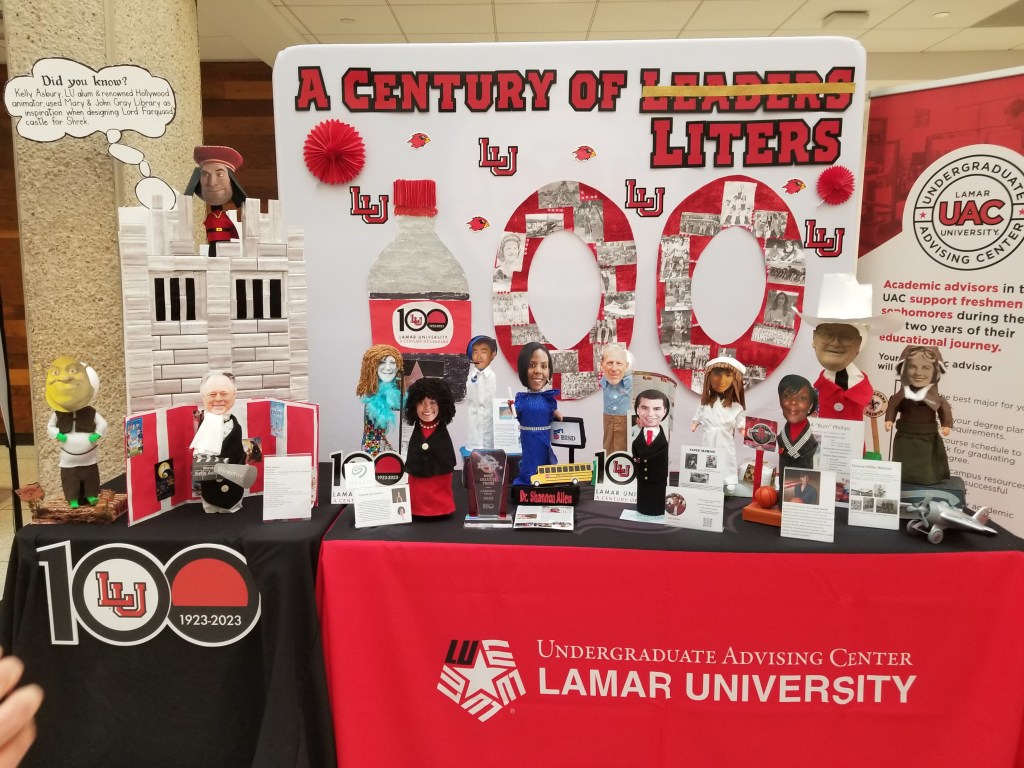
I had to be brave enough to share my silly preview day theme idea. Thankfully, my department all got into it, and we put together a beautiful display of our collaborative effort. I think everyone in the office contributed something in some way, which is just such a beautiful thing to me!
“When we feel safe. When we feel that our leaders care more about us than a number. They care more about our lives and our confidence, and our joy and our skillset more than some short-term gain… we will respond in kind and we will offer our blood our sweat and our tears and we will make sacrifices of all kinds to see that our leader’s vision is advanced” (REDDOT X, 2018).
“Working hard for something we don’t care about is called stress.
Working hard for something we love is called passion“
No offense intended by using the term “nerd” because I am a self-proclaimed goofball, silly goose, and nerd. So, I want to share a little piece of that with you because it is an example of how this program has helped me live authentically and how I am beginning to share myself with my team.
If you are participating in the upcoming event, I ask that you stop reading here and don’t steal my awesomely nerdy idea. Agreed? Okay, let’s continue.
So, I may have mentioned in a previous blog that our institution is celebrating its centennial celebration (woot woot, centennial class!). Leaning into that 100-year achievement, this upcoming weekend, we will participate in a campus preview event. These are typically themed, and this fall’s theme is “A Century of Leaders.” Boy, oh boy, were we stumped.
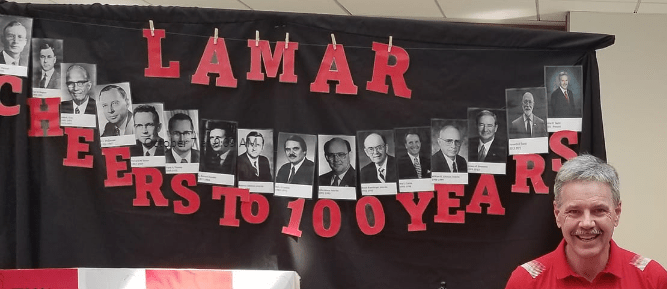
We’d recently done a decade of leadership and struggled to think of something new. “Cheers to 100 years” and President Taylor for taking a picture with our booth at the Spring event. We showcased the 100 years of university presidents and had university annuals from the 1950s to the 70s for guests to view.
So, one morning, I was mulling over the theme. I kept repeating, “A century of leaders, A century of leaders, leaders, leaders, leaders, leaders, humm liters?!?!”
What if we created liter bottle people to represent a century of leaders liters. So, I pitched the idea to my immediate supervisor. Then, I pitched the idea in a staff meeting. Needless to say, I was met with many stares of “Are you kidding me?” but no one flat out said, “That’s stupid,” and no one offered a better suggestion, so away we went. In my head, I could hear them saying they were crafty and couldn’t possibly create 6people from 2-liter bottles. But I was prepared. I came armed with middle school assignments to create just such a thing. I asked them if they could think of anything else, and I came prepared with lists of distinguished alumni and a more contemporary top 25 most recognizable alumni. We began brainstorming who we could create and showcase as our entry into the prize-winning contest.
I feel so much like Dr. Harapnuik when he says he’s so sneaky in how he helps us learn, collaborate, and grow (COVA). My teams have worked together to create their “bottle buddies.” When I explained in the staff meeting that 5th graders were making these, I found that everyone stopped thinking they couldn’t. We just needed a little dose of Growth Mindset. I will see staff members wandering off with felt, hot glue guns, and any crafting supplies I and others brought to the office.
The culture is shifting. There is teamwork happening. It is so exciting!
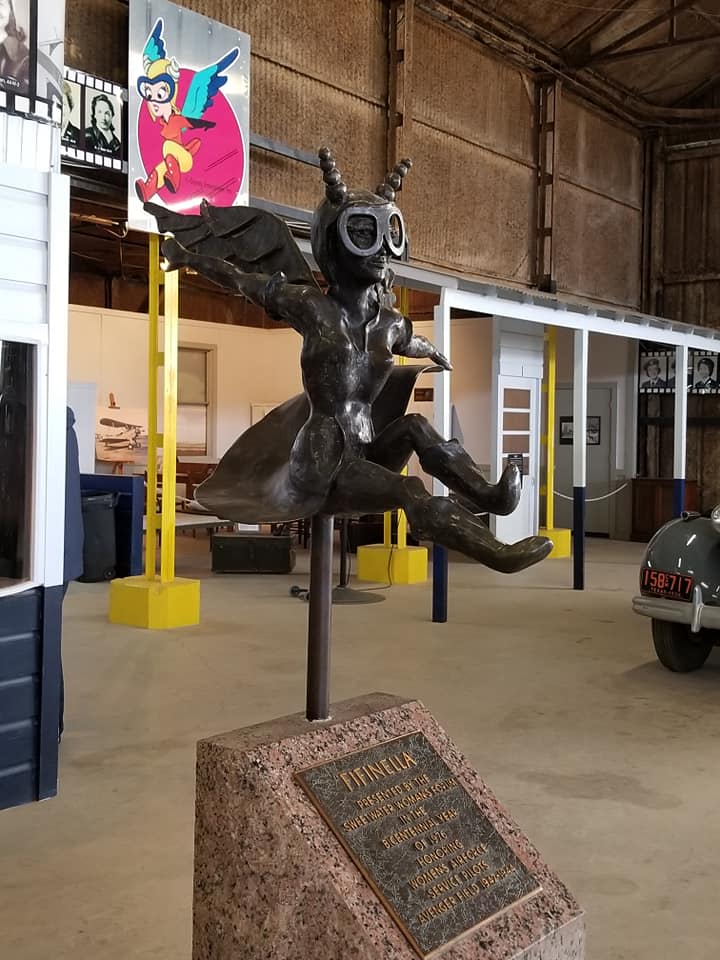
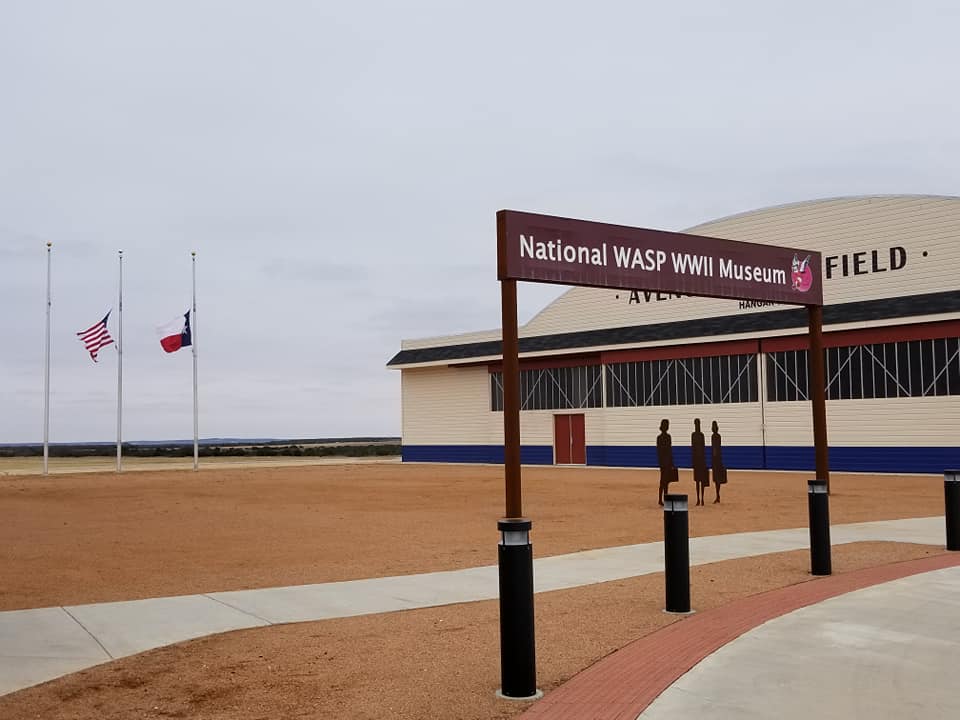
I have selected Florene Miller Watson as my most recognizable alumni of LU to honor with a crafty creation since I visited the WASP Museum in Sweetwater, Texas.
My institution is celebrating its centennial year. Next weekend’s preview day/campus visit theme is A Century of Leaders. I went through a list of 25 Notable alumni of Lamar University and decided that I would like to research Florene Miller Watson. I felt I had a personal connection after touring the WASP Museum in 2018.
Here, I’ll share a few of my findings to compile some talking points about her.
After the war, she attended Lamar State College of Technology (now LU), majoring in secretarial science.**
“Florene lived her life cheerfully giving to others and always believing the best in everyone she met” (***).
““Do not undervalue your abilities. You have abilities that you haven’t had a chance to use. Now, find something you want to use them on and get after it!” (Soundbytes of the WASP***)
1 of 25 women of the Women’s Air Force Service Pilots (WASPs)*
Completed flight training by age 19*
Taught servicemen to fly*
Army service volunteer – moved aircraft from factories to bases*
Obtained a Master’s Degree in Business Administration*
Taught college for 30 years*
UH**
Howard College**
Frank Phillips College**
Distinguished Flying Corps Member in Krister Aviation and Space Museum, Amarillo, Texas*
National Medal of Honor, Daughters of the American Revolution*
Lifetime Achievement Award, Air Force Association*
1st woman inducted into the Texas Panhandle Veterans Hall of Fame*
Galveston Aviation Hall of Fame*
International Women in Aviation Hall of Fame*
Ninety-Nines International Forest of Friendship***
1990 classic, “Feels Good” by Tony! Toni! Tone! Reminds me how good it feels to hit submit on those final assignments! Only one class to go! Graduation, I’ve got my eye on you!
Assignment Deadlines
Publication Outline – Due Sunday, August 27th
Publication Rough Draft – Due Sunday, September 3rd 10th (Updated on 08/23/2023)
Media Post – Due Sunday, September 17th
Final Draft – Due Sunday, October 1st
Compilation Post – Due Sunday, October 1st
Contribution to Your Learning and the Learning Community – Due Sunday, October 1st
I am once again pulled to evaluate the purpose of my innovation. These final reflection stages of the ADL Program coursework really ask us to go back and evaluate our learning journey throughout the course. I can not help but reconnect with Sinek’s “why” for myself. My resounding answer is still to “care about people.” I have always battled the duality of my audience. Torn between addressing blended learning in advising as a benefit for students or to advisors. The answer has always been both! As I move into the final stages of my publication article, I recognize that this has the potential to continue a conversation with others in my profession about how technology can be employed to humanize the relationship between students, parents, advisors, and leadership.
I see overwhelmed student faces at incoming events and hear the exasperation in their family members’ frustrations over navigating the transition into higher education.
I hear and see how overworked advisors are as they attempt to serve many different requirements, demands, and recommendations and help their students do what is best for their college experience.
I believe that when we create significant learning environments about advising topics that help students connect with why and when they might need to know about a requirement, procedure, or general FAQ and How-Tos. By focusing on the learning outcomes using tools like Understanding by Design, we can equip them with learning skills they can apply to all areas of college and life.
As I made my second to last contributions to learning post, I realized that I am losing and will continue to lose much of my ADL learning network. My cohort is made up of K-12 educators and instructional technologists. I have met a few business professionals but only briefly interacted with individuals in the higher education arena. Recently, the program has afforded me the opportunity to connect other advisors entering the program. I hope that I will be able to provide support and encouragement to them as they work through the frustrations and challenges this authentic learning environment presents. I wish the timing worked out so we could have co-collaborated on much of the work since there is so much work to be done.
It seems to me that Dr. Harapnuik has carefully crafted this program to establish this handoff point. This publication opportunity is just what we need to open a dialogue with others in our fields, with our interests, or just to continue our conversation on personalized learning so that we can continue to refine, revise, and improve our innovative ideas.
So, what do I want to say to other advisors? What do I think I have to contribute to the literature of the advising profession? All I really have is my authentic personal experiences and a purpose to care about people. I want to use my publication article to create a conversation that helps to continue the mission of expanding advising relationships from mandatory synchronous advising sessions into ongoing learning relationships. I think that advisors are in a position to employ technology to support them in the purely information transfer and how-to topics they are required to cover with students into concise and specific resources that students can explore ad hoc. Then by posing questions of inquiry for discussion or reflection, advisors can create communities of learners that broaden peer support and collaboration opportunities. Advisors can help craft resources to develop and encourage students’ intrinsic motivation to seek information and make connections. For example, instead of transferring overwhelming amounts of information to students, advising can help students explore their questions, interests, and goals. I believe that the transformative work that advisors will have time to do, as a result, will enrich advisors’ and students’ experiences.
In the ADL Program, we learn the importance of always focusing on learning. Technology, just for the sake of it, does not revolutionize education. We must be ready to engage in crucial conversations about our innovation ideas to be effective agents of change. To do this effectively, we must work to enact organizational change as we influence others. Acknowledging that our learners come to education from a new learning culture, we must find ways to adapt and reach our learners by creating significant learning environments. With intentional planning, we can present learners with choice, ownership, and voice within an authentic learning environment (COVA).
One of the critical components of becoming a catalyst for change is drawing others into collaborative relationships so that ideas and innovations can continue to grow and evolve with the input and perspective that others bring. Engaging media is one thing that we can employ to ensure that our message reaches those who can contribute. Speakers Mathew Luhn and Nancy Duarte discuss how effectively using media through storytelling can draw the audience into your message (Marwick Marketing, 2017; TEDx Talks, 2010). In my media project, I describe the misery that summer orientation season can bring to the advising profession. I will be the first to admit that in its current format (a long, hot day of walking all over campus and hearing people present to you), it is not an engaging experience. I cannot describe how many students and parents sleep through presentations and content. Hoping to resonate with potential readers of my article, following the advice of Nancy Duarte I paint this picture of the status quo sets the stage for my description of an alternative solution (TEDx Talks, 2010). I hope to draw readers into my article by describing “the new bliss” of what learners and advisors can experience by adding technology to expand the relationship (TEDx Talks, 2010).
Set up:
Beginning: Problem. Explain the problem that you set out to solve.
Build:
Middle: Solution. Describe how you solved it.
Payoff:
End: Success. Get excited about the success this produced.
(Marwick Marketing, 2017)
What is:
Beginning: Establish what is, the status quo
Compare a drastically different vision of what could be
Compare and contrast the status quo and the new idea
Tell Your Brand Story Better with Video(I have been unable to locate the recommended Adelie Studios resource titled: How Long Should My Business Video Be? – but this same source is quoted as saying, “Keep it short. Fifty-three percent of people viewing business videos leave after one minute,” says Eric Guerin, executive producer, Adelie Studios. “So edit. Then, when you think you’re done, edit some more,” he says. “Being concise helps keep your audience engaged and drives them to whatever your call to action is.” at Cio)
Participate in a class discussion in which you begin by addressing the following issues/questions:
Discuss ways that media can engage the audience to influence their thinking?
What have others done to engage you?
How will you incorporate these ideas into your media project?
How would you influence reviewers to read your publication?
Free writing and brainstorming for discussion response
One of the critical components of becoming a catalyst for change is drawing others into collaborative relationships so that ideas and innovations can continue to grow and evolve with the input and perspective that others bring. This Resources for Digital Environments course asks us to create a media project to advertise our publication article. Media allows the viewer to increase or decrease the speed of content. As a learner who still takes old-fashioned pen-and-paper notes, I appreciate the ability to back up and replay. The addition of closed captioning has been instrumental in my full understanding and is especially helpful when recording quotations.
Speakers Mathew Luhn and Nancy Duarte discuss how effectively using media through storytelling can draw the audience into your message (Marwick Marketing, 2017; TEDx Talks, 2010). Dr. Harapnuik does an exceptional job of placing questions of inquiry throughout his introduction videos. I always search for Learners Mindset Discussion podcasts on the topics we cover throughout the ADL Program. He has continually taught us about the power of storytelling and drawing your audience into your ideas through active, engaging, personalized learning. In my article, published in sources read by advisors, I reflect on the misery that summer orientation season can be for our profession. I cannot describe how many students and parents sleep through presentations and content. Improving these events through engaging media presents an opportunity to draw them into the event’s purpose, preparing their learner for the upcoming college experience. Mathew Luhn explains that you need to draw people in by creating something unusual, unexpected, or has some sort of action or conflict in the very beginning in [the] first eight seconds” (Marwick Marketing, 2017, 22:30). Nancy Duarte (2010) creates this hook by comparing “the commonplace of the status quo, [… contrasted …] with the loftiness of your idea” (TEDx Talks, 2010, 6:57-7:02). I hope to draw readers into my article by describing “the new bliss” of what learners and advisors can experience by adding technology to expand the relationship (TEDx Talks, 2010).
Thanks to the ADL Program, I love that I am constantly observing my learning behaviors.
I recently rearranged and connected multiple monitors. I still laugh at how much of this program I completed working on my laptop monitor alone. In my household, there are three adult technology users. My husband and adult daughter are gamers of every variety (board, tabletop, console, PC), and I have dabbled in all of the above, frequently poorly. We have accumulated several longer-used devices.
This morning, my taskbar is not showing on the additional monitors. I am constantly rearranging the monitors due to recording requirements vs. writing requirements. I create homemade teleprompters for digital media presentations, though I still need to find a way to scroll the text while recording. I discovered how to scroll text, but since I’m clicking between windows to advance presentations during recordings, it stops and annoys me! The display setting changes likely resulted in an unintended change or a misfired keyboard shortcut.
Into my handy dandy search engine, I type, “can I extend the menu bar across monitors,” and while executing the search, I decide to go digging through system settings to see if I can find it myself. What do you know? Right there in Personalization > Taskbar is a toggle to do precisely that. I click back over to my results and mentally applaud my learner’s mindset that knows there is a resource I can utilize when needed. Still, I am also a solution-seeking, inquisitive learner who will go tinkering about and seek support as required.
THIS! The learners’ mindset is what I want to help learners discover: their authentic learning opportunities. I want to work with a team of advisors to channel the passions that feed their strengths and abilities. I want to help humanize the relationship of advisors and of students.
The advisors feel like robots and that what they say isn’t heard and doesn’t seem to matter to many students. TAsked to justify the behavior and decisions of students who did not follow the advising they received or failed to follow the outlined procedures. They are placed into cycles with no finish line or celebration, leading to impending dread as the subsequent avalanche falls to them to manage.
When stressed out, people are not usually the best version of themselves. Insecurity can express themselves in hurtful and accusatory ways. Learners and their parents often need clarification on rules and regulations. Because learners have yet to learn the terminology used at the university, they will talk to multiple offices and people before getting the necessary information to make timely decisions. Understaffed and overworked humans can make mistakes, which damages relationship building. If we can help learners learn how to learn, they will also seek, verify, and understand well-planned and executed learning outcomes.








 The Advisor That Cares